Support our educational content for free when you purchase through links on our site. Learn more
25 Daily Bible Verses for Beginners to Meditate On 🕊️


Yes—there are many recommended daily Bible verses for beginners to meditate on, and you can start with one short passage such as Psalm 23:1, Psalm 119:105, or Matthew 11:28–30. Read it slowly, notice what it says in context, and carry one thought into your day; you don’t need a complicated routine or a whole chapter before breakfast.
When we choose a verse for reflection, we look for words that offer both comfort and something to consider. A familiar line like “The Lord is my shepherd” can become much richer when you read the rest of Psalm 23, with its images of guidance, danger, and companionship.
Below, we’ve gathered 25 beginner-friendly passages for peace, wisdom, courage, love, and spiritual growth, along with a simple way to meditate on Scripture each day. The goal isn’t to collect the most verses—it’s to give one passage enough attention to shape how you live.
Key Takeaways
- Start with one verse or short passage: Psalm 23:1, Psalm 119:105, and Matthew 11:28–30 are approachable choices.
- Read in context: Check the surrounding verses so you understand the passage beyond a familiar phrase.
- Try a simple routine: Read slowly, notice what stands out, reflect, pray, and choose one practical response.
- Choose verses that fit your need: Scripture offers passages for peace, guidance, courage, gratitude, and love.
- Keep the habit gentle: A few attentive minutes can be a meaningful beginning; missing a day is a reason to start again, not to give up.
Table of Contents
- ⚡️ Quick Tips and Facts
- 📖 Why Meditate on Scripture? A Beginner’s Guide to Biblical Meditation
- 🌱 How to Choose Daily Bible Verses for Meditation
- 🕊️ 25 Daily Bible Verses for Beginners to Meditate On
- 1. Psalm 1:2–3: Delight in God’s Word
- 2. Joshua 1:8: Reflect on Scripture Day and Night
- 3. Psalm 23:1: Trust God as Your Shepherd
- 4. Psalm 46:10: Be Still and Know God
- 5. Psalm 119:105: Let God’s Word Guide You
- 6. Proverbs 3:5–6: Trust God with Your Path
- 7. Isaiah 41:10: Find Courage in God’s Presence
- 8. Matthew 6:33: Seek God First
- 9. Matthew 11:28–30: Rest in Jesus
- 10. Matthew 22:37–39: Love God and Your Neighbor
- 11. John 1:1: Remember Who Jesus Is
- 12. John 3:16: Reflect on God’s Love
- 13. John 14:27: Receive Christ’s Peace
- 14. John 15:5: Abide in Jesus
- 15. Romans 8:28: Trust God in Every Season
- 16. Romans 12:2: Let God Renew Your Mind
- 17. 1 Corinthians 13:4–7: Practice Patient Love
- 18. 2 Corinthians 12:9: Lean on God’s Grace
- 19. Galatians 5:22–23: Grow the Fruit of the Spirit
- 20. Philippians 4:6–7: Bring Your Worries to God
- 21. Philippians 4:8: Focus Your Thoughts on What Is Good
- 22. Philippians 4:13: Find Strength in Christ
- 23. 2 Timothy 3:16–17: Understand Scripture’s Purpose
- 24. Hebrews 4:12: Reflect on the Living Word
- 25. 1 Peter 5:7: Give Your Anxieties to God
- 🙏 Bible Verses for Common Beginner Needs
- For anxiety, worry, and peace
- For strength, hope, and encouragement
- For wisdom, direction, and decisions
- For gratitude, love, and spiritual growth
- 🧘 How to Meditate on Scripture Daily: A Simple Beginner Routine
- Choose a verse and read it slowly
- Understand the context before you reflect
- Ask what the verse reveals about God and your life
- Pray, write, and carry one thought into your day
- ⏰ Build a Daily Scripture Meditation Habit That Lasts
- A five-minute morning or evening routine
- A simple seven-day Bible verse meditation plan
- What to do when you miss a day or lose focus
- 📚 Helpful Bible Study Tools and Translation Tips
- Choosing a Bible translation for beginners
- Using a journal, reading plan, or Bible app
- ⚠️ Common Scripture Meditation Mistakes to Avoid
- 💡 Quick Tips for More Meaningful Bible Meditation
- 🌅 Keep Growing: A Gentle Next Step in Your Bible Journey
- Conclusion
- Recommended Links
- FAQ
- Reference Links
⚡️ Quick Tips and Facts
If you’re wondering whether the Bible recommends verses for daily meditation, yes: start with one short passage, read it slowly, and return to it throughout the day. For a closer look at the spiritual and practical benefits, see What are the benefits of meditating on a daily Bible verse?.
| Quick fact | What it means for you |
|---|---|
| One verse is enough to begin. | You don’t need to tackle a whole chapter before breakfast. |
| Biblical meditation centers on God and Scripture. | Reflect on what the passage says, what it reveals about God, and how it may shape your choices. |
| Context matters. | Read the surrounding verses so a memorable line doesn’t get separated from its meaning. |
| There’s no magic duration. | Five thoughtful minutes can be a practical starting point; consistency matters more than a stopwatch. |
| You can meditate anywhere. | A quiet room helps, but a verse can travel with you on a walk, commute, or lunch break. |
| You don’t have to feel something dramatic. | Reflection can be quiet, ordinary, and still meaningful. |
A beginner-friendly rhythm: read, notice, reflect, pray, and carry one thought into the day. The Bible Society and BibleProject’s guide to biblical meditation offer helpful context for reading Scripture thoughtfully.
For more topic-focused passages, browse our Bible Verses by Topic and Bible Verses about Reflection.
📖 Why Meditate on Scripture? A Beginner’s Guide to Biblical Meditation
The Bible’s language of meditation is less “empty your mind” and more fill your attention with God’s words, works, and wisdom. Psalm 1 pictures a person who delights in God’s instruction and meditates on it as a tree planted by water: rooted, nourished, and fruitful over time (Psalm 1:1–3).
That doesn’t mean a verse is a shortcut to guaranteed success, instant calm, or a problem-free day. It means you make room to listen, consider, and respond. We often describe it as letting a line of Scripture move from something you read to something you remember and practice.
What biblical meditation can look like
- Read attentively: What does the passage actually say?
- Reflect honestly: What word or idea stands out, and why?
- Respond prayerfully: What might trust, gratitude, repentance, or courage look like here?
- Return to it: Bring the passage back to mind when a relevant moment arises.
A helpful distinction: meditation is not the same as treating every verse as a private prediction about your future. Read the passage in its literary and historical setting, then consider how its enduring wisdom speaks to faithful life now. The BibleProject overview of the Psalms is a useful guide to the poetry and prayer language many people meditate on.
A pastoral note about different experiences
Some readers find Scripture meditation calming; others find a passage challenging, puzzling, or emotionally tender. All of those responses can be part of thoughtful engagement. If a verse brings up grief or distress, you can pause, choose a gentler passage, or talk with a trusted pastor, counselor, or friend. Scripture can support spiritual care, but it should not be used to shame people for struggling or to replace professional mental-health care.
🌱 How to Choose Daily Bible Verses for Meditation
Choose a verse that is clear enough to revisit and rich enough to think about. It may speak to a current need—peace, courage, guidance, gratitude—or invite you to grow in love and patience.
| If you’re looking for… | Try beginning with… | A reflection question |
|---|---|---|
| Guidance | Psalm 119:105 | What is one next step I can see, even if the whole path isn’t clear? |
| Peace in a stressful moment | John 14:27 | What kind of peace does Jesus offer in this passage? |
| Courage | Isaiah 41:10 | What does God’s presence mean in the situation I’m facing? |
| Wisdom | Proverbs 3:5–6 | Where might I need wise counsel as well as trust? |
| Rest | Matthew 11:28–30 | What burden can I name honestly today? |
| Love in action | Matthew 22:37–39 | Who might need my patience or care? |
| Gratitude | Psalm 136:1 | What goodness can I acknowledge without denying what’s hard? |
You can also use a trusted Bible reading plan or explore our Bible Study Guides. One note from our editorial desk: don’t choose a verse only because it sounds good on a mug. Read the surrounding passage, especially if the wording seems to promise something absolute.
🕊️ 25 Daily Bible Verses for Beginners to Meditate On
You don’t have to work through this list all at once. Pick one passage for today, or stay with the same verse for several days. Several Bible teachers recommend this slower approach: Just Everyday Joy suggests one verse for a day or even a week, while Christel Owoo offers a broader collection for different needs. More verses can mean more options; it doesn’t mean you need to read them all daily.
The references below link to Bible text in the NRSVUE at Bible Gateway. Compare translations if a phrase feels unclear, and remember that exact wording differs by translation.
1. Psalm 1:2–3: Delight in God’s Word
Read Psalm 1:2–3. The psalm compares a person who delights in God’s instruction to a tree planted beside streams of water. It’s a picture of steady nourishment, not overnight perfection.
Reflect: What helps root me in wisdom when my day feels scattered?
2. Joshua 1:8: Reflect on Scripture Day and Night
Read Joshua 1:8. In context, Joshua is being commissioned to lead Israel after Moses. The verse connects attention to God’s instruction with faithful action; it isn’t a formula for guaranteed personal success.
Reflect: What teaching do I want to remember as I make decisions today?
3. Psalm 23:1: Trust God as Your Shepherd
Read Psalm 23, not just its famous opening. “The Lord is my shepherd” introduces a poem about provision, danger, comfort, and trust.
Reflect: Where do I need guidance or companionship right now?
4. Psalm 46:10: Be Still and Know God
Read Psalm 46 to hear the verse in its setting: a communal song about turmoil and God as refuge. “Be still” is not a demand to suppress real fear; it invites trust amid upheaval.
Reflect: What noise can I set down for a moment, and what truth can I remember?
5. Psalm 119:105: Let God’s Word Guide You
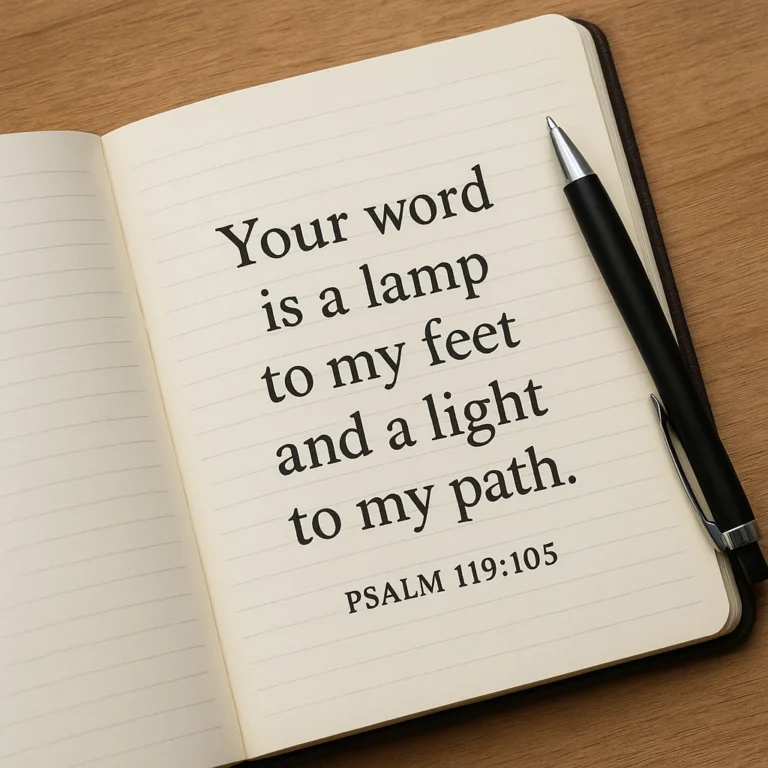
Read Psalm 119:105. The image is a lamp for the path—a light for the next stretch, not a floodlight that reveals every future turn.
Reflect: What wise next step is available to me today?
6. Proverbs 3:5–6: Trust God with Your Path
Read Proverbs 3:5–6. Proverbs offers wisdom for faithful living. Trusting God doesn’t mean refusing advice or ignoring evidence; it can include seeking wise counsel and acting responsibly.
Reflect: Where can trust and practical wisdom work together?
7. Isaiah 41:10: Find Courage in God’s Presence
Read Isaiah 41:10. This message of reassurance comes within a larger passage addressing Israel. Many Christians draw comfort from its witness to God’s presence and sustaining help, while attending to its original setting.
Reflect: What might it mean to face this difficulty with support rather than alone?
8. Matthew 6:33: Seek God First
Read Matthew 6:25–34. Jesus’ teaching addresses anxiety about daily needs and calls listeners toward God’s reign and righteousness. It is not a promise that believers will never face material hardship.
Reflect: What would it look like to put God’s values first in one choice today?
9. Matthew 11:28–30: Rest in Jesus
Read Matthew 11:28–30. Jesus invites the weary and burdened to come to him. The passage offers a picture of rest and discipleship, not a reprimand for needing help.
Reflect: What burden can I name, and what support might I need?
10. Matthew 22:37–39: Love God and Your Neighbor
Read Matthew 22:34–40. Jesus joins love of God with love of neighbor. Meditation here points outward: reflection becomes care, justice, and practical kindness.
Reflect: Who is my neighbor in the situation I’ll meet today?
11. John 1:1: Remember Who Jesus Is
Read John 1:1–5. John opens with poetic language about the Word, life, and light, introducing themes that shape the whole Gospel.
Reflect: What do light and life suggest about Jesus in this passage?
12. John 3:16: Reflect on God’s Love
Read John 3:16–21 rather than separating one familiar line from its surrounding conversation. The passage speaks of God’s love and the invitation to believe.
Reflect: How does the larger passage describe God’s purpose?
13. John 14:27: Receive Christ’s Peace
Read John 14:25–31. Jesus speaks to his disciples before his departure. The promise of peace is grounded in his presence and teaching, not in a guarantee that life will be trouble-free.
Reflect: What is the difference between peace and having every problem solved?
14. John 15:5: Abide in Jesus
Read John 15:1–11. Jesus uses the image of a vine and branches to describe dependence and fruitfulness.
Reflect: What helps me stay connected to Christ’s teaching and love?
15. Romans 8:28: Trust God in Every Season
Read Romans 8:18–30. Paul addresses suffering, hope, and the Spirit’s help. This verse should not be used to claim that painful events are good in themselves or that grief should be rushed.
Reflect: Where might hope be possible even before I understand what’s happening?
16. Romans 12:2: Let God Renew Your Mind
Read Romans 12:1–2. Paul connects renewed thinking with a life of worship and discernment.
Reflect: What belief, habit, or influence may need careful reconsideration?
17. 1 Corinthians 13:4–7: Practice Patient Love
Read 1 Corinthians 13:1–13. Paul is writing to a church community; this is not merely a romantic reading. The passage describes love as patient, kind, and enduring.
Reflect: Which quality of love could shape one conversation today?
18. 2 Corinthians 12:9: Lean on God’s Grace
Read 2 Corinthians 12:7–10. Paul reflects on weakness and grace. This passage does not suggest that people should refuse treatment or help; it offers a perspective on God’s sustaining presence amid limitation.
Reflect: Where can I receive help instead of pretending I have none?
19. Galatians 5:22–23: Grow the Fruit of the Spirit
Read Galatians 5:16–26. Paul describes the fruit of the Spirit in the context of community and Christian conduct.
Reflect: Which quality—love, patience, kindness, or another—needs room to grow?
20. Philippians 4:6–7: Bring Your Worries to God
Read Philippians 4:4–9. Paul encourages prayer and thanksgiving while writing from confinement. The passage is not a reason to feel guilty about anxiety or to avoid professional care; it points readers toward prayer, community, and God’s peace.
Reflect: What worry can I put into words, and what help can I ask for?
21. Philippians 4:8: Focus Your Thoughts on What Is Good
Read Philippians 4:8–9. Paul lists qualities worth attending to—truth, honor, justice, purity, and goodness—and connects thought with practice.
Reflect: What is true and good that deserves my attention alongside what is difficult?
22. Philippians 4:13: Find Strength in Christ
Read Philippians 4:10–14. Paul is speaking about learning contentment in changing circumstances, not claiming unlimited power to achieve any goal.
Reflect: What kind of strength do I need to meet today faithfully?
23. 2 Timothy 3:16–17: Understand Scripture’s Purpose
Read 2 Timothy 3:14–17. The passage describes Scripture’s role in teaching and equipping. It can remind beginners that Bible reading is about formation, not simply collecting memorable lines.
Reflect: What might this passage teach, correct, or equip me to do?
24. Hebrews 4:12: Reflect on the Living Word
Read Hebrews 4:12–13. The writer uses vivid language to describe God’s word as discerning and active. Read the surrounding argument to understand the image in context.
Reflect: What might this passage help me see honestly about my motives?
25. 1 Peter 5:7: Give Your Anxieties to God
Read 1 Peter 5:6–11. The letter addresses a community experiencing hardship and encourages humility, care, and steadfastness.
Reflect: What concern can I name before God, and who else could help carry it?
🙏 Bible Verses for Common Beginner Needs
A verse can meet you where you are without reducing your whole life to one mood. Use these suggestions as a starting point, then read each reference in context. For more curated collections, explore Bible Verses by Topic and Bible Verses for Strength.
For anxiety, worry, and peace
Consider Psalm 46:1–3, Isaiah 26:3, Philippians 4:6–9, or 1 Peter 5:7. These passages invite trust, prayer, and attention to God’s care. They do not promise that anxiety will vanish instantly.
If anxiety is persistent or affecting daily life, prayer can sit alongside support from a qualified professional. The National Institute of Mental Health provides information about anxiety disorders and treatment.
For strength, hope, and encouragement
Try Isaiah 40:28–31, Psalm 23, Romans 8:18–39, or 2 Corinthians 12:9–10. These passages speak to endurance and God’s presence without pretending hardship is easy.
For additional reading, see Bible Verses for Strength.
For wisdom, direction, and decisions
Reflect on Proverbs 3:5–6, Psalm 119:105, or James 1:5. Pair prayer with practical discernment: consider evidence, consequences, wise counsel, and the needs of others. A verse can guide reflection; it is not a substitute for careful decision-making.
For gratitude, love, and spiritual growth
Try Psalm 136:1, Matthew 22:37–39, Galatians 5:22–23, or Colossians 3:12–17. Ask how gratitude can coexist with honesty, and how love can become something concrete: a patient reply, a generous act, or a needed apology.
🧘 How to Meditate on Scripture Daily: A Simple Beginner Routine
Some articles recommend reading a verse aloud, journaling, praying, or comparing translations. Those can all help, but you don’t need a complicated method. A short, repeatable routine is easier to keep than a spiritual obstacle course.
The first featured video on biblical meditation, How to Practice Biblical Meditation: 3 Keys for Life-Changing Results by Tomorrow’s World, may also be helpful if you prefer a short video introduction.
Choose a verse and read it slowly
- Pick a verse or short passage that fits your question or current season.
- Read the surrounding paragraph or chapter heading.
- Read the passage twice, slowly.
- Notice a word, image, promise, command, or question that stands out.
For example, with Psalm 119:105, you might notice the difference between a lamp for the next step and a map of the entire future. That small image can give you something real to consider.
Understand the context before you reflect
Ask:
- Who is speaking?
- To whom?
- What happens just before and after this passage?
- Is it poetry, a proverb, a letter, a story, or a teaching?
- What might the original audience have heard?
A study Bible or a reliable commentary can help. BibleProject provides free literary overviews, while the Bible Gateway passage tools make it easy to compare passages and translations.
Ask what the verse reveals about God and your life
Try these three questions:
- What does this passage say? Start with the text, not just your first reaction.
- What does it reveal about God, people, or faithful living?
- What response might be appropriate today? That could be trust, action, patience, prayer, or further study.
If the meaning is uncertain, it is completely fine to say, “I’m not sure yet.” Reflection is not a pop quiz.
Pray, write, and carry one thought into your day
Finish with a brief prayer or a sentence in a notebook:
“Today I want to remember…”
Then choose one practical way to carry the verse with you:
- Write the reference on a note card.
- Add it to a private phone reminder.
- Revisit it during a break.
- Share your reflection with someone you trust.
You could use a paper notebook or a Bible app such as YouVersion or Dwell. Apps offer convenience and audio features; paper can reduce screen distractions. Neither tool does the reflecting for you.
⏰ Build a Daily Scripture Meditation Habit That Lasts
A sustainable habit should fit your real life, not an imaginary schedule in which the dishes wash themselves. Attach your verse reflection to something you already do: morning coffee, a commute, lunch, or bedtime.
A five-minute morning or evening routine
| Minute | Practice | Example |
|---|---|---|
| 1 | Setle | Take a breath and put your phone aside. |
| 2 | Read | Read one verse and its surrounding lines. |
| 3 | Notice | Name the word or image that stands out. |
| 4 | Reflect | Ask what the passage says in context. |
| 5 | Respond | Pray, write a sentence, or choose one action. |
Five minutes is a helpful starting structure, not a biblical rule. If you have more time, continue reading. If you have less, a single attentive minute still counts as a beginning.
A simple seven-day Bible verse meditation plan
| Day | Passage | Focus |
|---|---|---|
| 1 | Psalm 23:1–4 | Trust and care |
| 2 | Psalm 46:1–3, 10 | Refuge and stillness |
| 3 | Psalm 119:105–112 | Guidance from God’s word |
| 4 | Matthew 11:28–30 | Rest and discipleship |
| 5 | John 14:25–27 | Christ’s peace |
| 6 | Philippians 4:4–9 | Prayer and attention |
| 7 | Galatians 5:22–26 | Spiritual fruit in daily life |
You can read a different passage each day, or choose one passage for the whole week and notice something new each time. Both approaches are legitimate; the better fit is the one you can return to with attention.
What to do when you miss a day or lose focus
- Start again without self-scolding. Missing a day is not a spiritual failure.
- Make the routine smaller. Read one verse instead of a full chapter.
- Change the time or setting. A quieter moment may work better.
- Use a paper Bible or audio option if screens pull your attention away.
- Choose a new passage if your current one feels confusing or painful.
Consistency grows through returning, not through perfect streaks. The American Bible Society’s Scripture engagement resources offer additional ideas for building a reading practice.
📚 Helpful Bible Study Tools and Translation Tips
A Bible translation is a helpful reading companion, not a magic filter. The United Bible Societies describes the work of Bible translation around the world; translation teams make careful choices to communicate ancient texts in contemporary languages.
Choosing a Bible translation for beginners
| Translation | A useful feature | Keep in mind |
|---|---|---|
| New Revised Standard Version Updated Edition (NRSVUE) | Widely used in academic and church settings; aims for accuracy and readability. | Some wording may feel formal to new readers. |
| New International Version (NIV) | Smooth, familiar contemporary English. | Compare with another translation when a phrase seems ambiguous. |
| New Living Translation (NLT) | Often easy to read aloud and follow. | Its more interpretive phrasing can make comparison useful for close study. |
| English Standard Version (ESV) | More formal style that many readers find useful for study and memorization. | May feel less conversational to some beginners. |
Translation preferences differ among Christians. Try reading the same passage in two versions using Bible Gateway or YouVersion. For a beginner, clarity and careful context matter more than winning a translation loyalty contest.
Using a journal, reading plan, or Bible app
Helpful options include:
- A plain notebook for recording the verse, context, and one reflection.
- A reading plan from Bible.com.
- Audio Scripture from the YouVersion Bible App.
- An audio-first listening app such as Dwell.
Benefits: easy access, reminders, audio listening, and translation comparison.
Drawbacks: notifications can interrupt reflection, and a long plan can feel like homework if it doesn’t fit your life.
A simple journal entry can be just three lines: Passage / What I notice / One response. No calligraphy or color-coded tabs required.
⚠️ Common Scripture Meditation Mistakes to Avoid
- ❌ Reading a verse out of context. Read the surrounding passage before applying it.
- ❌ Treating meditation as a guarantee of a specific outcome. Biblical reflection is not a formula for control.
- ❌ Blaming yourself for feeling anxious or sad. Emotions are not proof that you have failed spiritually.
- ❌ Trying to meditate on too many passages at once. Begin with one.
- ❌ Assuming every verse applies in exactly the same way to every person. Consider genre, audience, and context.
- ❌ Confusing silence with spiritual achievement. A wandering mind is ordinary; gently return to the text.
- ❌ Using Scripture to discourage medical or mental-health care. Spiritual support can complement qualified professional help.
For context, compare a topic-focused devotional list with an in-depth Bible study resource. The summaries at Just Everyday Joy and Christel Owoo offer different collections and approaches; Bible Study Tools’ meditation verses gathers passages from across Scripture. They differ in list size and emphasis, not necessarily in their basic advice: choose a passage, reflect prayerfully, and read it responsibly.
💡 Quick Tips for More Meaningful Bible Meditation
- ✅ Keep your first goal small: one passage and one honest reflection.
- ✅ Read a few verses around your chosen line to preserve context.
- ✅ Say the verse aloud if hearing it helps you notice its rhythm.
- ✅ Compare translations when a phrase is unfamiliar.
- ✅ Write one practical response, not a grand life plan.
- ✅ Return to the passage later and notice what you understand differently.
- ✅ Ask for help from a pastor, study group, or trusted reader when a text is difficult.
- ✅ Let the passage challenge you as well as comfort you.
For background on how the Bible uses meditation language, Bible Study Tools’ collection of meditation passages and our Bible Verse Backgrounds can help you explore beyond a single quote.
🌅 Keep Growing: A Gentle Next Step in Your Bible Journey
Once one verse becomes familiar, you can read a whole psalm, a short Gospel story, or a paragraph from a New Testament letter. Keep the same basic questions: What does the text say? What does it mean in context? How might I respond faithfully?
If you want structured guidance, explore our Bible Study Guides or browse more Bible Verses by Topic. And if you’re still wondering which verse to choose first, start with Psalm 23:1, Psalm 119:105, or Matthew 11:28–30—then give the passage enough time to speak beyond its first familiar phrase.