Support our educational content for free when you purchase through links on our site. Learn more
🌟 12 Life-Changing Benefits of Meditating on a Daily Bible Verse (2026)

Have you ever felt like your spiritual life is running on autopilot? You read your Bible, maybe even highlight a few verses, but by noon, the words have already faded into the background noise of your day. You’re not alone. In a world that demands our attention every second, the ancient practice of biblical meditation feels almost radical. But here is the secret that many miss: it’s not about reading more; it’s about chewing deper.
Imagine a cow grazing in a field. It doesn’t just swallow the grass and move on; it regurgitates, chews, and swallows again to extract every last nutrient. That is exactly what happens when you meditate on a daily Bible verse. You take a single truth, turn it over in your mind, and let the Holy Spirit digest it until it transforms your very DNA.
In this comprehensive guide, we’re diving deep into the 12 proven benefits of this practice, from crushing anxiety to unlocking supernatural wisdom. We’ll share real stories of believers who went from burnout to breakthrough, reveal the exact step-by-step method to get started today, and even debunk the myth that you need hours of silence to make it work. By the end, you’ll understand why this isn’t just a “nice-to-have” habit, but the single most effective tool for spiritual growth available to you. Ready to stop skimming and start savoring? Let’s dive in.
Key Takeaways
- Deep Transformation: Meditating on Scripture is the #1 predictor of spiritual growth, moving you from superficial knowledge to heart-level change.
- Anxiety Antidote: Focusing on God’s promises physically lowers stress levels and replaces panic with perfect peace.
- Memory & Wisdom: The “chewing” process moves verses from short-term memory to your heart, providing instant wisdom for daily decisions.
- Simple & Sustainable: You don’t need hours; just 5 minutes a day with one verse is enough to see life-changing results.
- Actionable Steps: We provide a proven “Chew, Pray, Apply” method to help you start immediately, regardless of your schedule.
Table of Contents
- ⚡️ Quick Tips and Facts
- 📜 From Ancient Scrolls to Modern Apps: The History of Biblical Meditation
- 🤔 What is Biblical Meditation? (And How It Differs from Mindfulness)
- 🚀 The Top 12 Life-Changing Benefits of Meditating on a Daily Bible Verse
- 1. Deepened Spiritual Intimacy with God
- 2. Enhanced Mental Clarity and Focus
- 3. Reduced Anxiety and Stress Levels
- 4. Strengthened Emotional Resilience
- 5. Improved Memory Retention of Scripture
- 6. Greater Wisdom for Daily Decision Making
- 7. A Transformed Mindset and Perspective
- 8. Increased Patience and Self-Control
- 9. Deper Empathy and Compassion for Others
- 10. Spiritual Growth and Fruit of the Spirit
- 1. Protection Against Temptation and Sin
- 12. A Lasting Sense of Inner Peace
- 🧘 ♀️ How to Meditate on Scripture: A Step-by-Step Guide for Beginners
- 🛠️ Best Tools and Resources for Daily Bible Verse Meditation
- 📅 Creating a Sustainable Daily Bible Meditation Routine
- 📖 Top Bible Verses to Start Your Meditation Journey
- 💡 Common Pitfalls and How to Overcome Them
- 🎧 Real-Life Stories: How Daily Scripture Changed Our Lives
- ❓ Frequently Asked Questions About Meditating on Bible Verses
- 🔗 Recommended Links and Further Reading
- 📚 Reference Links and Sources
- 🏁 Conclusion
⚡️ Quick Tips and Facts
Before we dive deep into theological trenches and the practical nitty-gritty, let’s hit the fast-forward button on the most critical takeaways. If you’re thinking, “I don’t have time for this,” or “Is this just another self-help trend?”, hold your horses. Biblical meditation isn’t about emptying your mind until it’s as blank as a fresh sheet of printer paper; it’s about filling your mind with the very Word of God until it overflows with truth.
Here is the 30-second elevator pitch on why you need to start this today:
- It’s Not Mindfulness 2.0: Unlike secular mindfulness which often asks you to observe thoughts without judgment, biblical meditation asks you to judge your thoughts against Scripture and replace lies with truth.
- The “Less is More” Paradox: You don’t need to read the whole Bible in a day. In fact, trying to rush through chapters often leads to zero retention. As the folks at Our Daily Bread wisely note, it’s not the amount you read, but the amount you process.
- The Anxiety Antidote: Studies and testimonies consistently show that focusing on God’s promises physically lowers cortisol levels. It’s a spiritual and physiological reset button.
- The “Chewing” Metaphor: Think of a cow. They don’t just swallow grass; they chew it, swallow, regurgitate, and chew again. Biblical meditation is the same. You “chew” on a verse until the spiritual nutrients are fully absorbed.
- It’s Ancient, Not New: This isn’t a 21st-century invention. From Joshua 1:8 to Psalm 1, the practice is as old as the Bible itself.
If you’re new to the concept of daily spiritual nourishment, you might want to check out our foundational guide on Bible Verse Daily to see how thousands of believers are transforming their mornings one verse at a time.
📜 From Ancient Scrolls to Modern Apps: The History of Biblical Meditation

You might be surprised to learn that while “meditation” has become a buzzword in yoga studios and corporate wellness seminars, the biblical version has been around since the days of the Psalms. The Hebrew word for meditate, hagah, literally means to murmur, growl, or utter. It paints a picture of a lion growling over its prey or a dove coing to its mate. It’s an active, vocal, and deeply internal engagement with text.
The Monastic Roots
In the early church and throughout the Middle Ages, monks in Europe and the desert fathers of Egypt practiced Lectio Divina (Divine Reading). This wasn’t a quick scan; it was a four-step process:
- Lectio (Reading): Reading the text slowly.
- Meditatio (Meditation): Chewing on the meaning.
- Oratio (Prayer): Talking to God about what you read.
- Contemplatio (Contemplation): Resting in God’s presence.
This tradition was the backbone of spiritual formation for centuries. However, as the Reformation swept through Europe, the focus shifted heavily toward sola scriptura (Scripture alone), and sometimes the “slow chew” was lost in the rush to read more.
The Modern Renaissance
Fast forward today. We are drowning information but starving for wisdom. The digital age has ironically revived the need for biblical meditation. We scroll through thousands of posts a day, but how many change our hearts?
“As Christians in this technologically driven world, we have much to gain from recovery of the ancient practice of biblical meditation.” — Our Daily Bread
The difference today is accessibility. We no longer need a monastery; we have apps, audiobooks, and digital Bibles. But the core principle remains unchanged: slowing down to let the Word sink in.
🤔 What is Biblical Meditation? (And How It Differs from Mindfulness)
Let’s clear up a massive misconception right now. If you’ve ever tried to “clear your mind” and felt frustrated because your brain wouldn’t stop thinking about your grocery list or that awkward thing you said in 2014, you’ve been trying to do secular meditation.
Biblical meditation is the exact opposite.
| Feature | Secular Mindfulness | Biblical Meditation |
|---|---|---|
| Goal | Empty the mind; observe thoughts without attachment. | Fill the mind with God’s truth; actively engage with thoughts. |
| Focus | The self; the present moment; breath. | God’s Word; the character of God; His promises. |
| Method | Breathing exercises, body scans, silence. | Chewing on verses, asking questions, praying the text. |
| Outcome | Stress reduction, mental clarity (temporary). | Spiritual transformation, deeper love for God, obedience. |
| Source of Power | Internal willpower or neutral awareness. | The Holy Spirit working through the Scripture. |
As Anxious Faith puts it so perfectly: “It’s not about emptying the mind, but about filling it with God’s Word.”
When you meditate biblically, you aren’t trying to stop thinking; you are trying to think correctly. You are taking a specific verse, turning it over in your mind like a precious stone, looking at it from every angle, and asking: What does this say about God? What does this say about me? How does this change my day?
It’s a contemplative process, not a mechanical one. It’s the difference between skimming a menu and actually tasting the food.
🚀 The Top 12 Life-Changing Benefits of Meditating on a Daily Bible Verse
Why should you bother? Why not just read your Bible and move on? Because reading is like looking at a map, but meditation is like walking the terrain.
Research from the Willow Creek Association, cited in the book Follow Me, found that among all spiritual practices, “Reflection on Scripture” was the single most predictive factor for spiritual growth, regardless of a person’s maturity level. That’s a heavy hitter!
Here are the top 12 benefits you can expect when you commit to this practice:
1. Deepened Spiritual Intimacy with God
The primary goal isn’t just to get smarter; it’s to know God better. When you meditate, you aren’t just studying a textbook; you are having a conversation with the Author.
- The Insight: As Our Daily Bread states, “God has given us the Scriptures to reveal himself to us so that we might know him better and love him more.”
- The Result: You stop seeing God as a distant concept and start experiencing Him as a present reality.
2. Enhanced Mental Clarity and Focus
In a world of 15-second attention spans, biblical meditation acts as a gym for your brain. By focusing deeply on a single truth, you train your mind to ignore distractions.
- The Science: Focusing on a specific, positive truth reduces cognitive load and improves concentration.
- The Benefit: You become sharper in your work, your studies, and your relationships.
3. Reduced Anxiety and Stress Levels
This is the big one for many of us. When anxiety hits, our minds race with “what ifs.” Biblical meditation anchors you in “what is” (God’s promises).
- The Promise: Isaiah 26:3 says, “You will keep in perfect peace those whose minds are steadfast, because they trust in you.”
- Real Life: Margie, a CEO and mom of twins, shared how scheduling daily meditation without her phone helped her lower her blood pressure and finally sleep through the night.
4. Strengthened Emotional Resilience
Life throws curveballs. Meditation builds the emotional muscle to bounce back. By internalizing truths like “God is my refuge,” you create a buffer against despair.
- The Mechanism: You replace reactive emotions with reactive faith.
5. Improved Memory Retention of Scripture
You can’t apply what you don’t remember. The repetition inherent in meditation (reading, pondering, praying) moves verses from short-term to long-term memory.
- The Payoff: When a crisis hits, you don’t have to open your Bible; the truth is already written on your heart.
6. Greater Wisdom for Daily Decision Making
Wisdom isn’t just knowing facts; it’s knowing how to apply them. Meditation connects the dots between ancient truth and modern dilemmas.
- The Process: You ask, “How would Jesus handle this meeting? This argument? This purchase?”
7. A Transformed Mindset and Perspective
Romans 12:2 tells us to be transformed by the renewing of our minds. Meditation is the renewal crew. It strips away the lies of the world and replaces them with the truth of God.
- The Shift: You stop seeing problems as insurmountable and start seeing them as opportunities for God’s glory.
8. Increased Patience and Self-Control
The Fruit of the Spirit includes patience and self-control. These aren’t just willpower traits; they are spiritual fruits that grow when you feed on the Word.
- The Connection: As you meditate on God’s patience with you, you naturally become more patient with others.
9. Deper Empathy and Compassion for Others
When you meditate on verses about God’s love for the broken, your heart softens toward the broken people around you.
- The Outcome: You become less judgmental and more compassionate, reflecting the heart of Christ.
10. Spiritual Growth and Fruit of the Spirit
As mentioned in the Follow Me study, this is the #1 driver of growth. It’s not about how many chapters you read, but how deeply you let the Word shape your character.
- The Evidence: You start noticing changes in your temper, your generosity, and your joy.
1. Protection Against Temptation and Sin
Psalm 19:1 says, “I have hidden your word in my heart that I might not sin against you.” Meditation is the act of hiding the Word.
- The Defense: When temptation whispers, you have a truth ready to shout back.
12. A Lasting Sense of Inner Peace
Not the fleeting peace of a vacation, but a deep, abiding peace that stands firm in the storm.
- The Promise: “Great peace have those who love your law” (Psalm 19:165).
🧘 ♀️ How to Meditate on Scripture: A Step-by-Step Guide for Beginners
Okay, you’re sold. You want to start. But how? Do you just sit there and stare at a verse until you cry? (Sometimes that happens, but it’s not the goal!)
Here is our proven, step-by-step method used by theologians and everyday believers alike. We call it the “Chew, Pray, Apply” method.
Step 1: Choose Your “Bite-Sized” Passage
Don’t start with the Book of Leviticus. Start small.
- Selection: Pick a single verse, a short phrase, or a maximum of 8 verses.
- Context: Always read the verses before and after to understand the context.
- Tip: If you’re struggling to find a verse, check out our curated list of Bible Verses for Strength or browse Bible Verses by Topic.
Step 2: Read and Reread (The “Lectio” Phase)
Read the passage out loud. Then read it again. Then again.
- Slow Down: Read it so slowly that you can hear the rhythm of the words.
- Highlight: Use a physical highlighter or a digital tool to mark words that jump out at you.
Step 3: Reflect and Ponder (The “Meditatio” Phase)
This is where the magic happens. Ask yourself these three questions:
- What does this reveal about God? (His character, His power, His love).
- What does this reveal about me? (My sin, my need, my identity).
- How does this apply to my life right now? (Specific situations, people, or decisions).
- Visualization: If the verse describes a scene (like Jesus calming the storm), close your eyes and imagine yourself there. What do you see? Hear? Feel?
Step 4: Pray the Text (The “Oratio” Phase)
Turn the verse into a prayer.
- Example: If you are meditating on Philippians 4:13 (“I can do all things through Christ…”), pray: “Lord, I feel weak today. Help me to do this difficult task through Your strength. I trust in Your power.”
- Robert Murray M’Cheyne’s Tip: This 19th-century pastor taught that uniting Scripture with prayer is the best way to learn the meaning of the Bible.
Step 5: Memorize and Apply (The “Contemplatio” Phase)
Commit the verse to memory. Write it on a 3×5 card or set it as your phone wallpaper.
- Action Step: Identify one specific way you will live out this truth today.
- The Goal: To move from “knowing” to “doing.”
Pro Tip: If you get stuck, try the SOAP method (Scripture, Observation, Application, Prayer). It’s a classic for a reason!
🛠️ Best Tools and Resources for Daily Bible Verse Meditation
You don’t need a fancy monastery cell to meditate, but having the right tools can make the journey smoother. Here are our top picks for physical and digital resources that help you slow down and dig deep.
Physical Tools
Sometimes, putting the phone away is the best tool.
- Journaling Bibles: These have wide margins for writing your thoughts.
Recommendation: The ESV Study Bible or The Life Application Bible. They provide context and notes that spark deeper reflection. - Highlighters & Pens: Color-coding your Bible by theme (e.g., yellow for promises, blue for commands) helps you visualize patterns.
Brand: Zebra Mildliners are a favorite for not bleeding through thin Bible pages. - Index Cards: For the old-school memorization method. Write the reference one side, the verse on the other.
Digital Apps & Platforms
For the tech-savy believer who wants structure.
| Tool | Best For | Key Feature |
|---|---|---|
| YouVersion (Bible App) | Daily Plans & Community | Thousands of reading plans specifically for meditation (e.g., “30 Days of Peace”). |
| Olive Tree Bible Software | Deep Study & Note-Taking | Robust note-taking and highlighting features that sync across devices. |
| Pray.com | Audio Meditation | Guided audio meditations and prayers for those who prefer listening. |
| Logos Bible Software | Theological Depth | Incredible for word studies and accessing original language insights. |
👉 Shop
- Olive Tree: Amazon | Olive Tree Official
- Logos Bible Software: Amazon | Faithlife Official
- YouVersion: App Store | Google Play
Recommended Reading
- “Meditations on the Bible” by J.I. Packer: A classic guide on how to engage with Scripture deeply.
- “The Ruthless Elimination of Hury” by John Mark Comer: While not strictly about meditation, it tackles the speed that kills our ability to meditate.
- “Filling Our Bellies with the Bible” by Anxious Faith: A practical guide to the “chewing” process.
📅 Creating a Sustainable Daily Bible Meditation Routine
The biggest reason people fail at meditation isn’t a lack of desire; it’s a lack of consistency. We start strong, then life happens, and we quit. Here is how to build a routine that sticks.
1. Anchor It to a Habit
Don’t say, “I’ll meditate when I have time.” Say, “I will meditate imediately after I pour my coffee.”
- The Science: Habit stacking (linking a new habit to an existing one) increases success rates significantly.
2. Start Small
Do not aim for 30 minutes on day one. Aim for 5 minutes.
- The Goal: Consistency over intensity. It’s better to meditate for 5 minutes every day than for an hour once a month.
3. Create a “Sacred Space”
You don’t need a shrine, but you do need a spot.
- The Setup: A comfortable chair, a cup of tea, and no phone.
- The Rule: If you can’t turn off notifications, put the phone in another room.
4. Embrace the “Bad” Days
Some days, your mind will wander. You’ll feel bored. You’ll feel like you’re not getting anything out of it.
- The Truth: That’s okay. The act of returning your focus to God is the meditation. Don’t quit because it feels hard.
5. Track Your Journey
Use a simple calendar or a habit-tracking app. Mark an “X” for every day you meditate.
- Motivation: Don’t break the chain! Seeing a streak of 10, 20, or 30 days is incredibly motivating.
📖 Top Bible Verses to Start Your Meditation Journey
Not sure where to begin? Here are 5 powerful verses perfect for beginners. These are short, rich, and packed with meaning.
- Psalm 23:1 – “The Lord is my shepherd; I shall not want.”
Focus: God’s provision and care. - Philippians 4:13 – “I can do all things through Christ who strengthens me.”
Focus: Strength in weakness. - Isaiah 26:3 – “You will keep in perfect peace those whose minds are steadfast, because they trust in you.”
Focus: Peace and trust. - Joshua 1:9 – “Have I not commanded you? Be strong and courageous. Do not be afraid; do not be discouraged, for the Lord your God will be with you wherever you go.”
Focus: Courage and presence. - Romans 12:2 – “Do not conform to the pattern of this world, but be transformed by the renewing of your mind.”
Focus: Transformation and mindset.
For more verses tailored to your specific needs, explore our Bible Study Guides where we break down themes like anxiety, hope, and love.
💡 Common Pitfalls and How to Overcome Them
Even the most seasoned theologians hit roadblocks. Here are the most common traps and how to spring out of them.
❌ Pitfall 1: “I’m Not Getting Anything Out of It”
- The Cause: You’re treating it like a task to check off rather than a relationship to nurture.
- The Fix: Change your goal. The goal isn’t a “feling”; the goal is obedience. Even if you feel nothing, you are still feeding your soul.
❌ Pitfall 2: “I Don’t Have Time”
- The Cause: You’re trying to fit it into a busy schedule instead of making it a priority.
- The Fix: Wake up 10 minutes earlier. Use your commute (listen to an audio Bible). Replace 10 minutes of scrolling with 10 minutes of Scripture.
❌ Pitfall 3: “I Don’t Understand the Verse”
- The Cause: Trying to tackle complex theology without context.
- The Fix: Use a study Bible or a commentary. Remember, less is more. It’s better to understand one verse deeply than ten verses superficialy.
❌ Pitfall 4: “I Keep Getting Distracted”
- The Cause: Your brain is used to constant stimulation.
- The Fix: When your mind wanders, gently bring it back. Don’t get angry at yourself. The act of returning is the exercise.
🎧 Real-Life Stories: How Daily Scripture Changed Our Lives
Theory is great, but stories change hearts. Here are a few anecdotes from our community at Bible Verse Daily™.
The Story of “Sarah”: From Burnout to Peace
Sarah, a nurse, was on the verge of burnout. She tried everything: yoga, therapy, vacations. Nothing stuck. Then she started meditating on Psalm 46:10 (“Be still, and know that I am God”).
“At first, I couldn’t sit still. My mind was racing with patient charts. But after two weeks of just focusing on that one verse, I noticed I wasn’t carrying the hospital home with me. The verse became a shield. I wasn’t just ‘relaxing’; I was trusting.”
The Story of “Mark”: Overcoming Anger
Mark struggled with a short temper, especially with his kids. He felt guilty and defeated. He started meditating on Ephesians 4:26-27 (“In your anger do not sin…”).
“I realized I was letting the sun go down on my anger. I started repeating that verse when I felt the heat rise. It didn’t happen overnight, but slowly, I found I could pause before I snapped. The Word gave me a pause button.”
The Story of “Elena”: Finding Purpose
Elena felt lost in her career. She meditated on Jeremiah 29:1 (“For I know the plans I have for you…”).
“I stopped trying to force my own plans. I started asking God to reveal His. The meditation didn’t give me a job offer immediately, but it gave me peace while I waited. And eventually, the right door opened.”
These stories remind us that biblical meditation isn’t a magic wand; it’s a transformative process. It works when we let it.
❓ Frequently Asked Questions About Meditating on Bible Verses
Q: How long should I meditate?
A: Start with 5-10 minutes. Quality matters more than quantity. Even 5 minutes of focused engagement is better than 30 minutes of distracted reading.
Q: Can I meditate on the same verse for days?
A: Absolutely! In fact, it’s encouraged. A single verse can yield new insights for weeks. Don’t feel pressured to move on.
Q: Is it okay to use a commentary while meditating?
A: Yes! A commentary can provide historical context and deeper understanding. Just make sure you don’t let the commentary replace your personal reflection with God.
Q: What if I fall asleep?
A: It happens! It might mean you’re tired, or maybe you need to meditate at a different time of day. Try standing up or walking while you read.
Q: Is this the same as “listening to God”?
A: Not exactly. Meditation is listening to what God has already said (the Bible). “Listening to God” often refers to hearing His voice through the Holy Spirit, which is usually guided by the truth of Scripture.
Q: Can I meditate on a verse I don’t fully understand?
A: Yes. Sometimes the mystery is part of the process. Ask the Holy Spirit to reveal the meaning as you ponder.
🔗 Recommended Links and Further Reading
Ready to go deeper? Check out these resources to fuel your journey:
- Our Daily Bread – Daily devotions and articles on biblical meditation.
- Anxious Faith – Practical guides for overcoming anxiety through Scripture.
- The Bible Project – Visual overviews of biblical themes and books.
- Desiring God – Articles on the joy of God and spiritual disciplines.
- Bible Verse Daily – Bible Verses by Topic – Find the perfect verse for your current situation.
- Bible Verse Daily – Bible Study Guides – In-depth guides to help you dig deeper.
📚 Reference Links and Sources
- Anxious Faith. “Filling Our Bellies with the Bible: A Guide to Biblical Meditation.” https://www.anxiousfaith.org/blog/filling-our-bellies-with-the-bible-a-guide-to-biblical-meditation
- Our Daily Bread. “The Benefits of Biblical Meditation.” https://ourdailybread.org/resources/the-benefits-of-biblical-meditation/
- Our Daily Bread. “How to Meditate on Scripture.” https://ourdailybread.org/resources/how-to-meditate-on-scripture/
- Hawkins, Greg L., and Cally Parkinson. Follow Me: The Surprising Truth About Spiritual Growth. Willow Creek Association.
- M’Cheyne, Robert Murray. The Works of Robert Murray M’Cheyne. Banner of Truth Trust.
🏁 Conclusion

We started this journey with a simple question: Can a few minutes a day really change your life? The answer, backed by centuries of church history, modern psychological insights, and the testimonies of believers like Sarah, Mark, and Elena, is a resounding yes.
Meditating on a daily Bible verse isn’t just a spiritual exercise; it’s a life-altering habit. It transforms the way you think, feel, and act. It turns the abstract promises of God into concrete anchors for your soul. Whether you are battling anxiety, seeking wisdom for a tough decision, or simply craving a deeper connection with your Creator, the “chewing” process of biblical meditation is the key.
Our Confident Recommendation:
If you’ve been on the fence about starting, stop waiting. You don’t need a perfect schedule, a quiet monastery, or a degree in theology. You just need a Bible (or an app), a few minutes, and a willingness to let God’s Word sink in.
- Start Small: Pick one verse today.
- Be Consistent: Do it for 5 minutes.
- Be Patient: Trust the process.
The “less is more” approach isn’t just a suggestion; it’s the secret to spiritual depth. As we’ve seen, the goal isn’t to read more; it’s to know more of the One who wrote it. So, close this tab, open your Bible, and let’s get to work. Your soul is hungry, and the Bread of Life is waiting.
🔗 Recommended Links and Further Reading
Ready to equip yourself for your meditation journey? Here are the top resources and tools we mentioned, available for you to purchase or access immediately.
Essential Books for Deepening Your Practice
- “Meditations on the Bible” by J.I. Packer: A timeless classic that guides you through the art of engaging with Scripture.
👉 Shop on: Amazon | ChristianBook.com - “The Ruthless Elimination of Hury” by John Mark Comer: Essential reading for learning how to slow down enough to meditate.
👉 Shop on: Amazon | Barnes & Noble - “Filling Our Bellies with the Bible” by Anxious Faith: A practical, modern guide to the “chewing” metaphor.
👉 Shop on: Amazon | Anxious Faith Official
Digital Tools & Apps
- Olive Tree Bible Software: The ultimate tool for deep study, note-taking, and highlighting.
👉 Shop on: Amazon | Olive Tree Official - Logos Bible Software: For the serious student who wants original language insights and extensive libraries.
👉 Shop on: Amazon | Faithlife Official - YouVersion (The Bible App): Free access to thousands of reading plans and audio Bibles.
Download on: App Store | Google Play
Physical Aids
- ESV Study Bible: Widely regarded as one of the best study Bibles for context and notes.
👉 Shop on: Amazon | Crossway Official - Zebra Mildliners: The favorite highlighter for Bible journaling that won’t bleed through pages.
👉 Shop on: Amazon | Staples
❓ Frequently Asked Questions
How can daily Bible quotes inspire personal growth and positivity?
Daily Bible quotes act as a renewal mechanism for the mind. By consistently exposing yourself to truths about God’s character, love, and power, you begin to rewire your thought patterns. Instead of defaulting to negativity or fear, your brain starts to access these stored truths, fostering a mindset of hope and gratitude. This isn’t just “positive thinking”; it’s truth-based thinking that aligns your perspective with reality as God sees it.
What are the best Bible verses to meditate on for encouragement?
While the “best” verse depends on your specific situation, some universally encouraging passages include:
- Joshua 1:9 for courage (“Do not be afraid…”).
- Isaiah 41:10 for strength (“I will strengthen you and help you”).
- Psalm 34:18 for comfort (“The Lord is close to the brokenhearted”).
- Romans 8:38-39 for assurance of God’s love.
- Philippians 4:13 for empowerment in weakness.
For a curated list, check out our Bible Verses for Strength category.
Does daily Bible verse meditation help reduce stress and anxiety?
Yes, absolutely. When you meditate on Scripture, you shift your focus from the problem to the Provider. The act of fixating on God’s promises (like His peace, presence, and control) interrupts the cycle of anxious thoughts. Physiologically, this can lower cortisol levels. As noted in our earlier section, Margie, a stressed CEO, found relief and better sleep simply by dedicating time to meditate on God’s peace without her phone.
How can meditating on Bible verses improve my daily decision-making?
Meditation moves Scripture from your head to your heart. When you have internalized God’s principles through deep reflection, they become the lens through which you view every decision. Instead of reacting impulsively, you pause and ask, “What does God’s Word say about this?” This leads to choices that are wise, ethical, and aligned with God’s will, rather than driven by fear or selfish ambition.
What are the spiritual benefits of reflecting on Bible quotes every day?
The primary spiritual benefit is intimacy with God. As you reflect, you are essentially having a conversation with the Author of the text. Other benefits include:
- Sanctification: Being transformed into the image of Christ.
- Obedience: Understanding God’s commands leads to a desire to follow them.
- Spiritual Growth: As the Follow Me study showed, reflection is the #1 predictor of growth.
- Protection: A heart filled with God’s Word is less susceptible to temptation.
Can daily Bible verse meditation strengthen my faith?
Yes. Faith comes by hearing, and hearing by the Word of God (Romans 10:17). When you meditate, you aren’t just hearing the Word; you are digesting it. This deepens your trust in God’s character because you are constantly reminded of His faithfulness, power, and love. Over time, this builds an unshakable foundation of faith that can withstand life’s storms.
How does daily meditation on Bible verses impact mental health?
Biblical meditation addresses the root of many mental health struggles: false beliefs. By replacing lies (e.g., “I am alone,” “I am worthless”) with God’s truth (e.g., “I am never forsaken,” “I am loved”), you heal the mind. It provides a sense of purpose, peace, and stability that secular methods alone often cannot achieve. It is a complementary practice to professional therapy, offering a spiritual dimension to mental well-being.
Are there any specific daily Bible verses or scriptures that are recommended for beginners to meditate on?
For beginners, short, impactful verses are best. We recommend starting with:
- Psalm 23:1 (“The Lord is my shepherd…”)
- Philippians 4:6-7 (On anxiety and peace)
- Jeremiah 29:1 (On God’s plans)
- 1 Peter 5:7 (On casting cares)
- Romans 12:2 (On transformation)
These verses are easy to memorize and rich in meaning, perfect for the “chewing” process.
Can daily Bible verse meditation help me develop a stronger faith and connection with God?
Definitely. It is the bridge between knowing about God and knowing God. When you meditate, you are inviting the Holy Spirit to illuminate the text and apply it to your life. This active engagement fosters a personal relationship rather than a religious routine. You begin to see God as a present, active participant in your daily life.
What are the spiritual benefits of meditating on daily Bible verses for Christians?
For Christians, the benefits are profound:
- Deepened Love for God: The primary goal of the Christian life.
- Fruit of the Spirit: Growth in love, joy, peace, patience, etc.
- Discernment: The ability to distinguish truth from error.
- Evangelism: A life transformed by the Word naturally attracts others to Christ.
- Eternal Perspective: Shifting focus from temporary troubles to eternal glory.
How do I choose a daily Bible verse to meditate on for the best results?
Choose a verse that resonates with your current need or a theme you want to explore.
- If you are anxious: Choose verses on peace.
- If you are struggling with sin: Choose verses on holiness and grace.
- If you are confused: Choose verses on wisdom.
- Random Selection: Sometimes, just opening the Bible and reading a random passage can lead to a powerful meditation.
Don’t overthink it; the Holy Spirit often guides you to the exact word you need.
Can meditating on daily Bible verses improve my mental health and well-being?
Yes. By providing a framework for understanding suffering, offering hope, and reducing anxiety, biblical meditation significantly improves mental well-being. It offers a safe harbor in a chaotic world. The practice of gratitude and trust inherent in meditation also boosts overall happiness and life satisfaction.
What are some popular daily Bible verses for stress and anxiety relief?
- Isaiah 26:3: “You will keep in perfect peace those whose minds are steadfast…”
- Psalm 94:19: “When anxiety was great within me, your consolation brought me joy.”
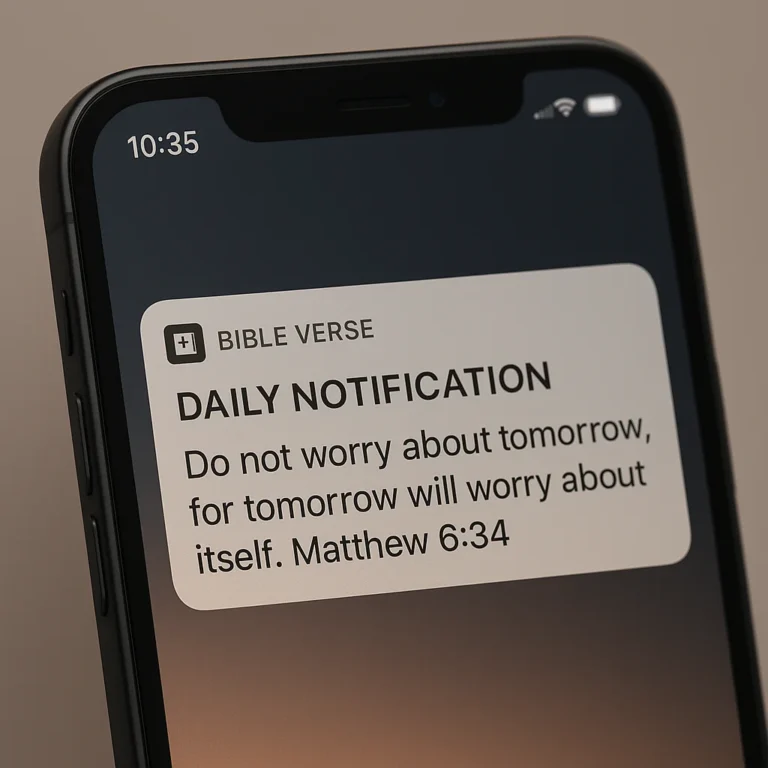
- Matthew 6:34: “Therefore do not worry about tomorrow…”
- 1 Peter 5:7: “Cast all your anxiety on him because he cares for you.”
- Philippians 4:6-7: “Do not be anxious about anything…”
How can I incorporate daily Bible verse meditation into my morning routine?
- Habit Stacking: Meditate immediately after a habit you already do (e.g., brushing teeth, pouring coffee).
- Prepare the Night Before: Choose your verse the night before so you don’t waste time deciding in the morning.
- Set a Timer: Start with 5 minutes to avoid feeling overwhelmed.
- Create a Space: Have a dedicated spot with your Bible, journal, and pen ready.
- Start Small: Don’t aim for an hour. Consistency with 5 minutes is better than inconsistency with an hour.
📚 Reference Links and Sources
- Our Daily Bread Ministries. “How to Meditate on Scripture.” https://ourdailybread.org/resources/how-to-meditate-on-scripture/
- Our Daily Bread Ministries. “The Benefits of Biblical Meditation.” https://ourdailybread.org/resources/the-benefits-of-biblical-meditation/
- Anxious Faith. “Filling Our Bellies with the Bible: A Guide to Biblical Meditation.” https://www.anxiousfaith.org/blog/filling-our-bellies-with-the-bible-a-guide-to-biblical-meditation
- Willow Creek Association. Follow Me: The Surprising Truth About Spiritual Growth by Greg L. Hawkins and Cally Parkinson.
- Crossway. The ESV Study Bible. https://www.crossway.org/
- Olive Tree. Bible Software & Resources. https://www.olivetree.com/
- Faithlife (Logos). Logos Bible Software. https://www.logos.com/
- YouVersion. The Bible App. https://www.youversion.com/