Support our educational content for free when you purchase through links on our site. Learn more
25 Short Bible Verses for Anxiety and Stress 🌿


Some of the best short Bible verses for daily reflection when you’re facing anxiety and stress are Psalm 56:3, Matthew 11:28, and Philippians 4:6–7. They remind us that fear can be brought honestly to God, that rest is offered to the weary, and that prayer can make room for peace—even when life hasn’t suddenly become simple.
What are some short Bible verses for daily reflection that can help with anxiety and stress? Start with one that speaks to what you’re feeling, read it in context, and return to it gently. A verse isn’t a magic switch or a test of faith; it can be a steady reminder to pause, pray, seek support, and take the next wise step.
We’ve found that a single familiar line can be easier to carry through a tense day than a long reading plan. Try choosing one verse in the morning, writing down a phrase that stands out, and asking, “What might this help me remember today?” For more daily reading ideas, see our guide to short devotionals for today.
Key Takeaways
- Start with a short, relevant verse: Psalm 56:3, Matthew 11:28, and Philippians 4:6–7 are helpful places to begin.
- Read the surrounding passage: Context helps you understand what a verse promises—and what it doesn’t.
- Reflect without pressure: Read slowly, name what you’re feeling, and turn the verse into an honest prayer or journal prompt.
- Faith and support can work together: Scripture may offer spiritual comfort, but persistent or severe anxiety also deserves appropriate professional care.
- Take one next step: Pause, ask for help, make a practical plan, or return to the verse when worry rises.
Table of Contents
- ⚡️ Quick Tips and Facts: Short Bible Verses for Anxiety and Stress
- 📖 What the Bible Says About Anxiety, Worry, and Stress
- 🌿 25 Short Bible Verses for Daily Reflection and Calm
- 1. Philippians 4:6–7 — Pray Instead of Worry
- 2. 1 Peter 5:7 — Give Your Cares to God
- 3. Matthew 11:28 — Come to Jesus for Rest
- 4. Psalm 46:10 — Be Still and Remember God
- 5. Isaiah 41:10 — Do Not Be Afraid
- 6. Psalm 23:1 — The Lord Is My Shepherd
- 7. John 14:27 — Receive the Peace of Christ
- 8. Psalm 34:4 — Seek God When You’re Afraid
- 9. Proverbs 3:5 — Trust God With What You Don’t Know
- 10. Isaiah 26:3 — Keep Your Mind on God
- 11. Psalm 55:22 — Let God Sustain You
- 12. Matthew 6:34 — Take Today One Day at a Time
- 13. Joshua 1:9 — Be Strong and Courageous
- 14. Psalm 94:19 — Find Comfort in God’s Consolation
- 15. Romans 8:28 — Remember God Is at Work
- 16. Psalm 121:1–2 — Look to the Maker of Heaven and Earth
- 17. 2 Timothy 1:7 — Remember God Gives Strength
- 18. Psalm 27:1 — The Lord Is Your Light
- 19. Lamentations 3:22–23 — Receive Fresh Mercy Each Morning
- 20. Zephaniah 3:17 — Rest in God’s Love
- 21. Psalm 62:1 — Be Still Before God
- 22. Romans 15:13 — Ask God for Hope and Peace
- 23. Hebrews 13:6 — The Lord Is Your Helper
- 24. Psalm 56:3 — Trust God When Fear Comes
- 25. Exodus 14:14 — Let God Fight for You
- 🧭 How to Choose a Bible Verse for What You’re Feeling
- Verses for panic, fear, and racing thoughts
- Verses for uncertainty and difficult decisions
- Verses for exhaustion, grief, and emotional overwhelm
- Verses for bedtime anxiety and restless nights
- 🕊️ A Simple Daily Bible Reflection for Stress Relief
- A five-minute Scripture and prayer routine
- How to meditate on a short Bible verse
- Journaling prompts for anxiety and worry
- 📱 Practical Ways to Remember and Share Encouraging Bible Verses
- 💛 A Gentle Note About Anxiety, Faith, and Getting Support
- 🙏 A Short Prayer for Anxiety and Stress
- Conclusion
- Recommended Links
- FAQ
- What is a good short Bible verse for anxiety?
- What Bible verse helps calm stress and worry?
- Can reading Scripture help with anxiety?
- How can I use a Bible verse during a panic attack?
- What Bible verse should I read before bed?
- How do I memorize short Bible verses for daily encouragement?
- Should I seek professional help for anxiety even if I pray?
- Reference Links
⚡️ Quick Tips and Facts: Short Bible Verses for Anxiety and Stress
A short verse can give you a steady thought to return to when worry starts writing the day’s script. If you’re building a gentle daily reading habit, our guide to 📖 what is the short devotional for today? offers more ways to pair Scripture with a few quiet minutes.
| Quick question | Helpful answer |
|---|---|
| Where should I start? | Try Philippians 4:6–7, Psalm 56:3, or Matthew 11:28. |
| How often should I reflect? | Once a day is a good start; revisit a verse when you need it. |
| What should I do with a verse? | Read it slowly, notice one phrase, connect it to your situation, then pray or journal. |
| Does a Bible verse replace mental-health care? | No. Scripture can support spiritual reflection, but it is not a substitute for professional assessment or treatment. |
| Which translation should I use? | Choose one you understand and read the surrounding passage for context. Compare translations using Bible Gateway or the YouVersion Bible App. |
A practical way to use a short verse
- Pause: Take one slow breath and notice what you’re feeling.
- Read: Say the verse once, without rushing.
- Reflect: Ask, “What does this reveal about God, and what might it invite me to do now?”
- Respond: Pray honestly, write a sentence, or take one practical next step.
- Repeat: Return to the verse later—not as a magic formula, but as a reminder.
For more Scripture organized by theme, browse Bible Verses by Topic and Bible Verses about Reflection.
One important distinction: Biblical encouragement does not mean you must feel calm immediately. Philippians 4 describes prayer, gratitude, and God’s peace; it does not promise that anxiety will vanish on command. We can take Scripture seriously while also taking symptoms seriously.
📖 What the Bible Says About Anxiety, Worry, and Stress
The Bible speaks about fear, trouble, grief, and anxious thoughts with striking honesty. The Psalms include cries for help; Jesus acknowledges life’s real concerns; Paul urges prayer while writing amid hardship. Scripture offers comfort, wisdom, and a relationship with God—not a scolding for having human emotions.
Anxiety in context: comfort without oversimplifying
A frequently shared verse is Philippians 4:6–7. Read alongside the letter, its invitation to pray and give thanks is part of a wider call to rejoice, practice gentleness, and attend to what is good. The promised peace “will guard” believers’ hearts and minds; that image suggests protection amid pressure, not necessarily the instant removal of every difficult feeling. Read the full chapter at Bible Gateway.
Jesus’ words in Matthew 6:25–34 likewise sit within a teaching about trust, priorities, and God’s care. “Do not worry about tomorrow” does not mean ignore tomorrow’s responsibilities. It encourages us not to let imagined future problems consume the present. You can read the passage in context at Bible Gateway.
A balanced Christian perspective
| Perspective | What it contributes | What to avoid |
|---|---|---|
| Spiritual reflection | Prayer, Scripture, community, and hope can help people make meaning and feel supported. | Suggesting that anxiety proves weak faith. |
| Practical action | Planning, rest, boundaries, and asking for help can address real stressors. | Treating prayer as a reason to avoid useful action. |
| Professional care | A qualified clinician can assess symptoms and discuss evidence-based support. | Assuming a Bible verse alone is sufficient for persistent or severe symptoms. |
A Christian can pray and speak with a doctor. Those are not rival loyalties. The National Institute of Mental Health explains that anxiety disorders can involve persistent, excessive fear or worry and are treatable. For a Christian perspective on Scripture and worry, compare this with David Jeremiah’s discussion of overcoming anxiety: the pastoral emphasis is on trusting God’s promises, while clinical care addresses health needs. Both perspectives can have a place.
🌿 25 Short Bible Verses for Daily Reflection and Calm
Wording varies by translation, so the quotations below are brief excerpts rather than claims that every Bible edition uses identical phrasing. Check the full passage in your preferred translation. These verses are selected for reflection on peace, courage, care, hope, and the next faithful step.
| What you’re facing | Verses to consider |
|---|---|
| Racing thoughts or fear | Psalm 56:3; Isaiah 41:10; Psalm 27:1 |
| Feeling overwhelmed | Matthew 11:28; Psalm 55:22; 1 Peter 5:7 |
| Uncertainty about tomorrow | Matthew 6:34; Proverbs 3:5 |
| Neding peace | John 14:27; Philippians 4:6–7 |
| Feeling low or alone | Psalm 23:1; Psalm 34:4; Lamentations 3:22–23 |
1. Philippians 4:6–7 — Pray Instead of Worry
Paul encourages believers to bring their requests to God through prayer and thanksgiving, and describes God’s peace as guarding their hearts and minds. This passage can help when your thoughts are circling the same problem.
Reflection: What is one specific concern you can name honestly in prayer? What is one thing, however small, for which you can give thanks alongside it?
Context matters: The passage does not say, “If you worry, you are failing.” It invites you to bring what troubles you to God. Read Philippians 4:4–9.
2. 1 Peter 5:7 — Give Your Cares to God
This verse invites believers to cast their anxieties on God because God cares for them. The image is active: handing over a burden rather than pretending it isn’t there.
Reflection: Name the worry you’re carrying. Then ask what part belongs in prayer, what part needs action, and what part is beyond your control. See 1 Peter 5:6–11 for the surrounding call to humility and steadfastness.
3. Matthew 11:28 — Come to Jesus for Rest
Jesus invites the weary and burdened to come to him for rest. The invitation is not reserved for people who have already solved everything or mastered their emotions.
Reflection: What would a small act of rest look like today—pausing, asking someone for help, or setting down a nonurgent task? Read Matthew 11:28–30.
4. Psalm 46:10 — Be Still and Remember God
“Be still” is often used as a personal calming phrase. In the psalm’s larger setting, it also calls people to recognize God’s power amid upheaval. Stillness here is not a demand to suppress emotion.
Reflection: Pause for a few breaths, then read Psalm 46 as a whole. What does the psalm say about refuge, trouble, and God’s presence?
5. Isaiah 41:10 — Do Not Be Afraid
Isaiah 41:10 offers reassurance of God’s presence, strength, help, and sustaining care. For someone facing uncertainty, its repeated promises can serve as a compact reminder that fear does not have to be faced alone.
Reflection: Which phrase do you most need today: “I am with you,” “I will strengthen you,” or “I will help you”? Read Isaiah 41 to understand the passage’s setting.
6. Psalm 23:1 — The Lord Is My Shepherd
The opening line of Psalm 23 pictures God as a shepherd who guides and cares for the psalmist. It offers a language of trust, not a guarantee that life will contain no valleys.
Reflection: What kind of guidance or care do you need right now? Continue through Psalm 23, where comfort appears even in the darkest valley.
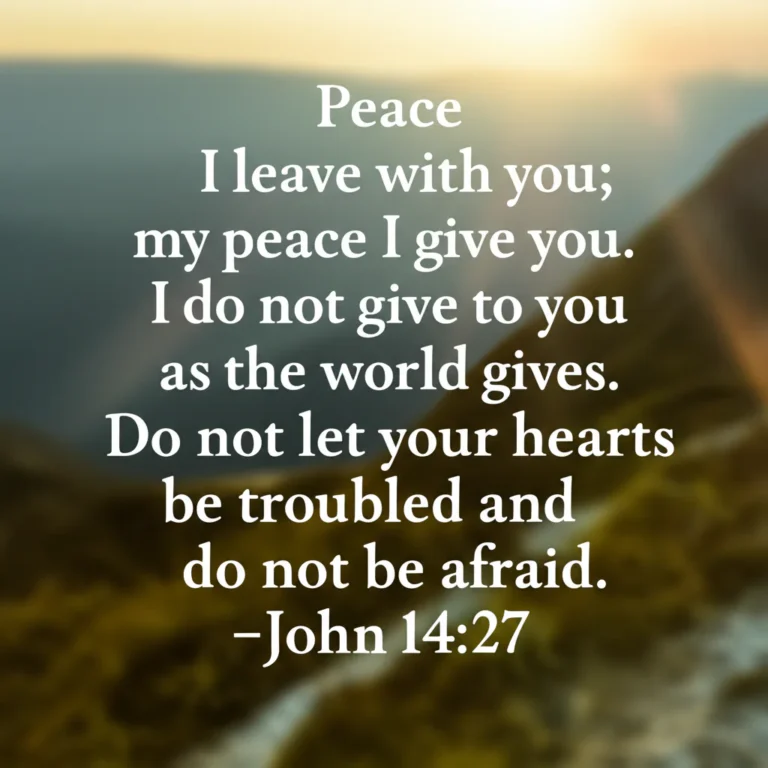
7. John 14:27 — Receive the Peace of Christ
Jesus speaks of giving peace to his disciples as he prepares them for his departure. The peace he offers is rooted in his presence and relationship with them, not in a promise that circumstances will always feel easy.
Reflection: What changes when you define peace as being held by Christ rather than having every problem disappear? Read John 14:25–31.
8. Psalm 34:4 — Seek God When You’re Afraid
The psalmist says he sought the Lord and was delivered from fear. The verse makes room for seeking help while afraid; it does not say a person must become fearless before praying.
Reflection: Try turning the verse into a simple prayer: “God, I’m afraid about __. Help me seek you and take the next wise step.” Read Psalm 34, which moves between praise, hardship, and trust.
9. Proverbs 3:5 — Trust God With What You Don’t Know
Proverbs 3:5–6 calls readers to trust God and seek divine guidance rather than relying only on their own understanding. It is not an instruction to stop thinking; the surrounding verses praise wisdom and discernment.
Reflection: Where might you need both prayer and sound advice? Read Proverbs 3:1–8.
10. Isaiah 26:3 — Keep Your Mind on God
Isaiah 26:3 connects steadfast trust with peace. It can be a helpful verse to repeat when attention keeps snapping back to frightening possibilities.
Reflection: Choose one short phrase from the verse and return to it gently. If your thoughts wander, that is not a failure; simply begin again. Read Isaiah 26.
11. Psalm 55:22 — Let God Sustain You
The psalm invites people to cast their cares on the Lord and trust in God’s sustaining care. The surrounding psalm, however, is emotionally intense: the writer describes betrayal and distress. Comfort does not require pretending pain is tidy.
Reflection: What burden can you name before God today? Is there also someone trustworthy you can tell? Read Psalm 55.
12. Matthew 6:34 — Take Today One Day at a Time
Jesus teaches his listeners not to be consumed by tomorrow’s worries. This is a call to live faithfully in the present, not to ignore planning, responsibilities, or foreseeable risks.
Reflection: What is today’s next manageable task? Write it down, and leave tomorrow’s questions for tomorrow where possible. Read the full teaching in Matthew 6:25–34.
13. Joshua 1:9 — Be Strong and Courageous
Joshua receives encouragement as he prepares to lead Israel after Moses’ death. The verse grounds courage in God’s presence; it is not a promise that every challenge will feel easy.
Reflection: What would courage look like as one small, values-aligned action—not as the absence of fear? Read Joshua 1 for the leadership context.
14. Psalm 94:19 — Find Comfort in God’s Consolation
This verse acknowledges that anxious thoughts can multiply and points to God’s consolation as a source of joy. That honesty matters: Scripture does not treat inner turmoil as imaginary or shameful.
Reflection: What comfort helps you feel less alone—prayer, a trusted friend, pastoral care, or professional support? Read Psalm 94.
15. Romans 8:28 — Remember God Is at Work
Romans 8:28 is often quoted during hardship. In context, Paul is speaking to suffering believers about hope, the Spirit’s help, and God’s purposes—not claiming that every painful event is good in itself.
Reflection: Where might you need hope without minimizing what hurts? Read Romans 8:18–39.
16. Psalm 121:1–2 — Look to the Maker of Heaven and Earth
The psalmist looks beyond the hills to God, the maker of heaven and earth, as the source of help. The verse can remind us to lift our attention beyond the immediate fear without denying it.
Reflection: When stress narows your focus, what helps you regain perspective? Read Psalm 121.
17. 2 Timothy 1:7 — Remember God Gives Strength
Paul reminds Timothy that God’s gift is not a spirit of fear, but of power, love, and self-discipline—or sound judgment, depending on translation. The verse is an encouragement toward faithful courage, not a reason to shame people experiencing anxiety.
Reflection: What would power expressed through love look like in your situation? What would wise self-control look like? Read 2 Timothy 1:3–14.
18. Psalm 27:1 — The Lord Is Your Light
Psalm 27 begins with confidence in God as light, salvation, and stronghold, while later expressing longing and fear. That blend makes it especially honest for people who trust God and still feel unsettled.
Reflection: Which line from Psalm 27 speaks to you today—the confident opening or the plea for help later in the psalm?
19. Lamentations 3:22–23 — Receive Fresh Mercy Each Morning
These lines speak of God’s steadfast love and mercies in a book written amid devastation. Their hope does not erase the grief surrounding them; it appears within it.
Reflection: What might “new mercies” mean in a difficult season—a little strength, a kind person, or the chance to try again? Read Lamentations 3:19–33.
20. Zephaniah 3:17 — Rest in God’s Love
Zephaniah describes God as present among the people, mighty to save, and rejoicing over them. This image can counter the feeling that distress makes you unworthy of care.
Reflection: Let the verse’s focus be God’s presence and love rather than pressure to feel cheerful. Read Zephaniah 3:14–20.
21. Psalm 62:1 — Be Still Before God
Psalm 62 expresses quiet trust in God as the psalmist faces threats. Its stillness is a posture of waiting on God, not a rule that you must be silent about suffering.
Reflection: What would it mean to wait with support instead of handling everything alone? Read Psalm 62.
22. Romans 15:13 — Ask God for Hope and Peace
Paul’s blessing asks that the God of hope fill believers with joy and peace as they trust, so they may abound in hope through the Holy Spirit.
Reflection: You can turn the verse into a prayer for yourself or someone you love. Read Romans 15:7–13.
23. Hebrews 13:6 — The Lord Is Your Helper
Hebrews 13:6 expresses confidence that God is a helper, even in the face of human opposition. It can offer reassurance when you feel exposed or uncertain.
Reflection: Where could you ask for help from God and from a person you trust? Read Hebrews 13:1–8.
24. Psalm 56:3 — Trust God When Fear Comes
“When I am afraid, I put my trust in you” is refreshingly direct: fear is acknowledged, then met with trust. It does not demand that fear disappear first.
Reflection: Try saying, “I am afraid about __, and I choose to turn toward God with it.” Read Psalm 56. The verse is also highlighted in David Jeremiah’s collection on worry and anxiety.
25. Exodus 14:14 — Let God Fight for You
Moses speaks these words to Israel at the Red Sea, when the people face a specific crisis and feel trapped. This verse is not a blanket instruction to stay passive in every situation; its original story is about God delivering Israel.
Reflection: Is your next step to wait, act, ask for help, or make a safety plan? Read Exodus 14 before applying the verse to your own circumstances.
🧭 How to Choose a Bible Verse for What You’re Feeling
A verse can be more useful when it speaks to the kind of pressure you’re experiencing. We suggest starting with the emotion or need, then reading the verse in its larger passage. For more themed collections, visit Bible Verses for Strength and Bible Verses by Topic.
| If you’re feeling… | Try… | A gentle reflection question |
|---|---|---|
| Afraid or on edge | Psalm 56:3; Isaiah 41:10 | What would help me feel accompanied as I face this? |
| Overloaded | Matthew 11:28; 1 Peter 5:7 | What can I hand over, delegate, or address one step at a time? |
| Caught in tomorrow’s worries | Matthew 6:34 | What is genuinely mine to do today? |
| Lonely or discouraged | Psalm 23:1; Romans 15:13 | Who could I contact for companionship or support? |
| Unsure what to do | Proverbs 3:5–6; Psalm 121:1–2 | What wise advice or practical information do I need? |
Verses for panic, fear, and racing thoughts
When thoughts race, choose a brief verse with simple language, such as Psalm 56:3 or John 14:27. Read it slowly and keep your attention gentle. You do not need to force yourself to feel better immediately.
If panic is intense, recurring, or affecting daily life, consider speaking with a health professional. The NIMH anxiety disorders resource explains symptoms and treatment options. Scripture can be part of your support, but it should not be used to diagnose or treat a health condition on its own.
Verses for uncertainty and difficult decisions
Try Proverbs 3:5–6 or Psalm 121:1–2. Pair reflection with ordinary wisdom: gather reliable information, consider consequences, pray, and consult trustworthy people.
Helpful question: “What do I know, what do I not know, and what is one responsible next step?” Trusting God does not require pretending you have no questions.
Verses for exhaustion, grief, and emotional overwhelm
Matthew 11:28, Psalm 55:22, and Lamentations 3:22–23 can speak to tiredness and pain. Read them without rushing to a silver lining. Some passages offer comfort by making room for lament first.
If you’re supporting someone else, a listening ear may be more helpful than an immediate verse. Proverbs 12:25 recognizes that a good word can lift a heavy heart; in practice, that may begin with saying, “I’m here. Do you want to talk?”
Verses for bedtime anxiety and restless nights
Psalm 4:8 or Psalm 23 may be a calming passage to read before bed. Try keeping a Bible or a note with one verse nearby and writing down tomorrow’s practical tasks so your mind does not have to rehearse them repeatedly.
If sleep problems persist, consult a healthcare professional. The NHS guidance on anxiety describes support and treatment options. A bedtime verse can be comforting, but ongoing sleep disruption deserves attention too.
🕊️ A Simple Daily Bible Reflection for Stress Relief
A daily Scripture habit need not become another item on an already crowded to-do list. Five thoughtful minutes are a perfectly respectable beginning. For more ways to connect a passage with prayer and learning, explore our Bible Study Guides and Bible Verses about Reflection.
A five-minute Scripture and prayer routine
- Setle in: Sit somewhere comfortable. Take a moment to notice what is on your mind.
- Choose one verse: Pick a verse connected to your present need, not the verse you think you’re “supposed” to choose.
- Read it twice: Use a translation you understand. Compare another translation if a phrase feels unclear.
- Notice one word or image: Is it “rest,” “help,” “peace,” “mercy,” or something else?
- Pray honestly: Tell God what is hard. You do not need polished language.
- Choose one response: Write a next step, ask someone for support, or simply carry the verse with you.
- Close gently: If you still feel anxious, that does not mean the reflection failed.
How to meditate on a short Bible verse
Christian meditation means attending to Scripture and reflecting on its meaning—not emptying the mind by force. One simple method is to read a verse aloud, notice what stands out, consider its context, and respond in prayer.
For example, with Psalm 56:3:
- Read: “When I am afraid…”
- Notice: The psalm names fear instead of hiding it.
- Reflect: What am I afraid of today?
- Respond: What might trusting God look like alongside a practical step?
- Return: Repeat the phrase later if it helps you refocus.
For helpful background on interpretation and study, use a reputable study Bible or compare passages through Bible Gateway and YouVersion.
Journaling prompts for anxiety and worry
A journal can help turn a blur of worry into concerns you can name. Try one or two prompts, rather than turning reflection into a 40-question exam.
- What am I feeling right now?
- What situation or thought seems to be contributing to it?
- What does this passage say in its original context?
- What comfort, challenge, or invitation do I notice?
- What is within my control today?
- Who could offer wise, compassionate support?
- What would I say to a friend feeling the same way?
Tip: Record the date and verse, but do not grade your emotions. A journal is a witness to your life, not a spiritual report card.
📱 Practical Ways to Remember and Share Encouraging Bible Verses
The best method is the one you’ll actually use. A handwritten note, a phone reminder, or reading with a friend can all help keep a verse close.
| Method | Why it can help | Watch-out |
|---|---|---|
| Write a verse on a note card | Easy to place by a desk, mirror, or bedside table. | Include the reference so you can revisit the context. |
| Set a gentle phone reminder | Makes a verse easy to revisit during the day. | Choose a notification time that won’t add pressure. |
| Use a Bible app | YouVersion offers reading plans, audio, and reminders. See the official app page. | App notifications are optional; you are allowed to turn them off. |
| Share a verse with a friend | Can open a supportive conversation. | Ask whether the person wants Scripture or simply a listening ear. |
| Keep a reflection journal | Helps you notice patterns and recurring needs. | Avoid treating emotional change as a measure of faith. |
For verse designs and shareable backgrounds, explore Bible Verse Backgrounds. When sending a verse to someone under stress, add a personal line such as, “I’m thinking of you. Would you like to talk?” That small sentence can make the difference between encouragement and a forwarded message that feels like a homework assignment. 📩
💛 A Gentle Note About Anxiety, Faith, and Getting Support
Anxiety is not proof that you have failed spiritually. People of faith may experience anxiety, and seeking support can be a wise response. Prayer, pastoral care, practical changes, and clinical treatment can complement one another.
The National Institute of Mental Health describes anxiety disorders as conditions involving more than occasional worry and notes that treatments are available. If anxiety is persistent, worsening, interfering with work, relationships, sleep, or daily activities, consider speaking with a qualified healthcare professional.
A balanced approach can look like this:
- Pray or reflect in a way that feels honest and grounding.
- Talk with someone trustworthy, such as a friend, pastor, counselor, or clinician.
- Seek professional assessment if symptoms are severe or persistent.
- Get urgent help if you may harm yourself or someone else. In the United States, call or text 988 for the 988 Suicide & Crisis Lifeline; if there is immediate danger, contact local emergency services.
A pastor can offer spiritual care. A clinician can assess mental-health symptoms. One person may sometimes fill more than one supportive role, but neither should discourage appropriate help.
🙏 A Short Prayer for Anxiety and Stress
God of peace,
I bring you the worries I can name and the ones I can barely explain.
Help me remember that I am not alone.
Give me wisdom for the next step, courage to ask for help,
and rest where I can receive it.
Hold me in your care today.
Amen.
If prayer feels difficult, keep it simple: “God, help me with this.” Honest words count. For more encouragement and passages to reflect on, browse Bible Verses for Strength and the Bible Study Guides collection.