Support our educational content for free when you purchase through links on our site. Learn more
17 Daily Bible Verse Memorization Techniques 🧠

The most effective daily Bible verse memorization techniques combine short practice, active recall, and spaced review: read a verse in context, try to recite it without looking, then revisit it over the next few days. Start small and stay consistent—one verse learned thoughtfully beats a long list you can’t remember next week.
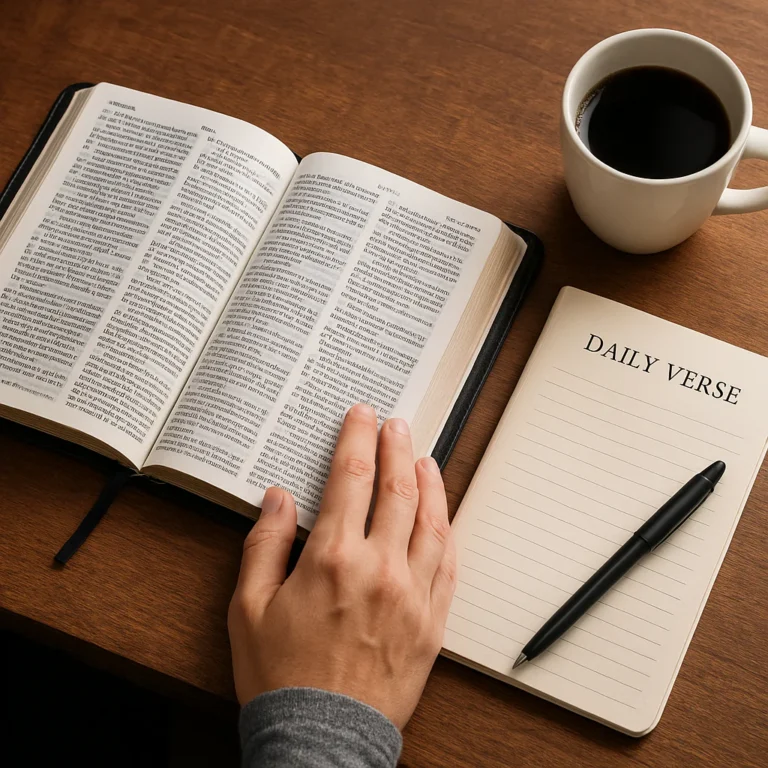
When we teach Scripture memory, we often see the same snag: someone rereads a verse again and again, feels familiar with it, then draws a blank when the page is covered. That’s why our go-to routine includes a moment of retrieval: hide the verse, recall what you can, and check the wording. It turns practice into a conversation with the text, not just a staring contest.
Choose a translation you understand, keep the passage’s context in view, and pair practice with a habit you already have. Forget a day? No guilt spiral required. Pick up where you left off.
Key Takeaways
- Use active recall: Read the verse, cover it, recite what you remember, and check for errors.
- Review over time: Revisit verses the next day, later in the week, and again in the weeks ahead.
- Learn meaning alongside wording: Read the surrounding passage and note its main idea.
- Keep the routine realistic: A few focused minutes attached to a daily habit can be easier to maintain.
- Choose methods that fit you: Try speaking, writing, audio, flashcards, music, or practicing with a friend.
- Treat missed days as normal: Resume with a short review; Scripture memory is a practice, not a perfection test.
Table of Contents
- ⚡️ Quick Tips and Facts for Daily Bible Verse Memorization
- 📖 Why Memorize Scripture? Biblical Roots and Benefits
- What the Bible Says About Hiding God’s Word in Your Heart
- How Scripture Memorization Supports Faith, Prayer, and Everyday Life
- 🧭 How to Choose a Daily Bible Verse
- Choose Verses for Your Season, Goals, or Bible Study
- Pick a Bible Translation You Can Understand and Remember
- Memorize a Verse in Context, Not in Isolation
- 🧠 17 Daily Bible Verse Memorization Techniques That Work
- 1. Read the Verse Aloud More Than Once
- 2. Break the Verse into Short Phrases
- 3. Write It by Hand
- 4. Cover, Recall, and Check
- 5. Use Spaced Repetition
- 6. Review Yesterday’s Verse Before Learning Today’s
- 7. Create a Verse Memory Card
- 8. Display Scripture Where You’ll See It
- 9. Pair the Verse with a Daily Habit
- 10. Use Rhythm, Music, or a Simple Tune
- 11. Record Yourself and Listen Back
- 12. Add Hand Motions or Visual Associations
- 13. Memorize with a Friend or Family Member
- 14. Say the Verse in Your Own Words, Then Recite It Exactly
- 15. Use First-Letter Prompts
- 16. Practice During Everyday Moments
- 17. Connect the Verse to Prayer and Real Life
- ⏱️ Build a Daily Scripture Memorization Routine
- A Five-Minute Bible Verse Practice
- A 10-Minute Routine for Deper Review
- Morning, Evening, or Both? Choosing a Time That Sticks
- 🗓️ Make a Bible Verse Memory Plan You Can Maintain
- Daily, Weekly, and Monthly Review Schedules
- How Many Verses Should You Memorize Each Week?
- Printable Memory Lists, Journals, and Verse Cards
- 📱 Bible Memorization Apps and Helpful Tools
- Using Bible Apps, Audio Bibles, and Digital Flashcards
- Choosing Between Paper and Digital Methods
- 🔁 How to Review Scripture and Keep Verses in Long-Term Memory
- A Simple Spaced-Repetition Review Calendar
- What to Do When You Forget a Verse
- How to Memorize Longer Bible Passages
- 👨 👩 👧 Bible Verse Memorization for Kids, Families, and Groups
- Fun Scripture Memory Games for Children
- Family Devotions and Group Recitation Ideas
- Accessible Techniques for Different Learning Needs
- 🚧 Common Scripture Memorization Challenges and How to Solve Them
- “I Don’t Have Time”
- “I Keep Forgeting the Words”
- “I’m Memorizing but Not Understanding”
- “I Missed a Day—Should I Start Over?”
- ✅ How to Know Your Bible Verse Memorization Is Working
- 🙏 Turn Memorized Verses into Prayer and Practice
- 🏁 Conclusion
- 🔗 Recommended Links
- ❓ FAQ
- What is the easiest way to memorize a Bible verse?
- How can I memorize one Bible verse every day?
- How long should it take to memorize a verse?
- Is it better to memorize Scripture word for word?
- Which Bible translation is best for memorization?
- How do I memorize Bible verses and remember them long term?
- Can I memorize Scripture if I have a poor memory?
- Should I memorize a verse’s reference too?
- 📚 Reference Links
⚡️ Quick Tips and Facts for Daily Bible Verse Memorization
For a daily Scripture prompt to start your routine, visit our Bible Verse Daily guide. At Bible Verse Daily™, we recommend keeping the practice small, meaningful, and repeatable: one verse, a few focused minutes, and regular review.
| Quick fact | Practical takeaway |
|---|---|
| Recall beats rereading alone. Trying to remember information strengthens learning more effectively than simply looking at it again, according to research summarized by The Learning Scientists. | Read the verse, hide it, recite what you can, then check the wording. |
| Spacing practice helps retention. Reviewing material across multiple sessions supports long-term learning, as explained by the American Psychological Association. | Review today’s verse tomorrow, later in the week, and again the following week. |
| Understanding matters. Scripture is more than a string of words to store; its setting and meaning shape how we remember and apply it. | Read the surrounding passage and note the verse’s main idea. |
| Short and steady is a strong start. A few attentive minutes each day are often easier to sustain than an ambitious plan that collapses by Thursday. | Begin with a short verse or a few lines of a passage. |
| There is no single best method for everyone. Speaking, writing, listening, and visual prompts provide different routes into practice. | Test two techniques for a week and keep the one you’ll actually use. |
A simple starter routine:
- Choose a verse that fits your current study or season of life.
- Read the verse and a little of its context.
- Say it aloud in short phrases.
- Cover the text and retrieve as much as you can.
- Check the wording, correct mistakes, and review it tomorrow.
A useful distinction: memorization is not a measure of spiritual maturity. Some people retain exact wording quickly; others need more repetition or benefit from audio, writing, or accessibility tools. The goal is not to win a Bible-memory race. It is to know Scripture faithfully enough to reflect on it and live it.
📖 Why Memorize Scripture? Biblical Roots and Benefits
What the Bible Says About Hiding God’s Word in Your Heart
Scripture memory has deep biblical roots. Psalm 119:11 says, “I have stored up your word in my heart, that I might not sin against you” (ESV Bible). The image is not of collecting religious trivia; it is of treasuring God’s instruction so it can shape a person’s choices.
Other passages connect the Word with meditation, teaching, and faithful living:
- Deuteronomy 6:6–7 describes keeping God’s commands in the heart and speaking of them in ordinary life (ESV Bible).
- Joshua 1:8 connects meditation on God’s instruction with obedience and wise action (ESV Bible).
- Colossians 3:16 calls believers to let the word of Christ dwell richly among them (ESV Bible).
- Matthew 4:1–11 portrays Jesus answering temptation with Scripture (ESV Bible).
Christian traditions differ in how they describe the relationship between memorization, spiritual formation, and the work of the Holy Spirit. We can affirm both sides without turning practice into a formula: careful repetition trains attention and recall; spiritual growth is not earned by perfect recitation.
How Scripture Memorization Supports Faith, Prayer, and Everyday Life
A memorized verse can give you language for prayer, help you recall a passage during a hard moment, or invite a second look at what the Bible says. It can also help you notice themes across a book of Scripture.
For more focused reading, explore our Bible Study Guides, Bible Verses by Topic, and Bible Verses for Strength. If your goal is reflective prayer, you may also find our Bible Verses about Reflection helpful.
Keep the context attached. A verse memorized without its setting can be misunderstood or applied carelessly. Read what comes before and after it, identify who is speaking, and ask what the passage meant in its original context before asking how it speaks to you now.
🧭 How to Choose a Daily Bible Verse
Choose Verses for Your Season, Goals, or Bible Study
You might choose a verse because it relates to a study you are already doing, a theme you want to explore, or a passage that has stayed with you. All are reasonable starting points. The strongest choice is usually one you want to return to—not necessarily the verse that looks most striking on a social graphic.
Try one of these approaches:
- Follow a Bible-book study: Memorize a key line from the passage you are reading.
- Choose a theme: Explore a topic through a group of passages using a study Bible or concordance.
- Learn a whole thought: Select a complete sentence or short paragraph rather than clipping a phrase mid-argument.
- Use a daily prompt thoughtfully: A daily quote can be a helpful invitation, but look up the passage and read its context.
Pick a Bible Translation You Can Understand and Remember
Use a translation that is clear to you and appropriate for your purpose. Some translations prioritize a more word-for-word rendering, while others aim for more natural contemporary English. Those approaches involve different trade-offs; compare translations with a trusted study resource rather than assuming one method is automatically best. The American Bible Society’s translation overview is a useful starting point.
| Consideration | What to ask |
|---|---|
| Clarity | Can I explain the verse in my own words without changing its meaning? |
| Consistency | Am I using the same translation for this passage throughout my practice? |
| Church tradition | Does my church or study group use a preferred translation? |
| Purpose | Am I memorizing exact wording, comparing translations, or studying the idea? |
If you want to recite a verse word for word, choose one translation and stick with it. Comparing translations can deepen understanding, but shifting between them while learning exact wording may create avoidable mix-ups.
Memorize a Verse in Context, Not in Isolation
Before committing a line to memory, read the paragraph or section around it. Ask:
- Who is speaking, writing, or being addressed?
- What problem, promise, command, or idea is the passage discussing?
- How does this verse connect to the sentences around it?
- What would be a faithful application—and what would be stretching the text?
This habit helps prevent a common mistake: remembering the words accurately while misusing the message. A study Bible or reliable commentary can help clarify unfamiliar historical and literary details.
🧠 17 Daily Bible Verse Memorization Techniques That Work
There is no need to use all 17 techniques at once. Choose two or three complementary methods—for example, read aloud, retrieve from memory, and review tomorrow. If the first attempt feels stubborn, that does not mean you are “bad at memorizing.” It may simply mean your approach needs a tune-up.
1. Read the Verse Aloud More Than Once
Read the verse slowly, paying attention to punctuation and meaning. Then read it again without rushing. Speaking engages your voice and hearing, while careful reading helps you notice the structure of the sentence.
Try this: Read the whole verse once, then read it phrase by phrase. Pause at natural breaks. Don’t repeat it so mechanically that the words stop making sense.
2. Break the Verse into Short Phrases
Chunking turns a long sentence into smaller pieces that are easier to learn and connect.
- Mark the natural phrase breaks.
- Memorize the first phrase.
- Add the second phrase and recite both together.
- Continue adding one phrase at a time.
- Practice the complete verse from the beginning.
For a longer passage, learn one sentence or thought-unit at a time. The links between units matter: use a transition word, repeated image, or change in argument to remember how the passage progresses.
3. Write It by Hand
Write the verse once while looking at it. Then cover it and write as much as you can from memory. Compare your version with the source and correct errors.
Handwriting gives you another way to attend to the words, but it is not a magic shortcut. If writing is uncomfortable or inaccessible, typing, dictation, or audio practice can serve the same learning goal.
4. Cover, Recall, and Check
This is a simple form of active recall:
- Read the verse carefully.
- Hide the text.
- Recite or write what you remember.
- Reopen the text.
- Correct missing or misplaced words.
- Try again after a short pause.
Research reviews on learning show that retrieval practice can support durable recall better than repeated exposure alone; see The Learning Scientists’ guide to retrieval practice. The key is to check your work: confident errors can stick too.
5. Use Spaced Repetition
Instead of repeating the verse 30 times in one sitting and then forgetting it by Monday, return to it across time. Research on learning and memory supports spacing practice across sessions; the APA’s overview of learning and memory explains why distributed learning can be useful.
| Review | Practice |
|---|---|
| First session | Learn the verse in short phrases. |
| Next day | Recite from memory, then check. |
| A few days later | Try again without looking. |
| One week later | Review alongside newer verses. |
| One month later | Recite, revisit context, and renew meaning. |
This is a flexible pattern, not a spiritual law. If you miss a review, simply resume.
6. Review Yesterday’s Verse Before Learning Today’s
Before introducing a new verse, give yesterday’s verse one recall attempt. This protects your older learning from being crowded out by novelty.
Keep a short “review stack” of recent verses. When it grows, rotate through a few at a time instead of restarting your entire list every day.
7. Create a Verse Memory Card
Write the reference one side and the verse on the other. You can also make digital cards in an app such as Anki, which supports spaced-repetition flashcards.
Good card habits:
- Keep one verse or short passage per card.
- Include the translation abbreviation.
- Put the reference on the front if you want to test recall in both directions.
- Mark difficult phrases rather than repeatedly drilling the whole verse from scratch.
8. Display Scripture Where You’ll See It
Put a written verse near a place you naturally pause: a desk, journal, kitchen counter, or bathroom mirror. You can also use a phone lock-screen image, but make sure it does not compete with notifications or safe driving.
A visible prompt is a reminder to practice, not a substitute for recall. After seeing it, cover it and try to say the verse before reading again. For printable inspiration, browse our Bible Verse Backgrounds.
9. Pair the Verse with a Daily Habit
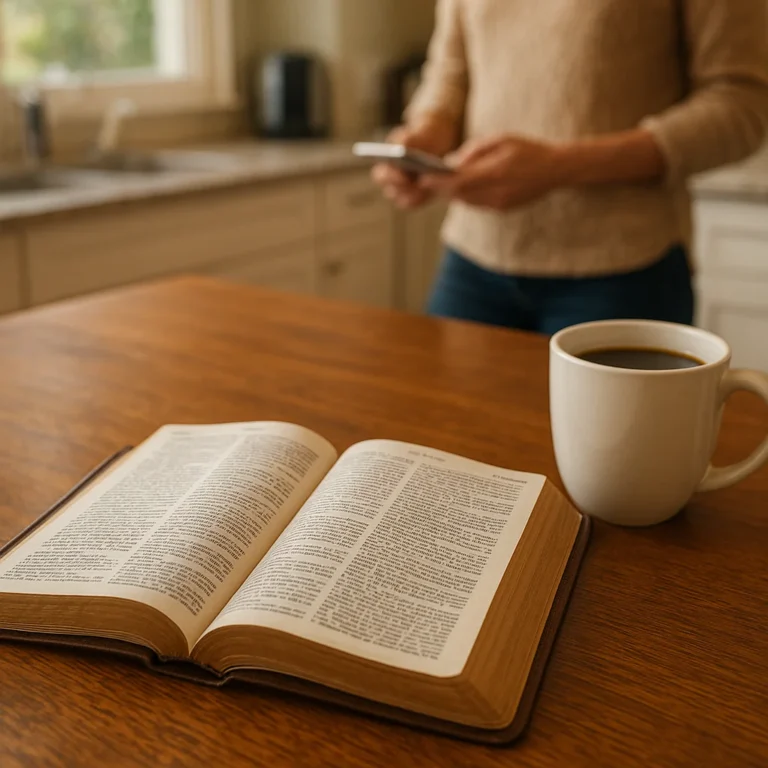
Attach practice to something you already do: after morning coffee, before lunch, or as part of evening prayer. Habit pairing lowers the odds that your plan will depend on remembering to remember.
A practical cue might be: “After I open my Bible in the morning, I’ll review yesterday’s verse.” Pick a cue that happens reliably, not an idealized routine you rarely keep.
10. Use Rhythm, Music, or a Simple Tune
Rhythm can make wording easier to recall. Try a steady spoken cadence, a simple chant, or a familiar melody. Brentwood Baptist’s article on ways to memorize Scripture also recommends using music and repetition.
Keep the tune simple enough that the words remain clear. If the melody changes the wording or makes you remember a paraphrase as the exact verse, check the text before reciting.
11. Record Yourself and Listen Back
Record yourself reading the passage accurately, then listen while walking, tidying, or taking a break. A recording can reinforce familiarity, especially for auditory learners or people who spend time away from a printed Bible.
Safety first: Never read, write, or handle a phone while driving. If you listen in the car, set the audio before you leave and keep your attention on the road.
12. Add Hand Motions or Visual Associations
Create a simple motion or mental picture for each phrase. For example, a verse about walking may bring to mind footsteps; a verse about light may prompt a lamp or sunrise. Use visual cues as memory aids, not as replacements for the passage’s meaning.
If movements are uncomfortable, imagine the picture instead. The best technique is the one that includes you rather than creating another barrier.
13. Memorize with a Friend or Family Member
Take turns saying a phrase, testing one another, or reciting together. A partner can notice a missing word you have learned to glide over.
For a group, keep the tone encouraging. Correct the text kindly, avoid public shaming, and let people use their preferred translation or accessibility supports where possible.
14. Say the Verse in Your Own Words, Then Recite It Exactly
First summarize the verse’s meaning in plain language. Then return to the chosen Bible translation and learn its exact wording. This combines understanding with accurate quotation.
Brentwood Baptist recommends rewording Scripture as a way to help it become familiar, while the Biola article emphasizes repeated reading and attention to a passage’s movement. Both can help, but a paraphrase is not the same thing as a verbatim quotation. Keep the distinction clear.
15. Use First-Letter Prompts
Write the first letter of each word as a cue. If you are learning a verse such as “The Lord is my shepherd,” your prompt might read T L i m s. Try to recite the full wording from the initials.
First-letter prompts work best as a temporary scaffold. Remove them once recall becomes easier so you are practicing the verse itself, not only decoding a puzzle.
16. Practice During Everyday Moments
Use low-distraction moments—waiting for an appointment, folding laundry, or taking a short walk—to recall a verse. These small retrieval attempts can complement your main practice session.
Do not practice in ways that put you or others at risk. Avoid reading a phone while driving, crossing streets, operating machinery, or supervising a situation that needs your attention.
17. Connect the Verse to Prayer and Real Life
Ask what the passage reveals, invites, or challenges. You might turn its ideas into prayer, note one faithful application, or write a question to revisit in Bible study.
A video featured elsewhere on the page, linked at #featured-video, stresses that memorization is intended to shape life, not merely store words. That spiritual emphasis fits well with the methods here, provided we remember that application requires careful reading, context, and humility. A verse can comfort, correct, or challenge; it should not be forced to say whatever we wish it said.
⏱️ Build a Daily Scripture Memorization Routine
A Five-Minute Bible Verse Practice
| Time | Action |
|---|---|
| Minute 1 | Read the verse and surrounding context. |
| Minute 2 | Read it aloud in natural phrases. |
| Minute 3 | Hide it and recite what you remember. |
| Minute 4 | Check the wording and correct mistakes. |
| Minute 5 | Say it once more, then choose tomorrow’s review cue. |
Five minutes is a starting point, not a ceiling. If a passage needs more time, give it more time. If you have only one minute, make one careful recall attempt and return later.
A 10-Minute Routine for Deper Review
The TOC’s “Deper Review” means deper review: a little more time for meaning, connection, and recall.
- Review older verses for two minutes.
- Read the new passage in context for two minutes.
- Learn the new verse in chunks for three minutes.
- Recite without looking for two minutes.
- Write one reflection or prayer for one minute.
If several verses feel difficult, add fewer new ones. Better to remember one verse carefully than to race through a week’s quota and retain only the opening words.
Morning, Evening, or Both? Choosing a Time That Sticks
There is no universally superior time. Morning practice may fit a devotional routine; evening review may work for people with calmer schedules. Some prefer a brief learning session in the morning and a quick recall check later.
Choose the time that is repeatable in your actual life. If mornings are a blur, attaching practice to breakfast may work better than setting an ambitious alarm. If evenings are unpredictable, try a lunch break.
🗓️ Make a Bible Verse Memory Plan You Can Maintain
Daily, Weekly, and Monthly Review Schedules
A plan should include both new learning and review. Without review, it is easy to accumulate verses you once knew but can no longer recite.
| Schedule | New learning | Review |
|---|---|---|
| Daily | One verse or a short passage | Yesterday’s verse plus one older verse |
| Weekly | Several days of new learning, with a rest or catch-up day | Recite the week’s verses in context |
| Monthly | Continue at a sustainable pace | Revisit the month’s key verses and choose what to keep reviewing |
Do not turn every missed day into a debt. Resume with the next session; your Bible memory plan is a guide, not a guilt ledger.
How Many Verses Should You Memorize Each Week?
There is no research-backed spiritual quota. One verse a week may be right for a busy season, a longer verse, or a new learner. Several short verses a week may suit someone who has more time and a strong review system.
Use these signs to adjust:
- If you can recall your verses after several days, your pace may be sustainable.
- If new learning is pushing older verses out, reduce the number of new verses.
- If you can recite words but cannot explain the passage, spend more time reading in context.
- If your method causes stress, simplify it.
Printable Memory Lists, Journals, and Verse Cards
A simple notebook can track:
- Verse, reference, and translation
- Date first learned
- Review dates
- Words or phrases that need attention
- A short note on context or meaning
For a paper system, use index cards or a journal. For a digital option, Anki allows custom flashcards and scheduled review. The tool matters less than a clear system you will use consistently.
📱 Bible Memorization Apps and Helpful Tools
Using Bible Apps, Audio Bibles, and Digital Flashcards
Apps can make passages easy to access, but features and availability can change. Check the current app listing and privacy details before signing up.
| Tool | Useful for | Watch-out |
|---|---|---|
| YouVersion Bible App | Reading plans, multiple translations, and Bible access | Notifications can distract; verify the passage and translation |
| Bible Gateway | Looking up passages and comparing translations | Use surrounding context rather than relying on a verse-only display |
| Anki | Custom digital flashcards and spaced review | Setup takes time; make cards simple and accurate |
| Audio Bible options in Bible apps | Listening to a passage repeatedly | Listening helps familiarity, but add retrieval practice for recall |
No app can decide whether a verse is being interpreted well. Use technology as a practice aid, then read the passage in context.
Choosing Between Paper and Digital Methods
| Choose paper if… | Choose digital if… |
|---|---|
| Writing by hand helps you focus. | You want audio, reminders, or searchable notes. |
| Notifications pull you away from practice. | You prefer carrying your cards in one device. |
| You like visible cards on a desk or wall. | You want review prompts across multiple locations. |
A hybrid approach is perfectly sensible: use a printed Bible for reading, a notebook for reflection, and an app for audio or review prompts. The best tool is the one that supports attention rather than stealing it.
🔁 How to Review Scripture and Keep Verses in Long-Term Memory
A Simple Spaced-Repetition Review Calendar
Try this flexible sequence for a new verse:
- Day 1: Learn it and recite it several times with the text available.
- Day 2: Retrieve it before looking.
- Day 4: Review it again.
- Day 7: Recite and check the wording.
- Day 14: Review it alongside older verses.
- Day 30: Revisit the passage and its context.
If you struggle at any stage, shorten the gap and practice again. If recall is easy, lengthen the gap. Spaced practice is a helpful learning principle, not a fixed timetable that every brain must obey.
What to Do When You Forget a Verse
Forgetting is ordinary. It is a signal to review, not evidence that the effort wasted.
- Try to recall the first phrase.
- Look at the text and identify where you got stuck.
- Repeat the missing section with its neighboring phrase.
- Close the text and recite the whole verse.
- Schedule another review soon.
If you repeatedly mix up translations or word order, write the translation abbreviation on your card and use one version consistently.
How to Memorize Longer Bible Passages
For a longer passage, learn the shape of the argument or story before drilling individual wording. Identify sections, repeated words, turning points, and transitions.
The Biola Magazine article, “The Easiest Way to Memorize the Bible”, describes an unusually intensive approach: read a passage aloud repeatedly—its example recommends 50 readings—before formal rote practice, then recite it many times. That approach may suit someone preparing for an extended study or eager to commit a whole book to memory. It is not necessary for everyone’s daily verse habit.
Brentwood Baptist’s Scripture-memory suggestions offer a more bite-sized approach, including repeated reading, audio, cards, and music. The methods differ in scale, not necessarily in principle: attentive repetition plus recall and review.
| Approach | Best fit | Possible drawback |
|---|---|---|
| Short-verse daily practice | Building a sustainable habit | Longer passages may take time to connect |
| Repeated reading before recitation | Learning the flow of a chapter or book | A large reading count can feel demanding |
| Chunk-by-chunk memorization | Long passages with clear sections | Requires careful review of transitions |
| Audio plus text | Learners who benefit from listening | Familiarity can be mistaken for independent recall |
👨 👩 👧 Bible Verse Memorization for Kids, Families, and Groups
Fun Scripture Memory Games for Children
Keep activities short, playful, and suitable for the child’s age and attention. Try:
- Phrase puzzle: Write each phrase on a card and put the lines in order.
- Missing-word game: Read the verse and pause before a familiar word.
- Echo reading: An adult reads one phrase; the child repeats it.
- Draw the idea: Invite the child to illustrate the passage, then talk about what the picture represents.
- Verse rhythm: Clap or tap a simple beat while saying the words.
Do not make a child’s memory performance a test of faith. Celebrate attention, curiosity, and understanding as well as accurate recitation.
Family Devotions and Group Recitation Ideas
A family can practice one phrase at breakfast, review it on a walk, or take turns choosing a verse from the week’s reading. Brentwood Baptist describes reading and repeating Scripture with children as a way to build familiarity through everyday routines (article).
For a group, invite people to share different methods: some may prefer singing, others writing or listening. Make room for different translations and learning needs, and explain why the group is using a particular translation.
Accessible Techniques for Different Learning Needs
Memory practice should be adaptable. If handwriting is difficult, use audio, typing, or dictation. If visual text is tiring, listen to a recording and repeat short phrases. If attention is limited, use a brief session and a single cue.
A disability, learning difference, or memory difficulty does not make Scripture less available to you. Consider larger print, screen readers, adjustable audio speed, or practicing with a supportive partner. For medical concerns about memory, seek qualified health advice rather than assuming a spiritual explanation.
🚧 Common Scripture Memorization Challenges and How to Solve Them
“I Don’t Have Time”
Start with one focused minute: read a verse in context, cover it, and make one recall attempt. Pair practice with an existing habit rather than adding a complicated new routine.
If your schedule is genuinely crowded, reduce the number of new verses. A smaller plan you keep is better than a grand plan you resent.
“I Keep Forgeting the Words”
The TOC typo says “Forgeting”; the actual problem is familiar enough. Use shorter chunks, write down difficult phrases, and review sooner. Make sure you are not switching translations during exact-word practice.
Try retrieving the verse before looking at it. Rereading can feel smooth because the text is in front of you; recall reveals which words have actually stuck.
“I’m Memorizing but Not Understanding”
Pause new learning and read the surrounding passage. Summarize the main point in your own words, identify the speaker and audience, and consult a trusted study resource if needed.
Memorizing exact wording and understanding meaning are related but distinct tasks. Give both a place in your routine.
“I Missed a Day—Should I Start Over?”
No. Resume with a brief review. A missed session is a scheduling hicup, not a verdict on your character.
If you feel behind, review fewer verses today and choose a realistic next step. You are allowed to continue without turning a devotional practice into a punishment.
✅ How to Know Your Bible Verse Memorization Is Working
Progress is more than reciting without a stumble. You may be making progress if you can:
- Recall the verse after a gap, not just immediately after reading it.
- Identify its reference and translation.
- Explain its main idea in context.
- Notice how it connects with the surrounding passage.
- Use it in prayer or reflection without forcing an application.
- Recognize when you need to check the text instead of trusting an uncertain quote.
A gentle self-check is to recite the verse, compare it with your Bible, and then explain what it means in your own words. If the words are right but the meaning is muddled, return to the passage. If the meaning is clear but a phrase is missing, schedule another recall session.
🙏 Turn Memorized Verses into Prayer and Practice
Use the verse as a doorway back into Scripture, not as a slogan detached from its setting. You might:
- Read the larger passage.
- Recite the verse from memory.
- Pray in response to its themes.
- Note one question or action to consider.
- Revisit the passage later and check your interpretation.
This keeps memory connected to reading and discipleship. For more passages organized by theme, explore Bible Verses by Topic and Bible Verses about Reflection. If a passage gives you encouragement during a difficult season, our Bible Verses for Strength collection can help you find related Scripture to study.