Support our educational content for free when you purchase through links on our site. Learn more
What Is Today’s Devotional Bible Verse? 📖

There is no single universal Bible verse assigned to every Christian today. The answer depends on the devotional, Bible app, church calendar, or reading plan you follow. For a trustworthy starting point, read the selected verse in context, then compare it with the surrounding passage before applying it to your day.
So, what is the Bible verse for today’s devotional? It might come from YouVersion, Our Daily Bread, Bible Gateway, a lectionary reading, or your own Bible study plan. Different sources may offer different Scriptures, and that is perfectly normal.
We recommend a simple approach: read the verse, read the paragraph around it, pray over its message, and choose one faithful action. A verse of the day is a doorway into Scripture—not a spiritual horoscope or a tiny quotation detached from its biblical home.
A few years ago, one of us received a verse notification during a frantic morning of missed alarms, cold coffee, and an inbox behaving like a mischievous racoon. The verse did not magically cancel the chaos, but reading it slowly changed the way the day was carried. That is the quiet strength of a daily devotional: not instant perfection, but steady formation.
Key Takeaways
- There is no single official Bible verse for everyone each day. Your devotional source determines the assigned passage.
- Read the verse in context. Include the surrounding paragraph or chapter before drawing conclusions.
- Use reliable resources such as YouVersion, Bible Gateway, Our Daily Bread, or a church lectionary.
- Choose Scripture for your season of life, whether you need encouragement, wisdom, peace, strength, gratitude, or guidance.
- Turn reading into practice: observe the passage, pray honestly, journal briefly, and take one practical action.
- A daily verse complements Bible study; it does not replace it.
- Consistency beats complexity. Five attentive minutes with Scripture can be more fruitful than an ambitious plan you abandon by Thursday.
- When devotional sources disagree, check the reference, translation, context, and theological perspective before deciding which guidance is sound.
Table of Contents
-
⚡️ Quick Tips and Facts About Today’s Devotional Bible Verse What Most People Mean by “Today’s Devotional Verse”
-
❓ Frequently Asked Questions About Today’s Devotional Bible Verse
-
What Is the Difference Between a Bible Verse and a Devotional?
Quick Tips and Facts About Today’s Devotional Bible Verse
If you’re searching for “What is the Bible verse for today’s devotional?”, here’s the honest answer: there isn’t one universal verse assigned to every Christian on every date. A church lectionary, Bible app, podcast, printed devotional, or personal reading plan may each select a different passage.
For immediate encouragement, begin with our guide to 30+ Inspirational Bible Verses for Daily Motivation (2026) 🌅. Then read the selected verse in context, pray over it, and consider one practical response.
| Question | Helpful answer |
|---|---|
| Is there one official verse for today? | No. Different traditions and devotional publishers use different schedules. |
| What should I read first? | Read the daily verse, its surrounding paragraph, and preferably the whole chapter. |
| How long should devotion take? | Even 5–15 focused minutes can create a meaningful rhythm. |
| What makes a devotional reliable? | Biblical context, sound interpretation, prayer, and practical application. |
| Should I use a Bible app? | ✅ Yes, if it helps you read consistently. ❌ No, if notifications replace thoughtful study. |
| What if today’s verse feels unrelated? | Explore its context before deciding it has nothing to say to you. |
What Most People Mean by “Today’s Devotional Verse”
The phrase usually refers to one of four things:
- A verse of the day selected by an app such as YouVersion.
- A daily devotional reading from a publisher such as Our Daily Bread.
- A church or lectionary reading assigned for a particular date.
- A personal Bible passage chosen for prayer, encouragement, or study.
That distinction matters. The Godward LLC app Bible – Verse of the Day, for example, says that “each day a new verse is sent to your device,” but its listing does not identify one universal verse for every reader. The app personalizes the delivery experience rather than claiming that everyone receives the same “official” Scripture.
The same pattern appears in devotional podcasts. Faith for Anxious Moms discusses Bible passages for fear, worry, and motherhood, but its listing does not name one specific verse for today. The takeaway is practical: identify the source before assuming “today’s verse” means one globally fixed text.
How to Find the Right Scripture for Today
Use this quick process:
- Name your source. Are you following an app, church calendar, podcast, book, or personal plan?
- Check the date and time zone. Apps may refresh at midnight according to device settings or publisher schedules.
- Read the reference, not merely the quotation. Open the passage in a complete Bible.
- Read the surrounding context. At minimum, read the paragraph; ideally, read the chapter.
- Ask a specific question: “What does this reveal about God, people, faith, or obedience?”
- Pray for faithful application. Application should arise from the passage’s meaning, not from wishful thinking.
- Write one action step. Keep it concrete: apologize, rest, encourage someone, ask for wisdom, or practice gratitude.
For deeper interpretation, pair your reading with the Bible Study Guides from Bible Verse Daily™.
A Simple 5-Minute Daily Bible Reading Routine
Try this rhythm when your coffee is still negotiating with your brain:
| Minute | Practice | Question |
|---|---|---|
| 1 | Read the verse slowly twice | What word stands out? |
| 2 | Read the surrounding passage | What is happening here? |
| 3 | Observe the message | What does this show about God? |
| 4 | Pray | How should I respond? |
| 5 | Record one action | What will I do today? |
This method is short without being shallow. A tiny reading habit, repeated consistently, often serves you better than an ambitious plan abandoned by Thursday.
What Is the Bible Verse for Today’s Devotional?
There is no single Bible verse for today’s devotional unless a specific devotional source has assigned one. The best answer depends on the resource you mean.
A daily devotional verse might come from:
- A verse-of-the-day service.
- A dated devotional book.
- A church calendar.
- A thematic reading plan.
- A personal need, such as anxiety, grief, courage, or gratitude.
Today’s Bible Verse Versus a Daily Devotional Message
These terms overlap, but they are not identical.
| Term | Meaning | Typical length |
|---|---|---|
| Verse of the day | One selected Scripture reference | One verse or short passage |
| Daily devotional | Scripture plus explanation, reflection, and prayer | 5–20 minutes |
| Bible reading plan | A scheduled sequence of passages | Several verses to chapters |
| Lectionary reading | Scripture selected by a church calendar | Multiple readings |
| Personal devotional | Your own prayerful study | Flexible |
A verse is the biblical text. A devotional is usually an interpretation and application of that text. The devotional should serve Scripture, not overshadow it.
The Godward app listing describes its passages as “bite-sized pieces” and offers themed backgrounds, music, reminders, sharing tools, and a Home Screen widget. Those features may help with consistency, but the app’s visual design is not the same thing as biblical interpretation. A beautiful page turn cannot rescue a verse taken out of context. It can, however, remind you to open the Bible in the first place.
Why Christians Reflect on One Scripture Each Day
Daily Scripture reflection can help Christians:
- Remember biblical truth amid busy routines.
- Practice prayerful attention.
- Connect faith with ordinary decisions.
- Develop a habit of meditation.
- Receive encouragement during difficult seasons.
- Grow in wisdom over time.
The Pew Research Center’s research on religious practices shows that religious habits vary considerably among Christians. That variety supports a balanced view: daily devotion is valuable, but there is no single required format that proves spiritual maturity.
Some people flourish with a quiet morning Bible and notebook. Others listen to Scripture during a commute. A parent may read one verse between school drop-off and laundry. A shift worker may pray at midnight. The clock is not the point; attention to God’s Word is.
How Daily Scripture Encouragement Supports Spiritual Growth
A daily verse can act like a signpost. It does not replace the whole road map, but it can help you remember which direction you are traveling.
Healthy devotional growth usually includes:
- Understanding: What did the passage mean in its original setting?
- Reflection: What truth deserves attention today?
- Prayer: How should this shape my relationship with God?
- Practice: What obedient response is appropriate?
- Community: How might wise Christians help me understand it?
Our Bible Verses about Reflection collection is useful when you want to slow down rather than speed-read through a quotation.
The History and Meaning of Daily Bible Devotionals

Daily devotional practice has roots in Christian prayer, Scripture reading, hymnody, family worship, and monastic traditions. Modern devotionals package those practices into a dated format, but the basic impulse is older than smartphones and considerably less dependent on Wi-Fi.
From Printed Devotional Books to Bible Apps
Printed devotional books made daily spiritual reading accessible at home. Modern apps add:
- Notifications.
- Audio Bible playback.
- Searchable translations.
- Reading-plan progress.
- Widgets.
- Notes and highlights.
- Social sharing.
- Personalized recommendations.
The change is convenient, but convenience creates a new temptation: collecting devotional content without actually lingering over it.
A paper Bible has notification badge. It also cannot remind you at 7:00 a.m. The best format is the one that helps you read with attention and return consistently.
The Role of Morning Prayer and Scripture Meditation
Morning devotionals are popular because they place Scripture near the beginning of the day. Yet “morning” is not a magic spiritual time. Jesus Himself withdrew to pray at different points in His ministry, and the Gospel accounts show intentional prayer rather than a universal clock rule.
Morning reading can help you:
- Set your mental focus before messages and meetings.
- Pray about the day’s responsibilities.
- Carry a biblical phrase into stressful moments.
- Begin with receptivity rather than reaction.
Evening devotionals can be equally fruitful. The Godward app’s bedtime-oriented features illustrate this alternative: a verse can help you review the day, confess honestly, give thanks, and rest.
How the Church Has Used Daily Scripture Readings
Many churches use structured calendars so congregations move through key biblical themes together. The Revised Common Lectionary is one prominent example, offering readings for Sundays and festivals across the Christian year.
Lectionary readings differ from personalized apps:
- Lectionaries emphasize communal worship and a broad biblical diet.
- Apps emphasize convenience, personalization, and repeated engagement.
- Topical devotionals emphasize a felt need or life situation.
- Sequential plans emphasize continuity and context.
None automatically wins every category. If you need breadth, a lectionary helps. If you need a reminder, an app helps. If you need to examine a biblical book carefully, a sequential plan usually serves you better.
How to Find a Reliable Bible Verse for Today
A trustworthy daily Scripture source should make the biblical reference clear, identify the translation, and avoid treating an isolated sentence as a spiritual fortune cookie.
Trusted Daily Devotional Websites and Bible Apps
Here are reputable starting points:
| Resource | Best for | Strength | Watch for |
|---|---|---|---|
| YouVersion | Reading plans and many translations | Broad library and multilingual access | Varying quality among user-created plans |
| Bible Gateway | Searching and comparing translations | Extensive online Bible tools | Devotional quality varies by linked content |
| Our Daily Bread | Short daily reflections | Long-running devotional tradition | Brief format may not satisfy deeper study |
| BibleProject | Biblical overview and context | Excellent visual teaching resources | More educational than date-specific |
| The Catholic Bible | Catholic daily readings | Official lectionary readings | Designed for a particular tradition |
| Vanderbilt Lectionary | Ecumenical lectionary access | Clear calendar structure | Not a personalized devotional |
Use these resources as tools, then verify the passage in a Bible translation you understand.
YouVersion Bible App and Verse of the Day
YouVersion offers Bible translations, reading plans, audio, notes, highlights, and verse-sharing functions. Its strength is accessibility at scale. You can move from a verse of the day to the chapter, compare translations, and continue into a plan.
Best practices:
- Turn off unnecessary notifications.
- Read the entire linked passage.
- Check who is speaking and to whom.
- Use reading plans to balance topical verses.
- Avoid assuming the most shared verse is the most relevant verse.
YouVersion’s broad catalog also means quality varies. A plan written by a seminary professor, a church, and an unknown contributor should not automatically be treated as interchangeable.
Bible Gateway Daily Bible Verse
Bible Gateway is particularly useful for readers who want to compare translations and search references. It can help you ask:
- Does this phrase appear similarly across translations?
- Is the verse part of a promise, warning, prayer, narrative, or command?
- What do the verses before and after it say?
Translation comparison is helpful, but it should not become a hunt for the wording that best supports a preferred opinion. The goal is understanding, not verse shopping.
Bible.com Reading Plans and Devotionals
Bible.com hosts plans on anxiety, grief, relationships, leadership, prayer, and many other subjects. Topical plans can be encouraging when matched to a genuine need.
Use a topical plan wisely:
- Read the devotional commentary.
- Read the full biblical passage.
- Identify the original audience.
- Distinguish the author’s application from the passage’s central claim.
- Ask whether the application is faithful and realistic.
Our Daily Bread Daily Devotional
Our Daily Bread is designed for brief, accessible devotional reading. It often combines a Scripture passage, reflection, prayer, and application. It can be a good companion for beginners or busy readers.
Its limitation is the same as any short devotional: brevity cannot answer every interpretive question. Pair it with a fuller reading plan when you want biblical depth.
BibleProject Reading Plans and Resources
BibleProject is excellent for understanding literary structure, themes, and the unified story of Scripture. Its Bible book overviews are especially helpful when a daily verse feels confusing because you do not know where it sits in the larger narrative.
A daily verse may be a tile; BibleProject helps you see the mosaic.
How to Check the Context of a Daily Scripture
Use the five-question context check:
- Who wrote or spoke these words?
- Who first received them?
- What problem, event, or argument surrounds them?
- What kind of literature is this?
- How does the passage fit with the Bible’s larger message?
For example, Jeremiah 29:11 is often used as a personal encouragement. Its hope is real, but the verse was addressed to exiles in a specific historical setting. Reading Jeremiah 29 helps you appreciate the promise without turning it into a guarantee of immediate comfort.
How to Compare Bible Translations Wisely
Compare translations for clarity, not novelty.
| Translation style | Examples | Useful for |
|---|---|---|
| Formal equivalence | ESV, NASB, NKJV | Close study of wording and structure |
| Functional or dynamic equivalence | NIV, NLT, CSB | Readability and devotional reading |
| Paraphrase | The Message | Fresh reflection, not primary word study |
For serious study, consult at least two translations and a reputable study tool. The NET Bible notes provide extensive translation commentary, while Bible Hub offers multiple translations and cross-references.
Why a Verse-of-the-Day Should Not Replace Bible Study
A single verse can encourage you, but it may not teach you the full argument of a biblical book. Over-reliance on isolated verses can produce:
- Repeated exposure to only favorite themes.
- Neglect of difficult passages.
- Confusion about historical setting.
- Overconfidence in personal impressions.
- A faith shaped more by algorithms than by Scripture’s full witness.
✅ Use a daily verse as an entry point.
❌ Do not use it as your entire Bible diet.
50 Bible Verses for Daily Devotional Reading
The following categories offer starting points rather than a claim that these are the only “correct” verses for a given day. Open each passage, read its context, and let theme lead you into a larger study.
1. Bible Verses for Hope and Encouragement
- Romans 15:13
- Psalm 42:5
- Lamentations 3:22–23
- Hebrews 10:23
- 1 Peter 5:10
Read Romans 15:13 as a prayer for hope rooted in God, not as a demand to feel cheerful on command.
2. Bible Verses for Peace and Anxiety
- Philippians 4:6–7
- John 14:27
- Isaiah 26:3
- Psalm 55:22
- 1 Peter 5:7
For readers wrestling with fear, our Bible Verses by Topic collection offers additional passages. Scripture encourages trust, while serious anxiety may also require support from a pastor, counselor, or medical professional. Faith and wise care are allies, not enemies.
3. Bible Verses for Strength and Courage
- Isaiah 41:10
- Joshua 1:9
- Psalm 46:1
- Ephesians 6:10
- 2 Timothy 1:7
Our Bible Verses for Strength collection explores how biblical courage differs from pretending that danger or pain does not exist.
4. Bible Verses for Faith and Trust in God
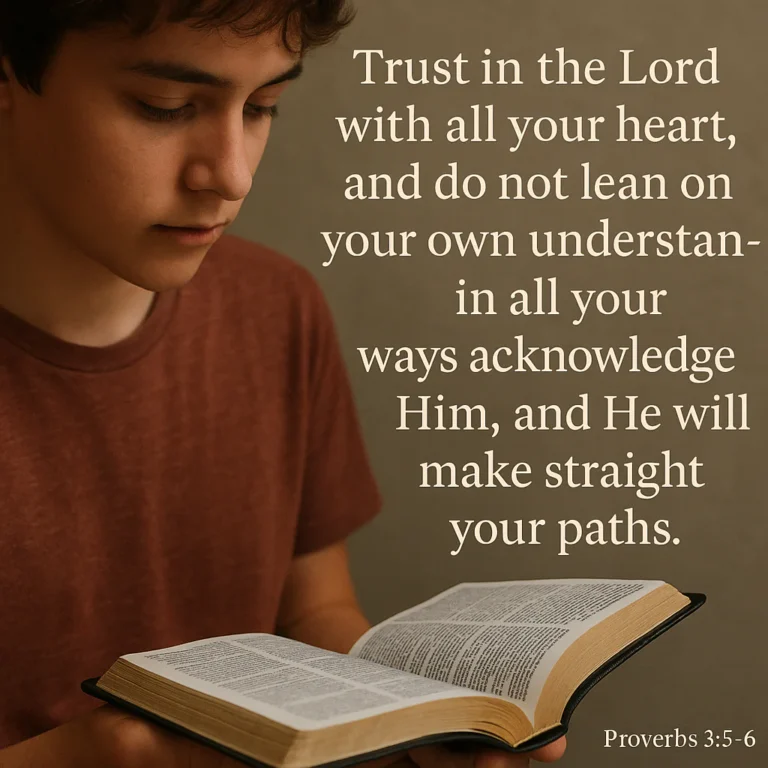
- Proverbs 3:5–6
- Hebrews 11:1
- Psalm 37:5
- Mark 9:24
- 2 Corinthians 5:7
Notice the honesty of Mark 9:24: faith and doubt can appear in the same prayer. Mature devotion does not require theatrical certainty.
5. Bible Verses for Guidance and Wisdom
- James 1:5
- Psalm 119:105
- Proverbs 16:9
- Proverbs 4:23
- Colossians 3:16
Ask for wisdom, then seek counsel, examine motives, and consider consequences. A verse is not a substitute for discernment.
6. Bible Verses for Prayer and Worship
- Psalm 95:6
- Matthew 6:9–13
- 1 Thessalonians 5:16–18
- Hebrews 4:16
- Psalm 100
Use a verse as a doorway into prayer. Read it aloud, respond to God, and leave room for silence.
7. Bible Verses for Love, Kindness, and Forgiveness
- 1 Corinthians 13:4–7
- Colossians 3:12–14
- Ephesians 4:32
- John 13:34–35
- Micah 6:8
These passages move love beyond sentiment. They describe patience, action, humility, mercy, and justice.
8. Bible Verses for Healing and Comfort
- Psalm 34:18
- Psalm 147:3
- Matthew 11:28–30
- 2 Corinthians 1:3–4
- Revelation 21:4
Read healing passages with care. They offer God’s presence and ultimate restoration; they should not be used to shame people whose physical healing has not occurred.
9. Bible Verses for Work, Purpose, and Calling
- Colossians 3:23
- Ephesians 2:10
- Proverbs 16:3
- Matthew 5:16
- 1 Corinthians 15:58
Purpose is broader than career success. Faithfulness can look like excellent work, caregiving, honesty, service, or patient perseverance.
10. Bible Verses for Family and Relationships
- Ephesians 4:2–3
- Romans 12:10
- Proverbs 15:1
- Colossians 3:13
- Psalm 127:3
Apply these verses with wisdom. Biblical peacemaking does not require tolerating abuse or avoiding appropriate boundaries.
11. Bible Verses for Overcoming Temptation
- 1 Corinthians 10:13
- James 1:12–15
- Matthew 4:1–11
- Psalm 119:11
- Galatians 5:16
Temptation is not defeated by willpower alone. Scripture, prayer, accountability, and practical boundaries work together.
12. Bible Verses for Patience and Waiting on God
- Psalm 27:14
- Isaiah 40:31
- Romans 8:25
- Psalm 130:5
- James 5:7–8
Waiting is not spiritual inactivity. It can include preparation, faithful work, lament, and hope.
13. Bible Verses for Gratitude and Contentment
- Psalm 107:1
- Philippians 4:11–13
- Colossians 3:15–17
- 1 Thessalonians 5:18
- Hebrews 13:5
Contentment is not denial. You can be grateful and still pursue justice, healing, or necessary change.
14. Bible Verses for Protection and Safety
- Psalm 23
- Psalm 91
- Psalm 121
- 2 Thessalonians 3:3
- Proverbs 18:10
Read protection passages as invitations to trust God, not as promises that believers will never face danger.
15. Bible Verses for New Beginnings
- Isaiah 43:18–19
- 2 Corinthians 5:17
- Philippians 3:13–14
- Ezekiel 36:26
- Lamentations 3:22–23
A new beginning may be dramatic, but often it begins quietly with one honest confession and one faithful next step.
16. Bible Verses for Grief and Loss
- Psalm mourning 34:18
- John 11:35
- Matthew 5:4
- Psalm 73:26
- 1 Thessalonians 4:13–14
Grief deserves time. Avoid using Scripture as a verbal bandage when someone needs presence, listening, and practical help.
17. Bible Verses for Financial Stress
- Matthew 6:25–34
- Philippians 4:19
- Proverbs 3:9–10
- 1 Timothy 6:6–10
- Matthew 6:21
These passages encourage trust and generosity, but they do not promise instant wealth. Pair prayer with budgeting, wise counsel, and practical assistance.
18. Bible Verses for Decision-Making
- James 1:5
- Proverbs 3:5–6
- Philippians 1:9–10
- Psalm 32:8
- Romans 12:2
Good decisions combine prayer, Scripture, counsel, facts, character, and patience.
19. Bible Verses for Identity in Christ
- Galatians 2:20
- Ephesians 1:3–8
- 1 Peter 2:9
- Romans 8:1
- 2 Corinthians 5:17
Your worth is not determined by productivity, popularity, appearance, or yesterday’s failure.
20. Bible Verses for Joy and Celebration
- Psalm 16:11
- Philippians 4:4
- Nehemiah 8:10
- John 15:11
- Psalm 118:24
Biblical joy can coexist with tears. It is deeper than a passing mood.
21. Bible Verses for Humility and Servanthood
- Philippians 2:3–8
- Mark 10:45
- Micah 6:8
- John 13:12–17
- 1 Peter 5:5–6
Humility is not self-hatred. It is freedom from making the self the center of every room.
22. Bible Verses for Integrity and Character
- Proverbs 10:9
- Psalm 15
- Luke 16:10
- Titus 2:7–8
- Matthew 5:37
Integrity is what remains when no one is applauding.
23. Bible Verses for Justice and Compassion
- Isaiah 1:17
- Amos 5:24
- Zechariah 7:9–10
- Matthew 25:35–40
- James 2:14–17
Compassion in Scripture is concrete. It feeds, visits, protects, listens, and acts.
24. Bible Verses for Spiritual Warfare
- Ephesians 6:10–18
- 2 Corinthians 10:3–5
- James 4:7
- 1 Peter 5:8–9
- Romans 8:37–39
Avoid sensationalism. Spiritual warfare includes resisting lies, practicing holiness, praying, and standing firm in God’s truth.
25. Bible Verses for Rest and Sabbath
- Exodus 20:8–11
- Mark 2:27
- Matthew 11:28–30
- Psalm 23:1–3
- Hebrews 4:9–11
Rest is not laziness. It is a declaration that your value does not depend entirely on output.
26. Bible Verses for Overcoming Fear
- Psalm 56:3–4
- Isaiah 43:1–2
- 2 Timothy 1:7
- John 16:33
- Psalm 27:1
Courage often begins with an honest sentence: “When I am afraid, I will trust.”
27. Bible Verses for Perseverance
- Galatians 6:9
- James 1:2–4
- Hebrews 12:1–2
- Romans 5:3–5
- Philippians 1:6
Perseverance is not pretending the work is easy. It is continuing with hope and support.
28. Bible Verses for God’s Promises
- Numbers 23:19
- 2 Corinthians 1:20
- Psalm 145:13
- Hebrews 10:23
- Joshua 21:45
Read promises carefully. Identify whom the promise addresses, what it means, and how it fits the Bible’s larger story.
29. Bible Verses About Jesus Christ
- John 1:1–14
- Colossians 1:15–20
- Philippians 2:5–11
- Matthew 11:28–30
- Hebrews 4:14–16
Christian devotion is not merely self-improvement. It is centered on the person and work of Jesus.
30. Bible Verses About the Holy Spirit
- John 14:16–17
- John 16:13
- Galatians 5:22–23
- Romans 8:26
- Acts 1:8
These passages connect the Spirit with guidance, fruit, prayer, witness, and transformed character.
31. Bible Verses About Salvation and Grace
- Ephesians 2:8–10
- Romans 3:23–24
- Romans 10:9–10
- Titus 3:5–7
- John 3:16
Grace is God’s gift, not a trophy awarded for spiritual performance.
32. Bible Verses About Repentance and Renewal
- Psalm 51:10–12
- Acts 3:19
- Romans 12:1–2
- 1 John 1:9
- Ezekiel 18:30–32
Repentance is more than feeling bad. It turns toward God and produces changed direction.
33. Bible Verses About God’s Love
- Romans 5:8
- 1 John 4:7–12
- John 3:16
- Zephaniah 3:17
- Psalm 136
God’s love is not vague approval. Scripture presents it as holy, faithful, sacrificial, and active.
34. Bible Verses About Obedience
- John 14:15
- Deuteronomy 6:4–9
- James 1:22
- 1 Samuel 15:22
- Matthew 7:24–27
Obedience responds to grace; it does not purchase grace.
35. Bible Verses About Spiritual Maturity
- Hebrews 5:12–14
- Ephesians 4:11–16
- Colossians 1:9–11
- 2 Peter 3:18
- Philippians 3:12–14
Maturity includes knowledge, discernment, endurance, humility, and love.
36. Bible Verses for Students and Young Adults
- Proverbs 1:7
- 1 Timothy 4:12
- Ecclesiastes 12:1
- Psalm 119:9
- Colossians 3:17
Young believers need encouragement without condescension and challenge without shame.
37. Bible Verses for Parents
- Deuteronomy 6:6–7
- Proverbs 22:6
- Ephesians 6:4
- Psalm 127:3–5
- James 1:5
Parenting Scripture should be applied with patience and humility. No verse turns parenting into a mechanical formula.
38. Bible Verses for Marriage
- Ephesians 5:21–33
- 1 Corinthians 13:4–7
- Colossians 3:12–14
- Genesis 2:24
- 1 Peter 3:7
Begin with mutual honor and Christlike service. Never use marriage passages to excuse coercion or abuse.
39. Bible Verses for Singles
- 1 Corinthians 7:32–35
- Psalm 37:4
- Matthew 6:33
- Philippians 4:11–13
- Isaiah 43:1
Singleness is not a spiritual waiting room. It is a meaningful season for love, service, friendship, vocation, and growth.
40. Bible Verses for Leaders
- Mark 10:42–45
- Proverbs 11:14
- James 3:1
- 1 Peter 5:2–3
- 1 Timothy 3:1–13
Biblical leadership is accountable, sacrificial, and protective rather than dominering.
41. Bible Verses for Mission and Evangelism
- Matthew 28:18–20
- Acts 1:8
- Romans 1:16
- 1 Peter 3:15–16
- 2 Corinthians 5:20
Share faith with truth, gentleness, respect, and attention to the person in front of you.
42. Bible Verses for Difficult Seasons
- Psalm 46:1–3
- Romans 8:28–39
- 2 Corinthians 4:16–18
- Habakkuk 3:17–19
- John 16:33
Difficult seasons need honest lament and durable hope, not forced positivity.
43. Bible Verses for Morning Devotions
- Psalm 5:3
- Psalm 143:8
- Mark 1:35
- Lamentations 3:22–23
- Matthew 6:33
Read slowly before checking the day’s headlines. Your phone can wait three minutes; it has survived worse.
44. Bible Verses for Evening Devotions
- Psalm 4:8
- Psalm 63:6
- Matthew 11:28
- Philippians 4:8–9
- Psalm 139:23–24
Evening Scripture can help you review the day with gratitude, confession, and trust.
45. Bible Verses for Sunday Worship
- Psalm 95:1–7
- Hebrews 10:24–25
- Acts 2:42–47
- Colossians 3:16
- John 4:23–24
Worship is both gathered and scattered: singing with the church and living faithfully afterward.
46. Bible Verses for Advent and Christmas
- Isaiah 9:6
- Micah 5:2
- Luke 1:26–38
- Luke 2:1–20
- Matthew 1:18–25
Read Christmas passages as part of Israel’s story, not merely as seasonal decoration.
47. Bible Verses for Lent and Easter
- Isaiah 53
- Mark 10:45
- John 19:16–30
- Matthew 28:1–10
- 1 Corinthians 15:3–8
The cross and resurrection belong together. Sorrow is not the final chapter.
48. Bible Verses for Thanksgiving
- Psalm 100
- Psalm 103:1–5
- Colossians 4:2
- Philippians 4:6
- 1 Chronicles 16:34
Thanksgiving remembers specific gifts rather than offering vague religious cheer.
49. Bible Verses for New Year Reflection
- Isaiah 43:18–19
- Philippians 3:13–14
- Psalm 90:12
- Proverbs 16:3
- Matthew 6:33
Use a new year for repentance and wisdom, not merely ambitious self-branding.
50. Bible Verses for Every Season of Life
- Ecclesiastes 3:1–8
- Romans 8:38–39
- Psalm 23
- Matthew 28:20
- Hebrews 13:8
The right devotional verse may change as your circumstances change. God’s faithfulness does not.
How to Choose a Personal Devotional Bible Verse
A personal verse should be chosen with need, context, and balance. If you are grieving, Psalm 34 may speak differently than Proverbs 16. If you are making a decision, James 1:5 may be more fitting than a general verse about success.
Choose Scripture Based on Your Current Season
Ask:
- Am I seeking comfort, correction, wisdom, courage, or gratitude?
- What pressure is shaping my thoughts?
- What virtue do I need to practice?
- What biblical truth am I tempted to forget?
Then search a trustworthy topical index, such as Bible Verse Daily™’s Bible Verses by Topic.
Read the Whole Passage Around the Verse
A verse is not a detachable inspirational sticker. Read:
- The verse.
- The paragraph.
- The chapter.
- The book’s purpose.
- Related passages only after understanding the primary text.
The 52-week devotional 52 of my FAVORITE VERSES makes this same point by encouraging readers to “read the chapter before and after to get context on the verse.” That advice is sound, although a devotional organized around one verse per week naturally gives you a slower pace than a daily verse app.
Look for the Main Message, Not Just a Convenient Phrase
Ask whether your interpretation:
- Fits the passage.
- Fits the Bible’s broader teaching.
- Respects the original audience.
- Produces love, wisdom, humility, and faithfulness.
- Avoids promises the text never made.
If a verse seems to guarantee exactly what you want by lunchtime, pause. Scripture can encourage you without becoming a personalized vending machine.
Ask What God May Be Teaching You
Reflect on four areas:
| Area | Question |
|---|---|
| God | What does this reveal about God’s character? |
| Self | What does this reveal about my motives or fears? |
| Neighbor | How should I treat others? |
| Practice | What faithful action follows? |
This keeps devotional reading relational and ethical rather than merely inspirational.
How to Use Today’s Verse in Prayer and Meditation
A verse becomes devotional when you attend, understand, respond, and practice.
The SOAP Bible Study Method
SOAP stands for:
- Scripture: Write the passage.
- Observation: What does it say?
- Application: What should change?
- Prayer: Respond honestly to God.
Example using Philippians 4:6–7:
- Scripture: Record the passage in your chosen translation.
- Observation: Paul connects prayer, thanksgiving, requests, and God’s peace.
- Application: Name one anxiety and one concrete prayer request.
- Prayer: Ask for peace without pretending the concern is imaginary.
The ACTS Prayer Method
ACTS offers another structure:
- Adoration: Praise God for who He is.
- Confession: Admit sin honestly.
- Thanksgiving: Name specific gifts.
- Supplication: Ask for help for yourself and others.
It is simple enough for a rushed morning and flexible enough for a longer quiet time.
Lectio Divina and Slow Scripture Reading
Lectio Divina traditionally involves:
- Reading.
- Meditating.
- Praying.
- Contemplating.
- Responding.
Read the passage several times. Notice what attracts or unsettles you. Do not force a dramatic revelation. Sometimes the deepest result is a small correction in how you speak to a family member.
How to Turn a Bible Verse Into a Personal Prayer
Use this pattern:
“God, thank You for __. Help me understand __. Forgive me for __. Give me wisdom to __. Help me trust You with ____.”
Personalize the prayer, but do not twist the Scripture into saying something it does not say.
How to Memorize a Daily Scripture
Try this seven-step method:
- Read the verse aloud.
- Identify its central phrase.
- Write it by hand.
- Recite it while walking.
- Put the reference on a reminder card.
- Review it at lunch and bedtime.
- Practice it in a real situation.
Memorization is not a contest. One deeply remembered verse may serve you for years.
Daily Devotional Journal Ideas and Reflection Questions
A journal turns fleeting inspiration into a record of God’s faithfulness and your growth.
What Does This Verse Reveal About God?
Record attributes such as:
- Faithfulness.
- Mercy.
- Holiness.
- Wisdom.
- Patience.
- Justice.
- Compassion.
- Sovereignty.
What Does This Scripture Reveal About Me?
Look for:
- Fear.
- Pride.
- Avoidance.
- Hope.
- Resentment.
- Desire.
- Need.
- Responsibility.
Honest reflection can sting a little. That is not always a defect; sometimes it is the point.
What Action Can I Take Today?
Write an action that is:
- Specific.
- Small enough to complete.
- Connected to the passage.
- Directed toward faithfulness rather than applause.
“Be more loving” is vague. “Call my sister and listen without interrupting” is actionable.
What Word or Phrase Should I Carry With Me?
Choose one phrase, such as:
- “Do not fear.”
- “Give thanks.”
- “Be quick to listen.”
- “My grace is sufficient.”
- “Wait for the Lord.”
Repeat it during a commute, meeting, workout, or difficult conversation.
How Can I Share This Encouragement With Someone Else?
Share thoughtfully:
- Include the reference.
- Explain why it encouraged you.
- Avoid assuming you know exactly what the other person feels.
- Ask permission before giving advice.
- Offer practical help when appropriate.
A verse can be a bridge. It should not be thrown like a paper airplane into someone else’s crisis.
Comparing Daily Devotional Bible Apps and Resources
The best resource depends on your reading style, tradition, attention span, and need for structure.
Best Bible Apps for Verse-of-the-Day Notifications
| App or resource | Best feature | Potential drawback |
|---|---|---|
| Bible – Verse of the Day by Godward LLC | Scheduled verse delivery, widgets, visual presentation, Bible Chat® | Privacy and subscription details deserve review |
| YouVersion | Large translation and plan library | Content quality varies among plans |
| Bible Gateway | Search and translation comparison | Less focused on a single immersive devotional experience |
| Our Daily Bread | Brief dated reflections | Limited depth for complex passages |
| Logos Bible Software | Advanced study tools | More features than casual readers need |
The Godward app lists support for iPhone, iPad, Mac with Apple silicon, and Apple Vision. It also lists identifiers, usage data, and diagnostics among data practices, including identifiers that may be used for tracking. Review the current Apple App Store privacy details before installing.
Best Devotional Apps for Families and Small Groups
For families, choose resources with:
- Age-appropriate explanations.
- Shared reading plans.
- Discussion questions.
- Audio support.
- Minimal advertising.
- Clear privacy controls.
YouVersion’s plans can work well for groups, while printed books can reduce screen distractions. For small groups, a shared physical devotional often keeps conversation from becoming a parade of phone notifications.
Printed Devotionals Versus Digital Devotional Tools
| Format | Advantages | Limitations |
|---|---|---|
| Printed devotional | Tactile, distraction-free, easy to annotate | Less searchable and less portable |
| Bible app | Portable, searchable, reminders, audio | Notifications and distractions |
| Podcast | Useful while commuting | Harder to pause and annotate |
| Email devotional | Arrives automatically | Can be ignored in a crowded inbox |
| Study Bible | Rich notes and cross-references | Heavier and less instantly searchable |
Our recommendation: use one primary format and one supporting tool. Five half-used apps do not create five times the spiritual depth.
Privacy, Notifications, and Personalization Features
Before choosing an app, check:
- What data is collected?
- Is data linked to your identity?
- Is it used for tracking?
- Can notifications be customized?
- Can you delete your account?
- Does the app require an account?
- Are AI features clearly labeled?
Bible Chat® may offer helpful guided interaction, but AI-generated responses should be tested against Scripture and trusted pastoral or scholarly guidance. AI can summarize; it cannot replace the Holy Spirit, the church, wise counsel, or careful interpretation.
Accessibility Features for Daily Scripture Reading
Look for:
- Adjustable text size.
- Dark mode.
- Screen-reader compatibility.
- Audio Bible.
- Playback speed control.
- High contrast.
- Captions or transcripts.
- Downloadable content.
- Simple navigation.
Accessibility is not an optional decoration. It determines whether someone can actually participate in daily Scripture reading.
Family Sharing and Group Bible Study Options
Group use works best when everyone agrees on:
- The translation.
- The reading schedule.
- The discussion questions.
- Privacy boundaries.
- Whether personal notes are shared.
- How disagreements are handled.
A group should make Scripture more understandable and actionable, not turn every devotional into a theological courtroom drama.
Reader Experiences With Daily Devotional Apps
App-store reviews often describe the emotional value of reminders and bite-sized readings. One Godward reviewer wrote that a passage seemed to apply “to whatever situation you are dealing with,” while another praised the widget for bringing Scripture directly to the Home Screen.
Those experiences are meaningful, but they are subjective. A personal sense of relevance is not the same as proof that a passage was written specifically about your circumstances. Enjoy the encouragement, then return to context.
What Makes a Good Daily Devotional?
A strong devotional keeps Scripture central while helping you respond faithfully.
Biblical Faithfulness and Sound Interpretation
A good devotional:
- Quotes the text accurately.
- Names the translation.
- Explains context.
- Avoids exaggerated promises.
- Distinguishes interpretation from application.
- Encourages the whole counsel of Scripture.
Check challenging claims against resources such as The Gospel Coalition’s Bible study resources, BibleProject, or a trusted study Bible. Different traditions may disagree on interpretation, so examine the author’s theological perspective rather than assuming neutrality.
Clear, Practical, and Encouraging Application
Application should answer:
- What does this mean?
- Why does it matter?
- What might faithful obedience look like?
- What support might I need?
Encouragement is not flattery. Sometimes Scripture comforts; sometimes it corrects; often it does both.
Prayer, Reflection, and Action Steps
A balanced devotional includes:
- Scripture.
- Explanation.
- Reflection.
- Prayer.
- Action.
Remove any one of these and the experience can become lopsided:
- Scripture without application can become merely academic.
- Application without Scripture can become self-help.
- Prayer without reflection can become vague repetition.
- Reflection without action can become spiritual navel-gazing.
Healthy Devotional Habits Versus Unhelpful Shortcuts
| Healthy habit ✅ | Shortcut ❌ |
|---|---|
| Read the surrounding context | Quote only the most comforting sentence |
| Compare translations carefully | Search for wording that confirms your opinion |
| Pray honestly | Perform religious language |
| Ask wise people | Treat an app as an oracle |
| Apply Scripture humbly | Use it to control someone else |
| Read broadly over time | Stay only with favorite themes |
Common Mistakes When Reading a Verse of the Day
Even sincere readers can misuse good things. Here are the most common traps.
Taking a Verse Out of Context
A verse may sound inspiring alone but mean something different in context. Read the paragraph and ask what problem the author addresses.
Treating Scripture Like a Daily Horoscope
A horoscope asks, “What will happen to me today?” Scripture asks deeper questions about God, humanity, sin, grace, wisdom, and faithful living.
A daily verse may speak personally without functioning as a secret forecast.
Confusing Personal Application With the Original Meaning
You can apply a text personally without claiming it was originally written about your private situation. That distinction protects both the Bible and the reader.
Skipping Difficult Passages
If your devotional diet includes only encouragement, you may become spiritually undernourished. Add sequential Bible reading, a church reading schedule, or a book study.
Using a Devotional Instead of Prayer and Community
A devotional can support church life, pastoral care, counseling, and friendship. It should not isolate you from them.
Recommended Bible Translations for Daily Devotions
New International Version
The NIV offers accessible modern English and is widely used in churches and study resources.
New Living Translation
The NLT is highly readable and often helpful for devotional reading, though readers should remember that it communicates meaning in a more dynamic style.
English Standard Version
The ESV is popular for close study and formal wording.
Christian Standard Bible
The CSB aims to balance accuracy and readability, making it useful for both study and personal devotion.
New King James Version
The NKJV retains traditional phrasing while updating much of the language.
New American Standard Bible
The NASB is valued formal equivalence and detailed study.
Choosing a Translation That You Will Actually Read
Choose the translation you understand well enough to read consistently. For deeper study, use two or three translations rather than treating one as the only faithful option.
Daily Bible Verses for Different Christian Traditions
A daily devotional answer can differ because Christian traditions use different calendars, lectionaries, translations, and interpretive frameworks.
Evangelical and Protestant Devotional Resources
Many evangelical resources emphasize personal Bible reading, prayer, conversion, discipleship, and practical application. YouVersion, Our Daily Bread, BibleProject, and numerous church plans fit this broad category, though their theology varies.
Catholic Daily Readings and Devotions
The United States Conference of Catholic Bishops daily readings follow the Catholic lectionary and include readings designed for the liturgical calendar.
Orthodox Christian Scripture and Prayer
Orthodox Christians may follow liturgical readings and prayer traditions connected to the church year. The Orthodox Church in America provides a useful official resource.
Ecumenical Daily Bible Reading Practices
The Revised Common Lectionary provides a shared framework across many denominations. It is especially useful if you want devotional reading connected to weekly worship rather than a personalized algorithm.
How to Share Today’s Bible Verse With Others
Sharing Scripture can encourage people, but timing and tone matter.
Family Devotions at Home
Keep family reading simple:
- Read a short passage.
- Ask one observation question.
- Share one application.
- Pray briefly.
- Let someone else choose tomorrow’s passage.
Children do not need a miniature seminary lecture before breakfast. They need clarity, warmth, repetition, and room to ask questions.
Small-Group Bible Study
For a group, use questions such as:
- What does the passage say?
- What surprises you?
- What is difficult?
- How does this connect with Jesus and the wider biblical story?
- What could faithful practice look like this week?
Church Newsletters and Bulletin Boards
Include the full reference, translation, and context. Avoid presenting a detached phrase as the church’s complete teaching on a subject.
Text Messages, Social Media, and Digital Sharing
A good message might say:
“This verse encouraged me today because I’m learning to wait patiently. I hope it gives you strength too.”
That is better than sending a verse with an implied command for the recipient to stop feeling sad.
How to Encourage Someone Without Sounding Preachy
Use:
- “I’m praying for you.”
- “This passage helped me remember God’s faithfulness.”
- “Would you like me to send the verse?”
- “How can I support you practically?”
Avoid:
- “Everything happens for a reason.”
- “You just need more faith.”
- “This verse proves exactly what you should do.”
Building a Consistent Daily Scripture Habit
Consistency grows from realistic design, not heroic promises.
Morning, Lunch Break, or Evening: Choosing Your Best Time
Choose the time when:
- Your mind is reasonably alert.
- You can be interrupted less.
- You can return consistently.
- The routine fits your responsibilities.
A parent may prefer lunch. A nurse may prefer the bus ride home. A retire may enjoy an unhuried morning. Faithfulness is more important than aesthetic timing.
Creating a Distraction-Free Devotional Space
Prepare:
- A Bible.
- A notebook.
- A pen.
- A reading plan.
- A comfortable chair.
- A timer if needed.
- A phone on Do Not Disturb.
The goal is not to build a monastery in your spare bedroom. It is to make the next faithful action easy.
Setting Reminders Without Feeling Overwhelmed
Use one reminder first. If you ignore it, change the time or location rather than adding twelve more alerts. A reminder should invite you, not scold you.
What to Do When You Miss a Day
Do not binge-read three days in guilt. Resume with today’s reading. If you want, briefly reflect on what disrupted the habit and adjust.
Missing a day is a scheduling problem, not a theological verdict.
How to Read Through the Bible With a Daily Plan
Choose a plan based on your pace:
| Plan type | Typical approach | Best for |
|---|---|---|
| Chronological | Events arranged by historical sequence | Storyline and history |
| Canonical | Genesis to Revelation | Traditional progression |
| Thematic | Topics such as prayer or wisdom | Specific seasons |
| Book study | One biblical book at a time | Context and depth |
| Lectionary | Church calendar readings | Worship connection |
Start with a plan you can finish. A modest plan completed is more useful than an impressive plan abandoned.
Quick Comparison of Daily Devotional Approaches
Verse of the Day
Best for: a brief reminder and starting point.
Strength: simple and memorable.
Drawback: limited context unless you read further.
Topical Devotional
Best for: anxiety, grief, parenting, courage, or another focused need.
Strength: feels relevant to a current season.
Drawback: may overemphasize favorite themes.
Book-by-Book Bible Reading
Best for: understanding context and biblical argument.
Strength: protects against isolated verses.
Drawback: requires patience when passages feel unfamiliar.
Church Lectionary Reading
Best for: shared worship and the Christian year.
Strength: broad, communal, and structured.
Drawback: may not address your immediate concern directly.
Guided Prayer and Scripture Meditation
Best for: slowing down and responding personally.
Strength: integrates Bible reading and prayer.
Drawback: requires discernment so personal impressions do not replace the text.
Recommended Links for Daily Bible Reading
Bible Reading Plans
Daily Devotional Websites
Bible Study Tools and Commentaries
Prayer and Christian Discipleship Resources
Frequently Asked Questions About Today’s Devotional Bible Verse
What Is the Best Bible Verse for Today?
There is no universal “best” verse. Choose a passage that fits your current need while reading its wider context. If you need hope, begin with Romans 15:13; if you need wisdom, read James 1:5; if you need peace, study Philippians 4:6–7.
Where Can I Find a Daily Bible Verse?
You can find daily verses through YouVersion, Bible Gateway, Our Daily Bread, church websites, printed devotionals, and Bible Verse Daily™ resources.
What Is a Good Bible Verse to Read Every Morning?
Psalm 5:3, Lamentations 3:22–23, and Matthew 6:33 are useful morning passages. Read the surrounding verses rather than treating one line as a ritual charm.
How Do I Know Which Scripture God Wants Me to Read Today?
Begin with a trustworthy plan, pray for wisdom, and read attentively. Christians should avoid demanding a mystical sign from every verse. God can use Scripture personally, but faithful interpretation still matters.
Should I Read One Bible Verse or an Entire Chapter?
Read at least the surrounding paragraph. When possible, read the entire chapter and study the book’s context. One verse is a helpful starting point, not always a sufficient study.
Can I Use a Bible App for My Daily Devotional?
Yes. Apps such as YouVersion, Bible Gateway, and Godward LLC’s Bible – Verse of the Day can support consistency. Review privacy practices, disable distracting notifications, and verify interpretations against Scripture.
What Is the Difference Between a Bible Verse and a Devotional?
A Bible verse is Scripture. A devotional usually adds explanation, reflection, prayer, and application. The devotional should illuminate the biblical text rather than replace it.
How Long Should a Daily Devotional Take?
Five focused minutes can be meaningful, while 20–30 minutes allows more context and journaling. The ideal length is one you can sustain with attention.
Can I Share Today’s Verse on Social Media?
Yes, but include the reference and avoid implying that one verse solves every problem. If quoting a copyrighted translation, follow that publisher’s permissions.
What Should I Do If a Bible Verse Confuses Me?
Read the larger passage, compare translations, consult a study Bible, and ask a trusted pastor or teacher. Confusion is a reason to investigate, not to panic.
How Do I Choose a Bible Verse for My Daily Devotional?
Identify your current season, choose a trustworthy source, read the passage in context, and write one faithful response. A topical index such as Bible Verse Daily’s Bible Verses by Topic can help you begin.
What Bible Verses Help With Daily Gratitude and Faith?
Try Psalm 103:1–5, 1 Thessalonians 5:18, Philippians 4:6, Hebrews 11:1, and Proverbs 3:5–6. Gratitude is strongest when it names specific gifts rather than using general religious language.
Where Can I Get Daily Bible Quotes for Motivation?
Use YouVersion, Our Daily Bread, Bible Gateway, or Bible Verse Daily™’s Bible Verses for Strength. Read motivational passages as invitations to faithful action, not promises of effortless success.
How Can I Find a Bible Verse for Daily Inspiration?
Search by a genuine spiritual need, then check the passage’s context. BibleProject and Bible Gateway are useful for background, while Bible Verse Daily™ provides topic-based starting points.
Which Bible Verses Are Best for Morning Devotionals?
Psalm 5:3, Psalm 143:8, Mark 1:35, Lamentations 3:22–23, and Matthew 6:33 are strong choices. Select one, read the full passage, and connect it to a practical intention for the day.
What Is a Good Bible Verse for Daily Encouragement?
Romans 15:13, Isaiah 41:10, Psalm 46:1, and Hebrews 10:23 offer encouragement grounded in God’s character and presence.
Can You Suggest Bible Verses for Daily Motivation and Faith?
Yes: Philippians 4:13, Colossians 3:23, Hebrews 12:1–2, Proverbs 3:5–6, and Galatians 6:9. Read Philippians 4:13 in context, especially Philippians 4:10–14, where Paul discusses contentment in both abundance and need.
What Bible Verses Are Recommended for Morning Devotionals?
Psalm 5:3, Mark 1:35, Psalm 90:14, Lamentations 3:22–23, and Matthew 6:33 are appropriate. The best passage is the one you will read carefully and apply faithfully.
Where Can I Get Daily Bible Quotes for Devotionals?
Try church reading plans, YouVersion, Our Daily Bread, Bible Gateway, the USCCB daily readings, the Orthodox Church in America calendar, or a printed devotional. Different sources may provide different passages because they follow different traditions and schedules.
What Are Some Uplifting Bible Verses for Everyday Encouragement?
Psalm 23, Isaiah 40:31, Romans 8:38–39, John 14:27, and 2 Corinthians 4:16–18 are uplifting without pretending that hardship is unreal.
How Can I Find a Bible Verse for My Daily Devotional?
Choose a trusted reading plan, identify your spiritual need, read the assigned passage in context, and pray for wisdom. Avoid selecting verses solely because they sound flattering.
What Is the Best Bible Verse for Daily Inspiration?
No single verse is best for everyone. Romans 12:2 can inspire renewal, Ephesians 2:10 can encourage purposeful living, and Colossians 3:23 can strengthen work ethic. Their meaning becomes clearer when read within their chapters.
Where Can I Find a Daily Bible Verse and Devotional Reading to Start My Day With Faith and Positivity?
Use YouVersion, Our Daily Bread, Bible Gateway, BibleProject plans, or your local church’s reading schedule. For a structured approach, combine a short daily verse with a longer weekly Bible study.
What Are the Most Popular Bible Verses for Daily Devotionals and Quiet Time With God?
Popular choices include Psalm 23, Jeremiah 29:11, Philippians 4:13, Proverbs 3:5–6, Isaiah 41:10, and Romans 8:28. Popularity should not replace context; Jeremiah 29:11, for example, gains depth when read alongside Jeremiah 29:1–14.
How Can I Apply Today’s Bible Verse to My Everyday Life and Spiritual Journey?
Ask what the passage reveals about God, what it exposes in you, what it asks you to believe, and what action it calls you to take. Share the insight with a trusted Christian and revisit it during the day.
What Are Some Inspirational Bible Verses for Daily Motivation and Encouragement?
Begin with Philippians 4:13, Galatians 6:9, Isaiah 41:10, Romans 8:31, and Psalm 46:1. For a larger collection, read 30+ Inspirational Bible Verses for Daily Motivation and Encouragement (2026) 🌅.
What Is the Daily Prayer for Today’s Devotion?
There is no universally assigned daily prayer. You can pray:
“Lord, help me understand Your Word today. Show me what is true, correct what needs changing, comfort me where I am hurting, and guide me into faithful action. Give me wisdom to apply this passage with humility and love. Amen.”
If your church or devotional provides a dated prayer, use it as a guide while speaking honestly in your own words.
Does the Bible App “Bible – Verse of the Day” Provide the Same Verse to Everyone?
The Godward LLC app listing describes a new personalized verse delivered daily, but it does not identify one universal verse for every user. Its scheduled delivery, widget, devotional features, and Bible Chat® tools are conveniences rather than evidence of a single official daily text.
Is a Weekly Verse Devotional Better Than a Daily Verse App?
Neither is automatically better. A weekly plan such as 52 of my FAVORITE VERSES allows extended meditation one passage, while an app offers reminders and variety. Readers who rush through daily content may benefit from the slower weekly model.
What Does the Featured Video Teach About Daily Devotion?
The featured video presents Daily Devotions for Monday, September 21, under theme “God’s Sovereignty,” using Genesis 2:7–9 and Genesis 3:6–13. Its perspective emphasizes God’s authority over creation, the seriousness of human rebellion, the complexity of evil, and the hope of redemption.
The video does not prove that Genesis 2–3 is the universal verse or reading for everyone that day. It demonstrates how one devotional source builds a theme from multiple passages. That is a valuable model when the interpretation remains connected to the text: read the passage, acknowledge difficult questions, and trust God without pretending every mystery has been neatly packaged.
What Should I Trust When Daily Devotional Sources Disagree?
Trust the source that provides:
- The exact reference.
- The complete passage.
- Historical and literary context.
- Transparent theological perspective.
- Responsible application.
- Respect for difficult questions.
Different readings may be faithful within different traditions. Compare sources, consult Scripture directly, and seek wise Christian counsel rather than assuming the newest notification is automatically the most authoritative.