Support our educational content for free when you purchase through links on our site. Learn more
🌅 How to Add Bible Meditation to Your Morning

How can I incorporate daily Bible verse meditation into my morning routine? Start with five unhuried minutes: read a short passage, reflect on what it means in context, pray in response, and carry one thought into your day. A simple practice you can repeat is better than an elaborate routine that only works on perfect mornings.
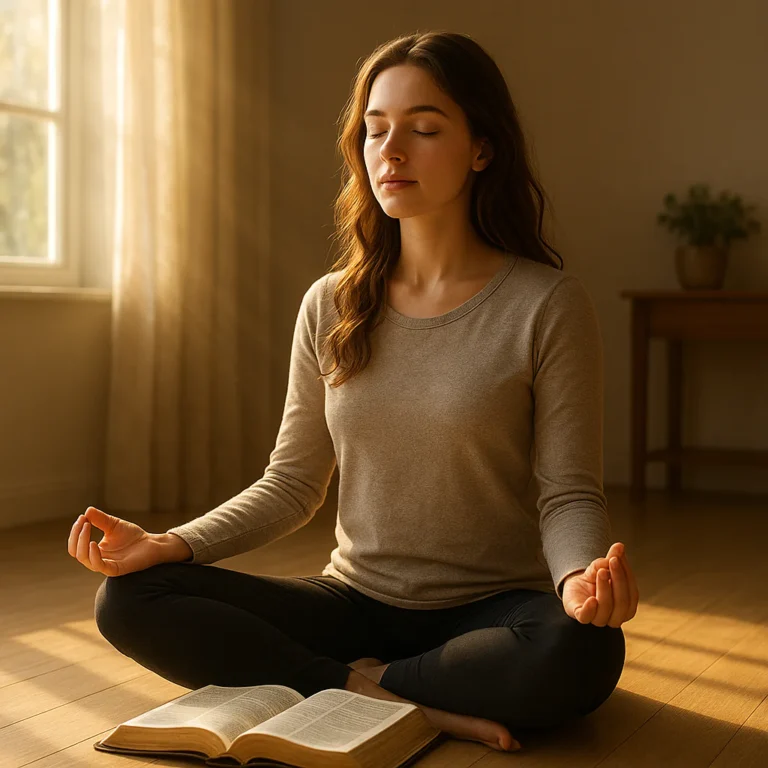
One morning, you may have a quiet cup of coffee and time to journal. The next, your household may be bustling before you’ve found your Bible. Both mornings can count: Scripture meditation is about attentive engagement, not creating a picture-perfect devotional scene.
Read slowly, ask what the passage says about God and faithful living, then choose a practical response. If your mind wanders, gently return to the text; if you miss a morning, simply begin again.
Key Takeaways
- Start small: Five minutes with one verse or short passage is enough to begin.
- Use a simple rhythm: Read, reflect, pray, and carry one insight into your day.
- Keep Scripture in context: Read the surrounding passage, especially when a verse is unfamiliar.
- Choose a routine that fits your real life: A printed Bible, an app, a journal, or no journal can all work.
- Let go of perfection: Distraction and missed mornings are normal; return to the practice without guilt.
Table of Contents
- ⚡️ Quick Tips and Facts
- 📖 What Morning Bible Verse Meditation Means
- Meditation in the Bible: A Brief Background
- Bible Meditation vs. Prayer, Bible Study, and Mindfulness
- 🌅 Why Meditate on Scripture in the Morning?
- Spiritual Benefits of a Morning Scripture Practice
- What Research Says About Reflection and Well-Being
- 🧭 How to Build a Daily Bible Verse Morning Routine in 10 Steps
- 1. Choose a Consistent Time and Place
- 2. Pick a Bible Translation and Scripture Source
- 3. Select a Verse or Short Passage
- 4. Set Up a Simple, Distraction-Free Space
- 5. Read Slowly and Notice the Words
- 6. Reflect on the Verse’s Meaning and Context
- 7. Pray the Scripture Back to God
- 8. Carry One Insight Into Your Day
- 9. Record a Thought or Prayer in a Journal
- 10. Keep the Practice Flexible and Sustainable
- ⏰ Morning Bible Meditation Routines for 5, 10, and 20 Minutes
- A Five-Minute Scripture Pause
- A Ten-Minute Read, Reflect, and Pray Routine
- A Twenty-Minute Guided Bible Meditation
- 🕊️ A Simple Christian Scripture Meditation Method
- Read: Let the Passage Setle
- Reflect: Ask What the Text Says
- Respond: Turn Your Reflection Into Prayer
- Rest: Sit Quietly With the Verse
- 📚 Choosing Bible Verses for Morning Meditation
- Verses for Peace, Anxiety, and Worry
- Verses for Gratitude and Joy
- Verses for Guidance and Important Decisions
- Verses for Strength, Hope, and Perseverance
- Verses for a New Day and Fresh Start
- How to Choose a Verse That Fits Your Season
- 📅 Bible Reading Plans and Tools for a Daily Practice
- Using a Printed Bible, Journal, or Devotional
- Bible Apps and Online Scripture Resources
- How to Follow a Verse-of-the-Day Plan Without Rushing
- 🧠 How to Stay Focused During Scripture Meditation
- What to Do When Your Mind Wanders
- Managing Phone Notifications and Morning Distractions
- Meditating With Kids, Roomates, or a Busy Household
- 🔁 Building a Lasting Morning Bible Habit
- Habit Stacking Scripture With Coffee, Breakfast, or Prayer
- Tracking Consistency Without Guilt
- What to Do If You Miss a Morning
- ⚠️ Common Bible Meditation Mistakes to Avoid
- 🙏 Making Morning Scripture Meditation Personal and Meaningful
- Meditate With Your Heart, Not Just Your Highlighter
- Balancing Personal Reflection With Biblical Context
- Adapting the Practice to Different Christian Traditions
- ❓ Morning Bible Verse Meditation: Frequently Asked Questions
- How long should I meditate on a Bible verse each morning?
- Which Bible verse is best to read first in the morning?
- Can I meditate on Scripture without journaling?
- Is listening to an audio Bible the same as reading a verse?
- What if I do not feel focused or spiritually engaged?
- Should I meditate one verse or a whole passage?
- Can I combine Bible meditation with breath prayer?
- ✅ Conclusion: Start Your Morning With One Scripture
- 🔗 Recommended Links
- ❔ FAQ
- 📑 Reference Links
⚡️ Quick Tips and Facts
The most reliable morning Bible meditation routine is usually simple enough to repeat: read a short passage, notice what it says about God and life, respond in prayer, and carry one practical thought into your day. For a closer look at the benefits of meditating on a daily Bible verse, remember that this practice is not a spiritual productivity contest. You do not need a candle, a color-coded journal, or a sunrise worthy of a travel brochure. One open Bible and a willing moment will do. 🌅
| Quick fact | Helpful starting point |
|---|---|
| How long? | Begin with 5 minutes; extend the time if it serves you. |
| How much Scripture? | One verse or a short paragraph, read in context. |
| What happens next? | Reflect, pray, and choose one way to live the passage. |
| Best time? | A time you can repeat—early morning if practical, or another quiet window. |
| What if you get distracted? | Notice it without scolding yourself, then return to a word or phrase. |
| Do you need a journal? | No. Journaling can help, but it is optional. |
| A useful prompt | “What does this passage show me about God, and how might I respond today?” |
A few guardrails help keep the practice grounded:
- ✅ Read the surrounding verses when a line is unfamiliar or easy to misapply.
- ✅ Choose a manageable routine that fits real mornings, not fantasy mornings.
- ✅ Let prayer and practical action follow reflection.
- ❌ Do not treat a verse as a magic slogan or a guarantee that every problem will disappear.
- ❌ Do not assume a distracted morning means you have failed spiritually.
Christian meditation is not emptying the mind so much as attending to Scripture and responding to God. We will come back to that distinction, because it changes what “focus” is supposed to feel like.
📖 What Morning Bible Verse Meditation Means
Morning Bible verse meditation is the intentional practice of reading a passage slowly, reflecting on its meaning, praying in response, and carrying its wisdom into the day. It may include silence, repeated reading, memorization, or journaling, but no single technique is required.
The word meditation can sound like a complicated exercise. In Scripture, however, meditation is often pictured as sustained attention to God’s teaching. The aim is not to force a special feeling. It is to let the text shape what we notice, trust, and do.
A helpful distinction:
| Practice | Main activity | A useful morning question |
|---|---|---|
| Bible reading | Taking in a passage | “What does the text say?” |
| Bible study | Examining meaning, context, and structure | “How did the original audience understand this?” |
| Prayer | Speaking and listening in relationship with God | “What do I want to bring before God?” |
| Scripture meditation | Staying with the passage and letting it inform thought and response | “What truth should I carry into today?” |
| General mindfulness | Attending to present experience | “What am I noticing right now?” |
These practices can overlap. Meditation may include prayer and study, but it need not become an elaborate research project before breakfast.
Meditation in the Bible: A Brief Background
The Bible speaks of meditating on God’s instruction, reflecting on God’s works, and keeping words close to heart. Psalm 1:1–3 portrays the flourishing person as one who delights in the law of the Lord and meditates on it “day and night.” Joshua 1:8 connects reflection on the law with faithful action.
That context matters: biblical meditation is not merely repeating a phrase until it feels soothing. It includes attention, remembrance, trust, and obedience. The repeated reading of a verse can steady attention, but meaning and context should lead the practice.
For an overview of related passages and themes, browse our Bible Verses about Reflection collection.
Bible Meditation vs. Prayer, Bible Study, and Mindfulness
Christian traditions differ in how they describe silent prayer, contemplation, and meditation. Some emphasize quiet receptivity; others focus on careful Scripture reading and spoken prayer. Both can be valuable when they remain anchored in the biblical text and the worship of God.
A balanced approach works well for many readers:
- Read the passage as written, rather than treating it as a personal fortune cookie.
- Reflect on its original message and wider biblical setting.
- Bring your response honestly to God.
- Ask how the passage might shape a concrete choice or attitude.
For broader interpretive guidance, see Bible Study Guides. If a verse seems to promise something absolute, read the paragraph or chapter around it before applying it to your circumstances.
🌅 Why Meditate on Scripture in the Morning?
A morning practice can give Scripture the first word before messages, tasks, and the day’s running commentary take over. That does not mean dawn is spiritually superior or that everyone must wake earlier. The best time is the time you can approach with attention and repeat without resentment.
A five-minute pause can help orient your day around God’s character rather than the urgent item at the top of your inbox. The Sabbath Meditation guide to morning Scripture meditation puts it memorably: “Mornings are for orientation, not production.” We like that. Your devotional time is not another task to optimize; it is a way of beginning with attention.
Spiritual Benefits of a Morning Scripture Practice
A daily verse can be a small point of return during a complicated day. You might remember a line about patience before answering a tense message, or a passage about mercy when yesterday’s mistake starts replaying in your mind.
Potential spiritual benefits include:
- Greater familiarity with Scripture: Repeated, attentive reading helps biblical language become more recognizable.
- A more deliberate prayer life: A passage can give words to gratitude, confession, grief, or hope.
- A practical bridge from belief to action: Reflection invites the question, “What could faithfulness look like in this situation?”
- A habit of remembrance: A verse carried through the day can call attention back to God amid ordinary tasks.
- A stronger sense of perspective: Scripture may help you name what is happening without making a difficult day disappear by decree.
No passage should be used to shame someone for anxiety, grief, depression, or trauma. Prayer and Scripture can offer spiritual support, but they are not substitutes for appropriate medical or mental-health care.
Explore Bible Verses by Topic when you want a passage related to a particular season or concern.
What Research Says About Reflection and Well-Being
Research on meditation and health does not automatically prove the effects of Christian Scripture meditation. The methods, participants, and practices in studies vary. It is therefore more accurate to say that some forms of structured meditation have been studied for stress and well-being, not that reading one Bible verse guarantees a specific health outcome.
The National Center for Complementary and Integrative Health summarizes research on meditation and notes both potential benefits and limitations. Its review is useful for understanding the wider topic, but it should not be treated as direct evidence for every religious practice.
A sensible distinction:
| Claim | What we can responsibly say |
|---|---|
| “A short Scripture practice will cure anxiety.” | ❌ No. That overpromises and may discourage needed care. |
| “Reflective practices may support calm or attention for some people.” | ✅ This is a cautious, research-aware statement. |
| “Prayer and Scripture can be meaningful spiritual supports.” | ✅ This describes their role for many people of faith. |
| “Everyone will feel peaceful after meditation.” | ❌ Not necessarily. Feelings vary, and hard emotions may remain. |
Use meditation as a spiritual practice, not a substitute for treatment. If anxiety or low mood is persistent or disrupting daily life, consider reaching out to a qualified health professional.
🧭 How to Build a Daily Bible Verse Morning Routine in 10 Steps
You do not need to complete ten steps every day. Think of these as building blocks: begin with the first few, then add what genuinely helps. A simple practice that happens is usually more useful than a perfect plan that stays on paper.
1. Choose a Consistent Time and Place
Choose a realistic cue: after waking, after making tea, before breakfast, or once the household settles. A quiet corner is helpful, but a parked car or kitchen chair can work too.
- Start at a time you already have, rather than borrowing sleep you need.
- If mornings vary, attach the practice to an existing activity.
- Keep a backup option for noisy or hurried days.
Mark 1:35 describes Jesus praying early in the morning. It offers an example of seeking solitude, not a command that every Christian must follow the same schedule.
2. Pick a Bible Translation and Scripture Source
Choose a translation you can understand and are willing to read regularly. The New Revised Standard Version Updated Edition (NRSVUE), New International Version (NIV), English Standard Version (ESV), and New Living Translation (NLT) each make different choices in style and wording.
| Translation | General reading feel | May suit readers who… |
|---|---|---|
| NRSVUE | Formal, often used in academic and ecumenical settings | Want a contemporary translation with a more formal register |
| NIV | Contemporary and broadly readable | Prefer familiar, flowing English |
| ESV | More formal and comparatively word-for-word in style | Like traditional phrasing and close textual correspondence |
| NLT | Conversational and meaning-focused | Want accessible language for devotional reading |
| The Message | Contemporary paraphrase | Appreciate vivid, idiomatic wording as a companion reading |
For careful interpretation, compare translations rather than treating one English wording as the only possible rendering. Bible Gateway provides an overview of available versions; translation principles are also discussed by publishers such as Crossway and Tyndale.
A paraphrase can be engaging, but pair it with a recognized translation when studying a verse closely.
3. Select a Verse or Short Passage
Choose either a verse connected to your circumstances or a passage from a reading plan. One verse is easy to carry; a short paragraph gives more context. If you are new to a book, read a few surrounding verses before settling on a line.
Helpful starting points include:
- A Psalm for prayer or lament
- A Gospel scene about Jesus’ teaching or actions
- A short passage from a New Testament letter
- A verse from a longer reading you are already following
Avoid choosing only verses that confirm what you already think. Sometimes a passage comforts; sometimes it corrects, challenges, or invites patience.
4. Set Up a Simple, Distraction-Free Space
Prepare the night before if that lowers morning friction: leave your Bible open, place a notebook nearby, or put your phone on silent. Natural light, a comfortable seat, and quiet can help—but none is a spiritual requirement.
Try this practical setup:
- Bible or Scripture app ready
- One notebook or note-taking method
- Phone notifications silenced
- A chair that supports comfortable posture
- A short list of passages for days when choosing feels difficult
If candles, tea, or a devotional book help you settle, enjoy them. If they become a complicated checklist, simplify. The point is attention, not atmosphere design.
5. Read Slowly and Notice the Words
Read the passage once for its overall sense, then again more slowly. Notice a repeated word, contrast, image, instruction, or promise. Reading aloud may help you hear the rhythm and structure.
A simple annotation system might use:
- Circle a repeated word.
- Underline a phrase that describes God or the speaker.
- Mark a question you want to revisit.
- Write one sentence about what you noticed.
Do not assume the first phrase that catches your eye is automatically a private message to you. Treat it as an invitation to read carefully.
6. Reflect on the Verse’s Meaning and Context
Ask questions that keep personal application connected to what the text actually says:
- Who is speaking, and to whom?
- What situation or question does the passage address?
- What does it reveal about God, people, or faithful living?
- What might be misunderstood if I read this line alone?
- Is there a response the passage invites—trust, lament, gratitude, repentance, action, or patience?
For example, Psalm 5:3 describes the psalmist bringing a request to God and waiting expectantly. Meditation can notice both parts: the honest request and the patient waiting.
7. Pray the Scripture Back to God
Let the passage shape your prayer, but speak naturally. You can thank God for what the text reveals, name a struggle, ask for help, or pray for someone else.
A simple pattern:
- Acknowledge: “God, this passage reminds me of your…”
- Be honest: “I am finding it hard to…”
- Ask: “Help me respond with…”
- Entrust: “I place this concern and this day in your care.”
Prayer is not a test of eloquence. A plain sentence can be a sincere prayer.
8. Carry One Insight Into Your Day
Choose one word, truth, or action to remember. Keep it small enough to do.
Examples:
- Passage about kindness → send an encouraging message.
- Passage about wisdom → pause before a decision.
- Passage about forgiveness → consider one next step, without pretending harm did not happen.
- Passage about rest → protect a reasonable boundary if you can.
The point is not to force a verse onto every situation. It is to let Scripture inform your responses with care.
9. Record a Thought or Prayer in a Journal
Journaling can help you notice recurring questions, prayers, and insights over time. Keep it short if that makes it sustainable.
Try four lines:
| Journal prompt | Example |
|---|---|
| Date and passage | Tuesday — Psalm 143:8 |
| What I noticed | The request is to hear of God’s steadfast love |
| My response | I feel uncertain about a decision |
| One next step | Ask for wise counsel before deciding |
A journal is a tool, not a spiritual scorecard. If writing makes you feel stuck, pray aloud or simply sit quietly instead.
10. Keep the Practice Flexible and Sustainable
Some mornings will allow twenty minutes; others will allow one verse before the bus arrives. Consistency does not mean identical sessions. It means keeping a meaningful point of contact with Scripture in a form that fits the day.
Try a “minimum version” for rushed mornings:
- Read one verse.
- Say one honest prayer.
- Choose one word to remember.
That is a complete, modest practice—not a failed version of an hour-long devotional.
⏰ Morning Bible Meditation Routines for 5, 10, and 20 Minutes
Use these routines as templates, not rules. Research summaries and devotional guides often recommend beginning small; Pray.com’s morning meditation guide suggests starting with a very brief session and building gradually. The useful principle is start at a length you can repeat, not “push through until your mind behaves.”
| Available time | Routine | Best for |
|---|---|---|
| 5 minutes | Read, notice, pray, carry one word | Busy mornings or habit-building |
| 10 minutes | Add context, journaling, and a practical response | A steady daily rhythm |
| 20 minutes | Include wider reading, study, silence, and extended prayer | Days when you have more space |
A Five-Minute Scripture Pause
- Minute 1: Sit comfortably and take a few natural, unhuried breaths.
- Minute 2: Read one verse or a short paragraph twice.
- Minute 3: Notice one word or idea; ask what it means in context.
- Minute 4: Pray one honest sentence in response.
- Minute 5: Choose one word or action to carry into the day.
For example, read Lamentations 3:22–23, notice theme of renewed mercy, and ask: “How might I receive mercy today, and how might I offer it?”
A Ten-Minute Read, Reflect, and Pray Routine
- Setle for one minute. Put down your phone and get comfortable.
- Read for two minutes. Read a short passage twice.
- Reflect for three minutes. Note the context, an important phrase, and one question.
- Pray for two minutes. Respond with gratitude, confession, petition, or lament.
- Choose a response for two minutes. Write a brief note or select one practical action.
This is enough time to move beyond skimming without turning your morning into a full Bible-study seminar.
A Twenty-Minute Guided Bible Meditation
- Minutes 1–2: Become still; let your breathing settle naturally.
- Minutes 3–5: Read a short passage aloud and silently.
- Minutes 6–10: Observe the passage: speaker, audience, repeated words, images, and movement.
- Minutes 11–14: Reflect on its meaning. Consult a study Bible or trusted commentary if needed.
- Minutes 15–18: Pray in response, including concerns and people on your mind.
- Minutes 19–20: Write one takeaway and a simple way to remember it.
Some mornings you may want silence; others may call for a lament Psalm or a longer reading. Both can belong in a thoughtful practice.
🕊️ A Simple Christian Scripture Meditation Method
A practical rhythm is Read, Reflect, Respond, Rest. It is not a magic formula, but it gives your attention somewhere to go besides the day’s mental to-do list.
Read: Let the Passage Setle
Read a short passage once for the whole idea and again for detail. If a single verse stands out, keep it connected to its surrounding thought.
You can read silently, aloud, or listen to an audio Bible. The important thing is to attend to the passage rather than rush to extract a motivational slogan.
Reflect: Ask What the Text Says
Ask what the passage communicates before asking how it applies to you. Notice genre, speaker, audience, and context. A poem, parable, historical narrative, and letter do not all work in the same way.
One useful question is: “What does this passage invite its first hearers to understand or do?” That question helps personal reflection remain honest and grounded.
Respond: Turn Your Reflection Into Prayer
Pray with the passage’s themes. If the text celebrates, give thanks. If it grieves, bring grief honestly. If it calls for justice or generosity, ask how you might respond responsibly.
A guide at My Bible Song recommends a prayer movement of acknowledging God’s character, naming where belief or practice is difficult, and asking for help. That can be a useful structure, as long as you adapt it rather than reciting it mechanically.
Rest: Sit Quietly With the Verse
Spend a short moment in quiet. If your thoughts wander, return to the passage without treating distraction as disobedience. Silence is not a demand to feel something unusual; it is space to remain attentive.
You might repeat a phrase quietly, but keep its meaning in view. A verse is not a charm, and repetition is not a guarantee that a concern will vanish. It is a way to return your attention to the text and to God.
📚 Choosing Bible Verses for Morning Meditation
There is no single “best” morning verse for every person. Choose a passage that fits your season, but read enough around it to understand its message. Our Bible Verses by Topic collection can help you find a starting point; then open the Bible and read the surrounding context.
| If you are seeking… | Possible passages | A reflection question |
|---|---|---|
| Peace amid worry | Matthew 6:25–34; Philippians 4:6–9 | What does this passage say about trust and concern? |
| Gratitude | Psalm 103:1–5; Colossians 3:15–17 | What good gift or relationship can I acknowledge? |
| Guidance | James 1:5; Proverbs 3:5–6 | What wisdom or counsel do I need before acting? |
| Strength | Isaiah 40:28–31; Psalm 46 | Where do I need help, and what kind? |
| A fresh beginning | Lamentations 3:22–24; Psalm 90:14 | What does this passage say about mercy and the day ahead? |
Verses for Peace, Anxiety, and Worry
Consider Matthew 6:25–34, where Jesus teaches about worry, daily needs, and trust in God. Read the whole section rather than plucking out a line to imply that practical problems do not matter. Jesus’ teaching challenges anxious preoccupation; it does not shame people who experience anxiety.
1 Peter 5:7 invites readers to cast their anxieties on God because God cares for them. It can prompt prayer, and it can sit alongside practical steps such as seeking support or speaking with a clinician.
Verses for Gratitude and Joy
Try Psalm 103:1–5, which calls the speaker to remember God’s benefits, or Colossians 3:15–17, which connects gratitude with communal life and action.
Gratitude meditation does not require pretending everything is fine. It can name a real gift while still acknowledging loss, injustice, fatigue, or uncertainty. Biblical lament and thankfulness can coexist.
Verses for Guidance and Important Decisions
James 1:5 speaks of asking God for wisdom. Proverbs 3:5–6 calls readers to trust in the Lord and acknowledge God in their ways.
Use these passages as invitations to seek wisdom, not as shortcuts that make discernment unnecessary. For consequential decisions, prayer can be joined with Scripture, careful thought, trusted counsel, and attention to the likely effects on others.
Verses for Strength, Hope, and Perseverance
Isaiah 40:28–31 speaks of God’s strength and the renewal of those who hope in the Lord. Romans 5:1–5 connects hope with endurance through a larger theological argument.
For more passages and reflections, visit Bible Verses for Strength. Read these texts as sources of hope and courage, not as instructions to hide exhaustion or refuse help.
Verses for a New Day and Fresh Start
Lamentations 3:22–24 describes God’s mercies as renewed and appears within a book of grief and lament. That setting makes the hope more compelling, not less: the passage speaks of faithfulness amid devastation, not because suffering never happened.
Other morning passages include Psalm 5:1–3 and Psalm 143:8. Both use morning language in prayer, but they express dependence and petition rather than a promise that every day will feel easy.
How to Choose a Verse That Fits Your Season
Use this four-question filter:
- What am I facing? Name the need without forcing a spiritual answer.
- What does the Bible say about this theme? Search a reliable index or topical resource.
- What does the passage mean in context? Read the surrounding paragraph or chapter.
- What response might be faithful today? Choose an action, prayer, or question—not a guaranteed outcome.
If a verse feels uncomfortable, you do not need to discard it immediately. It may challenge you in a helpful way—or it may not be the right passage for this moment. Discussing difficult texts with a trusted pastor, mentor, or study group can help.
📅 Bible Reading Plans and Tools for a Daily Practice
Tools can reduce decision fatigue, but they are optional. A printed Bible may make it easier to avoid notifications; an app may be useful when you travel. Choose tools that support attention instead of demanding it.
Using a Printed Bible, Journal, or Devotional
A printed Bible offers a calm, screen-free reading experience and makes it easy to see surrounding verses on the page. A notebook can hold questions and prayers. A devotional may provide a prompt or historical background, though it should supplement rather than replace Scripture.
Benefits: minimal digital distraction, flexible annotation, easy browsing.
Drawbacks: less convenient on the go; unfamiliar passages may need a study aid; devotional commentary varies in quality.
If you use a devotional, check whether it distinguishes the biblical text from the author’s interpretation. For difficult or unfamiliar passages, a reputable study Bible or commentary can add context.
Bible Apps and Online Scripture Resources
Digital tools are convenient, searchable, and often include audio. Examples include the YouVersion Bible App, Bible Gateway, and Dwell, an audio Bible app. Features vary by platform and may change, so review their current privacy settings and notification options.
| Tool | Useful for | Watch-out |
|---|---|---|
| YouVersion Bible App | Reading plans, multiple translations, audio, verse sharing | Notifications and other app features can pull attention away |
| Bible Gateway | Comparing translations and searching passages | Online browsing can lead to unrelated tabs |
| Dwell | Listening to Scripture and curated audio plans | Audio is not a substitute for checking context when studying closely |
| Printed Bible | Screen-free reading and easy visual context | Less portable, depending on the edition |
Tip: Download the passage or turn on airplane mode before you begin. If your phone is both your Bible and your greatest distraction, place it face down or use a dedicated reading mode.
How to Follow a Verse-of-the-Day Plan Without Rushing
A verse-of-the-day plan can give your practice a simple starting point. Read the verse, then ask where it sits in its passage. Many “daily verse” cards present a short excerpt; a quick check of the surrounding lines can prevent misunderstandings.
A steady routine might look like this:
- Read the daily verse.
- Open the full chapter or paragraph.
- Identify the main idea.
- Pray or journal in response.
- Return to the verse later if it remains meaningful.
A plan should serve your attention, not become a streak you protect at the expense of understanding. If a passage deserves more time, it is fine to pause the plan and stay with it.
🧠 How to Stay Focused During Scripture Meditation
Focus is not the same as having a blank mind. Attention naturally shifts, especially when you are tired, worried, or surrounded by noise. The practice is to notice the shift and gently return to Scripture.
What to Do When Your Mind Wanders
Try this three-step reset:
- Notice: “I’m thinking about the meeting.”
- Name without judgment: “That matters, and I can return to it after this.”
- Return: Read the sentence again or focus one phrase.
If a concern keeps resurfacing, write it down and pray about it. Sometimes distraction is a reminder of something practical that needs attention; sometimes it is simply the mind doing what minds do.
Managing Phone Notifications and Morning Distractions
Notifications are designed to attract attention. A few low-effort changes can help:
- Silence nonessential alerts for five or ten minutes.
- Put the phone in another room if possible.
- Use a printed Bible or download an audio passage beforehand.
- Keep a notepad nearby for tasks that suddenly come to mind.
- Avoid turning “checking the verse” into checking every message.
If an emergency requires your availability, keep your phone accessible and use a shorter practice. A faithful routine should fit your responsibilities.
Meditating With Kids, Roomates, or a Busy Household
A quiet room may not exist in your current season. Try reading before others wake, during a commute as a passenger, or in a brief pause after school drop-off. Parents and caregivers can also practice with children using a short story, one question, and a simple prayer.
For a noisy morning:
- Use one verse rather than a long passage.
- Listen with one earbud if that is safe and appropriate.
- Invite household members to share one thing they are thankful for.
- Choose a fallback moment later in the day.
A routine is not less spiritual because a toddler narrates it from the doorway. Sometimes the living-room chaos is simply where your life with God happens.
🔁 Building a Lasting Morning Bible Habit
The habit that lasts is usually the one with the fewest unnecessary barriers. Make your practice small, cued, and forgiving. A devotional streak can be motivating, but it is not a measure of your faithfulness or worth.
Habit Stacking Scripture With Coffee, Breakfast, or Prayer
Attach Scripture to an existing cue:
- After pouring coffee, read one verse.
- After brushing your teeth, pray a short Psalm.
- Before opening email, spend five minutes with a passage.
- During breakfast, read a short Gospel paragraph.
This is often called habit stacking: pairing a new behavior with a familiar routine. The Sabbath Meditation guide recommends practical cues such as tea, commuting, or preparing the night before. The approach is useful because it removes the need to invent a new schedule every morning.
Tracking Consistency Without Guilt
Track the practice if it encourages you. A check mark on a calendar or a short journal entry can help you notice patterns. But the goal is relationship and reflection, not a flawless streak.
A gentle tracker could record:
- Date and passage
- Approximate time spent
- One thing noticed
- Whether the routine felt practical to repeat
If tracking starts to feel punitive, stop tracking. Scripture is not a scoreboard.
What to Do If You Miss a Morning
Resume at the next available moment. Do not add extra reading as punishment or treat a missed day as proof that you cannot build the habit.
Try a one-minute restart:
- Read a verse.
- Offer a short prayer.
- Continue with the day.
The kindest routine is one that makes room for ordinary human life.
⚠️ Common Bible Meditation Mistakes to Avoid
| Common mistake | Why it can be a problem | A better approach |
|---|---|---|
| Treating one verse as a complete promise to everyone | Context may change the meaning | Read the surrounding passage |
| Expecting immediate calm every time | Feelings do not follow a schedule | Let the practice be honest, not performative |
| Turning meditation into an achievement streak | Can create shame or pressure | Measure usefulness, not perfection |
| Repeating words without considering meaning | May become detached from the text | Reflect on speaker, setting, and purpose |
| Ignoring practical help | Spiritual reflection does not replace wise action | Combine prayer with support and sound decisions |
| Assuming distraction means failure | Minds wander naturally | Notice and return gently |
| Making the routine too ambitious | Complex plans are harder to repeat | Start with one verse and a few minutes |
A further caution: avoid using a verse to silence someone else’s pain. “Just trust God” can be a poor response when a person needs compassion, safety, medical care, or practical help. Scripture should lead us toward truth and love, not spiritual shortcuts.
🙏 Making Morning Scripture Meditation Personal and Meaningful
A practice becomes personal when you bring your real questions to the text. That does not mean bending the Bible to say whatever you wish. It means reading honestly, paying attention to context, and responding with humility.
Meditate With Your Heart, Not Just Your Highlighter
Highlighting can help you remember a phrase, but a marked-up Bible is not the same thing as a formed life. After noticing a verse, ask:
- What feeling or question does this raise for me?
- What response might the text invite?
- Is there someone I need to listen to, forgive, encourage, or help?
- What might I need to learn before acting?
The answer may be quiet prayer, a practical next step, or simply more time with the passage. Not every meditation needs a dramatic takeaway.
Balancing Personal Reflection With Biblical Context
Personal application is valuable when it follows careful reading. For example, a promise addressed to a particular person or community may not be a direct guarantee that the same event will happen to every reader. A poem may use imagery rather than literal prediction; a command may be directed to a specific setting.
A sound reading habit asks:
- What does the passage say?
- What does it mean in its literary and historical setting?
- How does it fit with the wider biblical story?
- How might its enduring wisdom speak to my life?
Our Bible Verse Backgrounds can help explore context and setting.
Adapting the Practice to Different Christian Traditions
Christian communities have different customs around Scripture, silence, liturgy, and devotional reading. Some readers may pair meditation with the daily lectionary; others follow a devotional plan, pray the Psalms, or read a Gospel passage. These approaches can all support a thoughtful routine.
A balanced practice can include:
- Scripture read in context
- Prayer shaped by the passage
- Silence or spoken reflection, as comfortable
- Guidance from trusted leaders or a faith community
- Room for questions and difficult emotions
If you are unsure how a particular passage is understood in your tradition, consult a pastor, priest, spiritual director, or trusted study resource. Good guidance does not remove every disagreement; it helps us handle disagreement carefully and charitably.
❓ Morning Bible Verse Meditation: Frequently Asked Questions
How long should I meditate on a Bible verse each morning?
There is no required duration. Five minutes is a helpful starting point for many people: read a verse or short passage, reflect briefly, pray, and choose one takeaway. A longer session can include deeper study or journaling, but length alone does not determine spiritual value.
If you are starting a new habit, choose a routine that feels easy to repeat on a busy day. You can extend it naturally when you have more time.
Which Bible verse is best to read first in the morning?
There is no single best verse. Psalm 5:3 and Psalm 143:8 are morning-themed prayers; Lamentations 3:22–24 reflects on mercy amid grief.
Choose a passage connected to your circumstances or follow a reading plan. In either case, read the surrounding verses so the line is not separated from its meaning.
Can I meditate on Scripture without journaling?
Yes. Journaling is optional. You can reflect silently, pray aloud, read the passage again, or choose one word to remember during the day.
If writing helps you focus, keep it brief: note the passage, one observation, and one response. If writing becomes a burden, set it aside.
Is listening to an audio Bible the same as reading a verse?
Listening is a valid way to engage Scripture, particularly if reading is difficult or your morning includes a commute as a passenger. Audio can also help you hear rhythm and emphasis.
For careful study, check the written passage and its context when you can. Never use audio in a way that compromises safety while driving, cycling, or operating equipment.
What if I do not feel focused or spiritually engaged?
That does not mean the practice has failed. Read a shorter passage, return to one phrase, or name the distraction and pray about it. You may feel little at first; reflection is not measured by an emotional reaction.
If a passage brings up distress or painful memories, you can pause and seek support from a trusted spiritual leader or qualified professional.
Should I meditate one verse or a whole passage?
Both can work. One verse is easy to remember, while a short passage provides context and often makes the meaning clearer. A good compromise is to read a paragraph, then carry one phrase from it into your day.
If a verse seems confusing or unusually absolute, reading more of the passage is especially helpful.
Can I combine Bible meditation with breath prayer?
Yes, if it helps you slow down and attend to Scripture. You might breathe naturally while quietly praying a short biblical phrase, such as “The Lord is my shepherd” from Psalm 23. Keep the phrase connected to its context and understand the breathing as a support for attention—not a spiritual technique that guarantees a particular result.
If breath-focused practices feel uncomfortable or trigger distress, skip them. You can simply read and pray.
How do I remember a daily Bible verse throughout the day?
Choose one short phrase, write it on a note, or use a quiet phone reminder. You can also repeat it while walking or during a routine pause.
The aim is not constant mental repetition. It is to let the passage return to mind when it is relevant and to respond thoughtfully.
What are the benefits of starting the morning with Bible verses?
A morning Scripture practice can build familiarity with the Bible, give prayer a starting point, and help you approach daily choices with reflection. Many Christians also find it spiritually grounding. These are meaningful potential benefits, not guaranteed health outcomes.
Let the practice support your life rather than replace practical care, community, rest, or professional help when needed.