Support our educational content for free when you purchase through links on our site. Learn more
15 Daily Bible Verses for Stress and Anxiety Relief 🌿


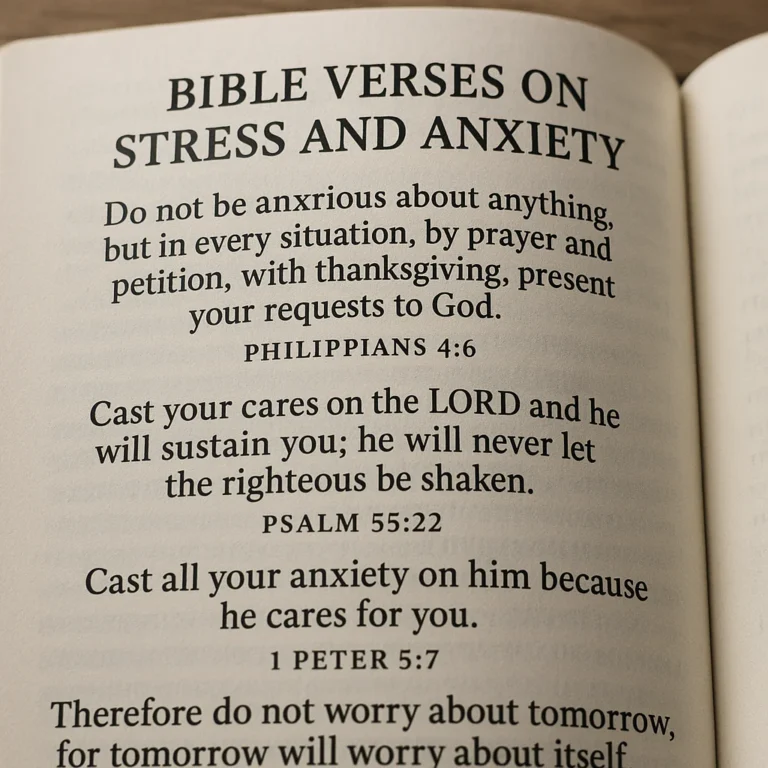
Some of the most popular daily Bible verses for stress and anxiety relief are Philippians 4:6–7, Isaiah 41:10, Matthew 6:34, Psalm 23:1–4, and 1 Peter 5:7. They offer words for prayer, courage, comfort, and taking life one day at a time—without suggesting you must feel calm every moment to have faith.
We’ve found that a short passage can be easier to carry through a busy day than a long reading plan. Read a verse in context, notice one phrase that speaks to you, and turn it into an honest prayer. Sometimes the first bit of relief is simply having words for what you’re carrying.
Key Takeaways
- Start with a verse that fits the moment: Philippians 4:6–7 for worry, Psalm 23 for comfort, or Matthew 6:34 for concerns about tomorrow.
- Read the surrounding passage, since context helps reveal what a verse means.
- Build a simple daily rhythm: read, reflect, pray, and choose one practical next step.
- Anxiety is not a sign of spiritual failure. Scripture can offer comfort alongside support from trusted people and qualified mental-health professionals.
- If anxiety is persistent or disrupting daily life, seek professional help as well as spiritual encouragement.
Table of Contents
- ⚡ Quick Tips and Facts: Daily Bible Verses for Stress and Anxiety
- 🌿 Why Scripture Can Bring Comfort During Stress and Anxiety
- 📖 15 Popular Daily Bible Verses for Stress and Anxiety Relief
- 1. Philippians 4:6–7: Pray Instead of Worry
- 2. Isaiah 41:10: Remember You Are Not Alone
- 3. Matthew 6:34: Take Today One Day at a Time
- 4. Psalm 34:4: Seek God When Fear Rises
- 5. 1 Peter 5:7: Cast Your Cares on God
- 6. John 14:27: Receive Christ’s Peace
- 7. Psalm 23:1–4: Find Comfort in God’s Care
- 8. Joshua 1:9: Take Courage in God’s Presence
- 9. Psalm 46:1–2: Remember God Is Your Refuge
- 10. Proverbs 3:5–6: Trust God With the Unknown
- 11. Psalm 55:22: Let God Sustain You
- 12. Romans 8:38–39: Rest in God’s Unfailing Love
- 13. Lamentations 3:22–23: Begin Again With Hope
- 14. 2 Timothy 1:7: Remember the Spirit God Gives
- 15. Psalm 94:19: Find Comfort in Troubled Thoughts
- 🕊️ Bible Verses for Specific Stressful Moments
- Verses for panic, racing thoughts, and fear
- Verses for work stress and difficult decisions
- Verses for sleep and nighttime anxiety
- Verses for grief, uncertainty, and hard seasons
- 🔎 What These Bible Verses Mean in Context
- 🙏 How to Use a Daily Bible Verse for Anxiety Relief
- A simple five-minute Scripture routine
- How to turn a verse into a prayer
- Journaling, memorization, and verse cards
- 📅 A 7-Day Bible Reading Plan for Stress and Worry
- 📚 Choosing a Bible Translation for Comfort and Clarity
- 💬 How to Share an Encouraging Bible Verse With Someone
- ⚠️ A Helpful Note About Faith, Anxiety, and Mental Health Support
- 🌱 Encouragement for the Days When a Verse Doesn’t Make Anxiety Disappear
- Conclusion
- Recommended Links
- FAQ
- Reference Links
⚡ Quick Tips and Facts: Daily Bible Verses for Stress and Anxiety
- For a short daily reading, start with Philippians 4:6–7, Isaiah 41:10, Psalm 23:1–4, Matthew 6:34, or 1 Peter 5:7. Read the surrounding passage too; a verse is a window into a larger story, not a fortune cookie.
- Try this simple pattern: read slowly, notice one phrase, pray honestly, and choose one small next step. Our guide to the benefits of meditating on a daily Bible verse explains how reflection can help Scripture stay with you beyond your reading time.
- A Bible verse can offer spiritual comfort, but it is not a substitute for mental-health care. If anxiety is interfering with daily life, speak with a qualified health professional. The National Institute of Mental Health outlines common anxiety disorders and treatment options.
- 📌 Quick reference:
| When you feel… | Try reading… | A simple focus |
|---|---|---|
| Woried about what’s next | Matthew 6:34 | Take today one step at a time |
| Afraid or alone | Isaiah 41:10 | Remember God’s presence |
| Overwhelmed by thoughts | Philippians 4:6–7 | Pray honestly; receive peace |
| Weighed down by cares | 1 Peter 5:7 | Tell God what is troubling you |
| In need of comfort | Psalm 23:1–4 | Picture God’s care through a hard valley |
- ✅ Choose a translation you understand, and check the passage context with a trusted Bible resource such as BibleGateway or the YouVersion Bible App.
- ❌ Don’t treat anxiety as proof that you lack faith. The Psalms include fear, grief, questions, and trust, sometimes all in the same breath.
🌿 Why Scripture Can Bring Comfort During Stress and Anxiety
Scripture does not promise that every anxious feeling will vanish as soon as you read a verse. It does offer words for fear, a framework for hope, and reminders of God’s presence when life feels unsteady. That distinction matters: comfort is meaningful even when it is not an instant cure.
The Bible gives us several ways to respond to distress:
- Prayer: Philippians 4:6–7 invites believers to bring requests to God.
- Reassurance: Isaiah 41:10 emphasizes God’s presence and help.
- Wisdom for the present: Matthew 6:34 focuses attention on today rather than tomorrow’s imagined troubles.
- Honest lament: Many Psalms give voice to pain without pretending everything is fine.
A helpful perspective comes from the American Psychological Association’s explanation of anxiety: anxiety can be a normal response to stress, but persistent or intense anxiety may call for professional support. Faith practices and clinical care need not compete. For many people, prayer and Scripture are part of a broader network of support that may also include therapy, medical care, trusted friends, and practical changes.
Explore more passages in our collections of Bible verses by topic and Bible verses for strength.
📖 15 Popular Daily Bible Verses for Stress and Anxiety Relief
These verses are popular because they speak to recognizable human experiences: fear, uncertainty, exhaustion, and the need for comfort. We’ve included a brief reflection for each, but read the full passage in your preferred translation. Wording differs among translations, so the reference is the stable part.
| Verse | Helpful theme | A reflection prompt |
|---|---|---|
| Philippians 4:6–7 | Prayer and peace | What can I honestly bring to God today? |
| Isaiah 41:10 | God’s presence | Where do I need help rather than self-reliance? |
| Matthew 6:34 | Today’s concerns | What is actually mine to do today? |
| Psalm 34:4 | Seeking God amid fear | What fear can I name in prayer? |
| 1 Peter 5:7 | Entrusting cares to God | What burden have I been carrying alone? |
| John 14:27 | Christ’s peace | What kind of peace am I longing for? |
| Psalm 23:1–4 | Guidance and comfort | What might it mean to be accompanied here? |
| Joshua 1:9 | Courage and presence | What brave, wise step can I take? |
| Psalm 46:1–2 | Refuge and strength | Where can I seek help right now? |
| Proverbs 3:5–6 | Trust and guidance | What don’t I know yet? |
| Psalm 55:22 | Sustaining care | Who can help me carry this burden? |
| Romans 8:38–39 | God’s enduring love | What truth remains true in a hard season? |
| Lamentations 3:22–23 | Renewed mercy | What small beginning is possible today? |
| 2 Timothy 1:7 | Courage, love, sound judgment | What response would reflect love and wisdom? |
| Psalm 94:19 | Comfort in anxious thoughts | What words bring steadiness to my mind? |
1. Philippians 4:6–7: Pray Instead of Worry
Paul writes to the Philippians about prayer, thanksgiving, and the peace of God. The passage does not scold people for feeling anxious; it points them toward bringing their needs to God. Prayer here is not pretending the problem is small. It is telling the truth in God’s presence.
Try making the verse practical:
- Name what is worrying you.
- Ask for the help, wisdom, or comfort you need.
- Include one thing you can give thanks for without denying the difficulty.
- Pause and breathe before deciding your next step.
Read the full chapter in a translation you trust at BibleGateway. You can also find related reflections in our Bible study guides.
2. Isaiah 41:10: Remember You Are Not Alone
“Do not fear” appears here alongside reasons for courage: God’s presence, strength, help, and support. In its original setting, Isaiah 41 addresses Israel’s fear and God’s assurance to his people. The promise is not that life contains no hardship; it is that hardship does not mean abandonment.
When anxiety says, I have to handle everything by myself, this verse offers a different starting point: you can seek help, and you are not required to be fearless before you act. Read Isaiah 41 in context through BibleGateway.
3. Matthew 6:34: Take Today One Day at a Time
Jesus’ teaching about worry in Matthew 6 points to trust in God’s care and attention to the present. “Do not worry about tomorrow” is not a command to ignore planning, bills, health concerns, or responsibilities. It challenges us not to live tomorrow’s distress in advance.
A practical question to ask is: What is one responsible thing I can do today, and what is not mine to solve today? Read Matthew 6:25–34 as a whole at BibleGateway.
4. Psalm 34:4: Seek God When Fear Rises
Psalm 34 describes seeking the Lord and being heard amid fear. The psalm later recalls trouble, rescue, and God’s nearness to the brokenhearted. Its confidence comes from a lived story, not from claiming that a faithful person never feels afraid.
You might pray a plainspoken version: “God, I feel afraid about __. Please stay near and show me the next step.” The Psalms make room for both honest emotion and trust.
5. 1 Peter 5:7: Cast Your Cares on God
Peter encourages readers to place their anxieties on God because God cares for them. The surrounding passage also speaks about humility, vigilance, and standing firm in faith. In other words, entrusting a burden to God does not mean denying reality or refusing wise help.
One way to practice this verse is to write down a worry, pray about it, and then identify one person or action that could help. Leting go of a burden spiritually can include asking another person to help carry it practically. Read the passage in context at BibleGateway.
6. John 14:27: Receive Christ’s Peace
In John 14, Jesus speaks to his disciples before his arrest and death. His promise of peace comes in a moment of impending upheaval, not in a life free of painful events. That context keeps the verse from becoming a guarantee of constant calm.
The peace Jesus offers is not simply the absence of problems. It is a gift grounded in his presence and relationship with his followers. Read John 14:25–31 at BibleGateway.
7. Psalm 23:1–4: Find Comfort in God’s Care
Psalm 23 pictures God as a shepherd who guides, provides, and stays near—even in the darkest valley. Notice the movement: green pastures are not the only setting. The valley is part of the psalm, and the shepherd is present there too.
For a slow reading, pause after each image:
- What would “rest” look like for me today?
- Where do I need guidance?
- What valley am I walking through?
- Who can accompany me in practical ways?
Read the whole psalm at BibleGateway, and browse our Bible verses about reflection.
8. Joshua 1:9: Take Courage in God’s Presence
Joshua receives this encouragement as he prepares to lead Israel after Moses’ death. The verse is tied to a specific calling and moment of transition. Its broader principle is not “you will never feel nervous,” but courage can mean taking a faithful next step while remembering God’s presence.
If you’re facing a difficult conversation, appointment, or decision, pair the verse with preparation: gather information, ask for counsel, and make a realistic plan. Read Joshua 1 in context at BibleGateway.
9. Psalm 46:1–2: Remember God Is Your Refuge
Psalm 46 calls God a refuge and strength, a present help in trouble. It uses dramatic images of the earth giving way and waters roaring to describe upheaval. The point is not that danger is imaginary; it is that God is portrayed as a trustworthy refuge amid instability.
A refuge can include prayer, a safe place, a supportive person, and professional care. Those forms of support are not rivals. Read the psalm at BibleGateway.
10. Proverbs 3:5–6: Trust God With the Unknown
Proverbs 3 encourages trust in God and attentiveness to God’s wisdom. It does not tell readers to switch off their judgment. The surrounding chapter commends wisdom, instruction, and discernment. Trust is not the same as refusing to think; it means seeking guidance beyond our own limited perspective.
Ask: “What information do I need? Who is wise and trustworthy? What choice reflects love, honesty, and responsibility?” Read Proverbs 3 at BibleGateway.
11. Psalm 55:22: Let God Sustain You
Psalm 55 is a prayer from someone distressed by betrayal and danger. Its invitation to cast a burden on God comes from a deeply troubled setting. That makes it especially helpful when your situation is complicated rather than neatly fixable.
Try naming the burden specifically, then ask both for God’s sustaining care and for the support you need from people. Read the full psalm at BibleGateway.
12. Romans 8:38–39: Rest in God’s Unfailing Love
Romans 8 speaks of suffering, weakness, and hope before affirming that nothing can separate believers from God’s love in Christ. It does not say hardship is painless. It says hardship does not get the final word about God’s love.
When fear tells you that distress makes you unworthy or abandoned, this passage offers a firm counterpoint. Read Romans 8 in context at BibleGateway.
13. Lamentations 3:22–23: Begin Again With Hope
Lamentations is a book of grief following Jerusalem’s destruction. Its hope in God’s compassion appears in the middle of devastation, not after an easy resolution. The passage can support a modest, honest hope: today may bring enough mercy for today, even if the larger story remains painful.
Read Lamentations 3:19–33 at BibleGateway.
14. 2 Timothy 1:7: Remember the Spirit God Gives
This verse contrasts fearfulness with power, love, and sound judgment. Different translations render the final phrase in different ways, such as self-discipline or sound mind. Read the surrounding passage: Paul is encouraging Timothy to remain faithful amid hardship, not promising that believers will never experience fear.
A useful reflection is: “What would a response shaped by love and sound judgment look like right now?” Read 2 Timothy 1 at BibleGateway.
15. Psalm 94:19: Find Comfort in Troubled Thoughts
Psalm 94 acknowledges anxious thoughts and points to God’s consolation. It is a brief, honest line for days when the mind feels crowded. Repeating a verse may help focus attention, but it should not become pressure to force yourself into feeling calm.
Try reading it slowly, then name one comforting truth or person you can turn to. Read the psalm in full at BibleGateway.
🕊️ Bible Verses for Specific Stressful Moments
Different situations call for different kinds of comfort. The verses below are starting points, not magic words. If you want more themed passages, see our collections of Bible verses by topic and Bible verses for strength.
| Situation | Passages to consider | Helpful reminder |
|---|---|---|
| Panic or racing thoughts | Psalm 94:19; Philippians 4:6–7 | Slow down and seek support |
| Work stress or decisions | Proverbs 3:5–6; Joshua 1:9 | Pair prayer with wise preparation |
| Nightime worry | Psalm 23; Psalm 4:8 | Seek comfort and a steady routine |
| Grief or uncertainty | Psalm 34; Lamentations 3:22–23 | Lament and hope can coexist |
| Feeling alone | Isaiah 41:10; Romans 8:38–39 | Reach out as well as pray |
Verses for panic, racing thoughts, and fear
When thoughts race, try reading one short passage aloud at a comfortable pace. Psalm 56:3, Psalm 94:19, and Philippians 4:6–7 can give you words for fear and prayer. You do not need to read them perfectly or feel instantly different.
If you experience intense or recurring panic, or symptoms that feel medically concerning, contact a health professional. The NIMH anxiety disorders page offers information about symptoms and treatment; a clinician can help assess what support fits your situation.
Verses for work stress and difficult decisions
For a demanding season at work, Proverbs 3:5–6 can prompt reflection, while Matthew 6:34 helps separate today’s responsibilities from imagined future scenarios. Joshua 1:9 may encourage courage in a transition, but pair encouragement with sensible planning:
- Write down the decision or task.
- Separate facts from predictions.
- Identify the next action you can take.
- Ask for advice from someone with relevant experience.
- Pray for wisdom, courage, and a generous spirit.
For thoughtful Bible reading practices, browse our Bible study guides.
Verses for sleep and nighttime anxiety
Psalm 23 and Psalm 4:8 are often read for comfort at night. A bedtime routine might include a short passage, a simple prayer, and a written reminder of anything you can address tomorrow. If sleep difficulty persists, the NHS guidance on insomnia explains when to seek help and offers practical information.
Try not to turn devotional reading into one more task you can “fail.” A few sincere lines are enough.
Verses for grief, uncertainty, and hard seasons
Psalm 34, Psalm 55, and Lamentations 3 make room for sorrow and distress. Their language can help when a cheerful slogan feels like a sweater that doesn’t fit. Grief may call for companionship, time, and practical care; Scripture can accompany those needs without erasing them.
Our collection of Bible verses about reflection offers more passages for quiet reading and contemplation.
🔎 What These Bible Verses Mean in Context
Verse lists are useful for finding a starting point, but context helps us read wisely. A line that sounds like a simple guarantee may be part of a poem, a letter to a particular church, or a message to Israel in a specific historical moment.
| Reading question | Why it matters |
|---|---|
| Who is speaking? | A psalmist, prophet, apostle, or Jesus may be addressing a different situation |
| Who is the audience? | Some promises were first spoken to a particular community |
| What comes before and after? | The surrounding verses clarify the point |
| What kind of writing is this? | Poetry, wisdom, history, and letters communicate differently |
| How do translations vary? | Comparing translations can reveal nuance, not necessarily contradiction |
For example, Matthew 6:34 encourages trust in God’s care; it is not an instruction to ignore tomorrow’s responsibilities. Joshua 1:9 addresses Joshua’s leadership and calling; it is not a guarantee that every plan will succeed exactly as hoped. And Philippians 4:6–7 invites prayer without shaming readers for having anxious feelings.
If you’d like a listening option, the featured video is described as a 15-minute Biblescapes audio Bible collection of more than 80 passages about anxiety, worry, doubt, stress, and fear. Listening can be a helpful companion to reading, though it is not a replacement for understanding each passage in context.
For reliable text comparison, use BibleGateway or the YouVersion Bible App, and explore our Bible study guides.
🙏 How to Use a Daily Bible Verse for Anxiety Relief
A daily verse works best when it becomes a small practice of attention—not a test of whether you are spiritual enough to feel calm. Here’s a gentle approach that can fit into a busy morning, a lunch break, or the quiet minutes before bed.
A simple five-minute Scripture routine
- Choose one passage. Read a few verses, not only a sentence pulled out of context.
- Read it twice. On the second reading, notice a phrase that stands out.
- Name your feelings honestly. Try, “I feel worried about…” or “I’m not sure what to do about…”
- Reflect on the passage. Ask what it reveals about God, people, or the situation.
- Pray simply. Ask for comfort, wisdom, courage, or support.
- Choose one next step. That might be making a phone call, asking for help, or resting.
- Return to the verse later. A reminder on paper or your phone can help you revisit it.
For more on reflective reading, see the benefits of meditating on a daily Bible verse.
How to turn a verse into a prayer
Use the passage as a starting point, then speak in your own words.
Example using Psalm 23:
- “God, I feel like I’m in a difficult valley.”
- “Please guide me through what I can’t see clearly.”
- “Help me accept support from people who care.”
- “Show me the next safe and wise step.”
This kind of prayer does not require polished language. The Psalms themselves range from praise to lament, so honest words belong in prayer. Find more reflective prompts in our Bible verses about reflection.
Journaling, memorization, and verse cards
Choose the tool that serves you; you don’t need a full stationery department to meet God in Scripture. A notebook, a phone note, or a printed verse can all work.
| Practice | Possible benefit | Keep it gentle |
|---|---|---|
| Journal one sentence | Helps name what is on your mind | Stop before it feels burdensome |
| Memorize a short phrase | Makes a passage easier to recall | Choose a phrase that feels meaningful |
| Set a daily reminder | Creates a consistent cue | Turn it off if it becomes stressful |
| Keep a verse card nearby | Provides a visible prompt | Read it with context, not as a slogan |
| Listen to an audio Bible | Useful when reading feels difficult | Revisit the text when you can |
Our Bible verse backgrounds can provide visual reminders, but the most useful format is the one you’ll actually use. For a broader introduction to Bible-reading habits, visit Bible study guides.
📅 A 7-Day Bible Reading Plan for Stress and Worry
This short plan moves through prayer, presence, trust, comfort, and hope. Read the full passage each day, then choose one prompt. It is fine to repeat a day or pause; spiritual practices are not homework with a late penalty.
| Day | Reading | Reflection prompt |
|---|---|---|
| 1 | Philippians 4:4–9 | What can I bring to God honestly? |
| 2 | Psalm 23 | Where do I need guidance or rest? |
| 3 | Matthew 6:25–34 | What belongs today, and what can wait? |
| 4 | Isaiah 41:8–13 | What does God’s promised presence mean to me? |
| 5 | Psalm 34:1–10 | What fear can I name without judgment? |
| 6 | John 14:25–31 | What kind of peace is Jesus offering here? |
| 7 | Lamentations 3:19–33 | What small sign of mercy can I notice today? |
Make the plan personal
- Read in a translation you understand.
- Write one sentence about what stood out.
- If a passage brings up difficult feelings, take a break or discuss it with a trusted pastor, counselor, or friend.
- If you miss a day, continue where you left off. No catching-up marathon required.
You can compare translations on BibleGateway and find more guided reading ideas in our Bible study guides.
📚 Choosing a Bible Translation for Comfort and Clarity
There is no single translation that is best for every reader or every purpose. Some prioritize a more word-for-word approach; others use more natural contemporary language. Readable wording can help you understand a passage, while comparing translations can reveal where phrasing differs.
| Translation | General reading feel | Helpful approach |
|---|---|---|
| NIV | Contemporary, widely used | Read the passage and surrounding paragraph |
| NLT | Clear, natural English | Helpful for many readers’ devotional reading |
| ESV | More formal style | Compare with another translation when wording feels unfamiliar |
| KJV | Traditional English | Enjoy its literary cadence, while checking older vocabulary |
| CSB | Contemporary with a balance of form and readability | Useful for study and everyday reading |
These are broad descriptions, not a ranking. Translation choices involve careful scholarship and different philosophies. Compare passages using BibleGateway or YouVersion. If you’re studying a challenging passage, consult a reputable study Bible or trusted teacher rather than relying on a quote graphic alone.
💬 How to Share an Encouraging Bible Verse With Someone
A verse can be a thoughtful gift, but a person in distress may need listening before advice. Ask first: “Would a Bible verse or prayer feel helpful right now?” That small question respects their preferences and keeps encouragement from sounding like a correction.
A compassionate way to share might be:
“I’m sorry this is weighing on you. Would it be okay if I shared a verse that comforts me? I’m here to listen, too.”
- ✅ Offer to listen, sit with them, or help with a practical need.
- ✅ Share the passage and its reference, not just an isolated quotation.
- ❌ Avoid “just pray more” or “you shouldn’t feel anxious.”
- ❌ Don’t promise that a verse will make their symptoms disappear.
Proverbs 12:25 recognizes the value of a kind word. Sometimes the most faithful response is not a clever quotation; it is a steady, nonjudgmental presence. For more shareable passages, browse Bible verses by topic.
⚠️ A Helpful Note About Faith, Anxiety, and Mental Health Support
Feeling anxious does not mean you have failed spiritually. Anxiety can arise for many reasons, and persistent or severe symptoms deserve care. Scripture, pastoral support, therapy, and medical care can work together; people may choose different combinations depending on their needs and circumstances.
Consider reaching out to a health professional if anxiety:
- Makes work, school, relationships, or daily tasks difficult.
- Persists or feels overwhelming.
- Leads to frequent panic or substantial sleep disruption.
- Prompts you to avoid activities or situations that matter to you.
The National Institute of Mental Health provides information about anxiety disorders and treatments. The 988 Suicide & Crisis Lifeline offers U.S. crisis support; if you or someone else is in immediate danger, contact local emergency services. Outside the United States, use your country’s local crisis or emergency resources.
Faith communities can offer belonging, prayer, and practical support. A pastor or spiritual mentor may be a helpful companion, but they are not a substitute for a licensed clinician when clinical care is needed.
🌱 Encouragement for the Days When a Verse Doesn’t Make Anxiety Disappear
Sometimes you read a passage, pray, and still feel anxious. That does not mean you read it incorrectly, prayed badly, or disappointed God. It means you are a human being experiencing distress—and you may need more than one kind of support.
Other Christian writers make a similar practical point. A Scriptured Life encourages readers to learn, pray, and keep Scripture close, while also advising people to consult a doctor or therapist when anxiety affects health or daily life. Concordia Gospel Outreach emphasizes God’s care and notes that answer to prayer may not arrive on our preferred timetable. And Bible Connection’s collection of comforting verses pairs Scripture with practical reminders about self-care and seeking support.
Those perspectives are compatible: Scripture can encourage trust, and responsible care can include professional help. If the verse you chose doesn’t quiet your mind, try reading a Psalm of lament, contacting someone you trust, or speaking with a qualified clinician. Sometimes the next faithful step is not a stronger attempt to feel peaceful; it is letting someone walk with you.