Support our educational content for free when you purchase through links on our site. Learn more
35 Popular Bible Verses for Quiet Time 🙏

The answer to “What are the most popular Bible verses for daily devotionals and quiet time with God?” includes passages such as Philippians 4:6–7, Proverbs 3:5–6, Psalm 23, Psalm 46:10, Isaiah 41:10, Matthew 11:28–30, James 1:5, and Lamentations 3:22–23. Together, they speak to the needs most of us bring to Scripture: anxiety, guidance, rest, courage, wisdom, hope, and a fresh start.
A good daily devotional is not a race to collect verses or maintain a flawless reading streak. Choose one passage, read it in context, pray through it, and ask how it should shape your next faithful step. A few attentive minutes with God can be more meaningful than a hurried chapter read while mentally composing your grocery list.
One morning, we opened Psalm 23 expecting a quick word of comfort before a busy day. By the time we reached “he restores my soul,” the packed schedule had not changed—but our posture had. That is the quiet power of Scripture: it may not rearrange the circumstances immediately, but it can reorient the person facing them.
Key Takeaways
- Start with trusted favorites: Philippians 4:6–7, Psalm 23, Proverbs 3:5–6, and Lamentations 3:22–23 are excellent foundations for daily devotionals.
- Read beyond a single sentence: Check the surrounding verses so popular Bible passages are understood in their original context.
- Match Scripture to your need: Choose passages about peace, strength, wisdom, forgiveness, gratitude, or hope according to the season you are facing.
- Use a simple devotional rhythm: Read, observe, reflect, pray, and practice one response.
- Consistency matters more than length: A focused five-minute quiet time can become a lasting habit.
- Do not treat Scripture like a slogan: God’s Word forms your character; it is not a promise that every preferred outcome will happen.
- Return to grace when you miss a day: Restart without guilt, adjust your routine, and keep seeking God.
Table of Contents
- ⚡️ Quick Tips and Facts: Bible Verses for Daily Devotionals
- How to Choose a Scripture for Quiet Time With God
- A Simple 10-Minute Daily Devotional Routine
- Morning, Evening, and On-the-Go Bible Reading Tips
- 📖 Biblical Background: Why Christians Practice Daily Devotionals
- What the Bible Says About Meditating on Scripture
- Prayer, Silence, and Listening for God’s Guidance
- How Jesus Modeled Quiet Time With God
- 🌅 35 Most Popular Bible Verses for Daily Devotionals and Quiet Time
- 1. Jeremiah 29:11: God’s Plans and Hope
- 2. Philippians 4:6–7: Peace Instead of Anxiety
- 3. Proverbs 3:5–6: Trusting God’s Direction
- 4. Psalm 23: The Lord as Our Shepherd
- 5. Psalm 46:10: Be Still and Know God
- 6. Isaiah 41:10: Courage When You Feel Afraid
- 7. Matthew 6:33: Seeking God First
- 8. Matthew 11:28–30: Rest for the Weary
- 9. John 3:16: God’s Love and Salvation
- 10. John 14:27: The Peace of Christ
- 11. Romans 8:28: God Working Through All Things
- 12. Romans 12:2: Renewing Your Mind
- 13. 1 Corinthians 10:13: Strength During Temptation
- 14. 2 Corinthians 5:17: New Life in Christ
- 15. Galatians 5:22–23: The Fruit of the Spirit
- 16. Ephesians 2:8–9: Salvation by Grace
- 17. Ephesians 6:10–11: Spiritual Strength and God’s Armor
- 18. Philippians 4:13: Strength Through Christ
- 19. Philippians 1:6: God Finishes What He Begins
- 20. Colossians 3:23: Working Wholeheartedly for God
- 21. 2 Timothy 1:7: Power, Love, and Self-Control
- 22. Hebrews 4:12: The Living Word of God
- 23. Hebrews 11:1: Understanding Biblical Faith
- 24. James 1:5: Asking God for Wisdom
- 25. 1 Peter 5:7: Giving Your Worries to God
- 26. 1 John 1:9: Confession and Forgiveness
- 27. Psalm 1:1–3: Growing Like a Tree Planted by Water
- 28. Psalm 27:1: God as Light and Salvation
- 29. Psalm 34:8: Tasting and Seeing God’s Goodness
- 30. Psalm 51:10: A Clean Heart and Renewed Spirit
- 31. Psalm 119:105: Scripture as a Lamp for Your Path
- 32. Proverbs 16:3: Comitting Your Plans to God
- 33. Isaiah 40:31: Renewed Strength for the Weary
- 34. Lamentations 3:22–23: New Mercies Every Morning
- 35. Micah 6:8: Walking Humbly With God
- 💛 Best Bible Verses for Specific Daily Needs
- Bible Verses for Anxiety, Stress, and Overthinking
- Bible Verses for Peace and Rest
- Bible Verses for Strength During Hard Seasons
- Bible Verses for Hope and Encouragement
- Bible Verses for Wisdom and Decision-Making
- Bible Verses for Faith and Trust in God
- Bible Verses for Forgiveness and Spiritual Renewal
- Bible Verses for Love, Marriage, and Family
- Bible Verses for Work, Purpose, and Productivity
- Bible Verses for Grief, Loss, and Comfort
- Bible Verses for Protection and Safety
- Bible Verses for Gratitude and Contentment
- 🌄 Best Morning Bible Verses for Starting the Day With God
- A Morning Scripture Reading Plan
- Morning Prayers Based on Bible Promises
- How to Avoid Reaching for Your Phone First
- 🌙 Best Evening Bible Verses for Nightime Devotions
- Scriptures for Reviewing Your Day
- Bible Verses for Sleep and Rest
- An Evening Prayer of Gratitude and Surrender
- 🧭 How to Build a Consistent Daily Devotional Habit
- Choose a Realistic Time and Place
- Use the SOAP Bible Study Method
- Try the ACTS Prayer Method
- Create a Scripture Memory Practice
- Use a Bible Reading Plan Without Turning It Into a Chore
- What to Do When You Miss a Day
- 📝 How to Study a Bible Verse During Quiet Time
- Read the Verse in Its Full Context
- Ask Observation, Interpretation, and Application Questions
- Turn Scripture Into a Personal Prayer
- Journal Prompts for Christian Devotions
- How to Meditate on Scripture Without Misusing It
- 📚 Bible Translations and Devotional Tools Compared
- Choosing Between the NIV, ESV, NLT, CSB, and KJV
- Study Bibles, Devotional Bibles, and Large-Print Editions
- Bible Apps for Daily Scripture Reading
- Recommended Christian Journals, Pens, and Reading Plans
- 👨 👩 👧 Bible Verses for Families, Children, and Christian Moms
- Simple Family Devotion Ideas
- Short Scriptures Children Can Memorize
- Quiet Time for Busy Parents
- Bible Reading With Your Spouse or Small Group
- 🎯 Common Mistakes to Avoid in Daily Devotions
- Taking Verses Out of Context
- Treating Quiet Time Like a Spiritual Performance
- Using Scripture as a Quick Fix for Deep Pain
- Confusing Feelings With God’s Voice
- ❓ Frequently Asked Questions About Daily Bible Devotionals
- What Is the Best Bible Verse to Read Every Day?
- How Many Bible Verses Should I Read During Quiet Time?
- What Is a Good Bible Verse for Today?
- How Long Should a Daily Devotional Be?
- Should I Read the Bible or Pray First?
- Can I Use the Same Bible Verse Every Day?
- What Should I Do If I Do Not Understand a Passage?
- Is Reading a Daily Bible Verse Enough?
- How Can I Stay Consistent With Bible Reading?
- ✅ A 30-Day Bible Verse Quiet Time Reading Plan
- Days 1–5: Trust and Dependence on God
- Days 6–10: Peace and Freedom From Anxiety
- Days 11–15: Strength and Courage
- Days 16–20: Wisdom and Spiritual Growth
- Days 21–25: Love, Grace, and Forgiveness
- Days 26–30: Hope, Gratitude, and Purpose
- 🔗 Recommended Links for Bible Study and Christian Devotions
- Bible Gateway
- YouVersion Bible App
- BibleProject
- Blue Letter Bible
- The Gospel Coalition Bible Reading Resources
- 📌 Reference Links and Trusted Biblical Sources
- Bible Passages on Prayer and Meditation
- Bible Passages on Wisdom and Spiritual Growth
- Bible Translation and Interpretation Resources
- Further Reading on Christian Spiritual Formation
- 🙏 Conclusion: Making God’s Word Part of Your Everyday Rhythm
Quick Tips and Facts: Bible Verses for Daily Devotionals
Looking for the Bible verse for today’s devotional? Start with our guide to What Is the Bible Verse for Today’s Devotional? and then choose a passage that meets your real spiritual need, not merely the verse that happens to look prettiest on a coffee mug. ☕📖
Fast Answers for Busy Quiet Times
The most popular Bible verses for daily devotionals commonly address peace, guidance, courage, hope, wisdom, forgiveness, and spiritual growth. Frequently chosen passages include:
- Philippians 4:6–7 for anxiety and prayer
- Proverbs 3:5–6 for trust and direction
- Psalm 23 for comfort and God’s care
- Psalm 46:10 for stillness and surrender
- Isaiah 41:10 for courage
- Matthew 11:28–30 for rest
- Romans 12:2 for renewed thinking
- James 1:5 for wisdom
- Lamentations 3:22–23 for morning hope
- Psalm 119:105 for guidance from Scripture
These passages are popular for good reasons, but popularity is not the same as universal fit. A verse about courage may serve you beautifully on Monday, while a passage about confession or lament may be more honest on Wednesday. Scripture is not a vending machine where we insert a worry and receive an instantly cheerful slogan. It is God’s Word, meant to shape the whole person.
The Bible Society describes the Bible as a collection of writings that communicates God’s story and relationship with humanity. That larger story matters because a devotional verse should be read within its biblical context.
The 10-Minute Quiet-Time Pattern
When time is short, use this simple rhythm:
| Minutes | Practice | Question to Ask |
|---|---|---|
| 1 | Become still | What am I carrying into this moment? |
| 2 | Read the passage | What does the text actually say? |
| 3 | Read it again | What word or phrase stands out? |
| 2 | Reflect | What does this reveal about God? |
| 1 | Respond | What should I confess, trust, thank God for, or obey? |
| 1 | Pray | How can I turn this passage into a prayer? |
A short, attentive devotional can be spiritually fruitful. A longer session can be wonderful too, but duration is not the measure of devotion. Jesus warned against prayer becoming a performance in Matthew 6:5–13.
Three Rules for Choosing a Daily Verse
-
Choose the need, then check the context.
If you feel anxious, begin with Philippians 4:6–7, but read the surrounding paragraph and notice Paul’s emphasis on prayer, gratitude, thought patterns, and contentment. -
Prefer a paragraph over an isolated sentence.
A single verse can be memorable, but a fuller passage often prevents misunderstanding. -
Move from information to response.
Ask, “What will I do with this truth today?” Scripture is intended to form faithful living, not merely produce inspirational wallpaper.
Morning, Evening, and On-the-Go Reading
| Situation | Helpful passages | Best response |
|---|---|---|
| Starting the day | Psalm 5:3; Lamentations 3:22–23; Psalm 118:24 | Offer the day to God |
| Facing anxiety | Philippians 4:6–8; 1 Peter 5:7 | Pray specifically and gratefully |
| Neding direction | Proverbs 3:5–6; James 1:5; Psalm 32:8 | Ask for wisdom and examine motives |
| Feeling weak | Isaiah 41:10; Psalm 73:26; 2 Corinthians 12:9 | Depend on God rather than self-confidence |
| Ending the day | Psalm 4:8; Matthew 11:28–30; Lamentations 3:22–23 | Release unfinished concerns |
| Traveling or waiting | Psalm 23; Romans 8:38–39; Joshua 1:9 | Practice God’s presence |
For topical collections, our Bible Verses by Topic category is a useful starting point. For deeper study, pair it with our Bible Study Guides.
Biblical Background: Why Christians Practice Daily Devotionals
What “Quiet Time With God” Means
“Quiet time” is a modern Christian phrase rather than a formal biblical command. It usually describes a regular period devoted to:
- Reading or listening to Scripture
- Prayer
- Reflection
- Worship
- Confession
- Gratitude
- Applying biblical truth
The practice reflects several biblical patterns. Psalm 1 portrays the blessed person as someone who delights in and meditates on God’s instruction. Jesus repeatedly withdrew to solitary places to pray, as recorded in Luke 5:16. The Bible also describes believers gathering, teaching one another, praying, and singing together in Colossians 3:16–17.
That gives us an important balance:
- Personal devotion matters.
- Christian faith is not meant to be lived alone.
- Quiet time supplements church, fellowship, worship, and wise pastoral care.
A devotional is not a magical appointment that makes a person spiritually superior. It is a recurring opportunity to attend to God.
How Scripture Describes Meditation
Biblical meditation is not emptying the mind into neutrality. It is more like filling the mind with God’s words and turning them over carefully.
The Hebrew concept behind meditation in passages such as Psalm 1 and Psalm 119 includes pondering, murmuring, or repeatedly reflecting. The BibleProject overview of the Psalms shows how biblical poetry invites readers to slow down and absorb the language of worship, lament, wisdom, and trust.
Try this sequence:
- Read the verse slowly.
- Repeat a key phrase.
- Ask what it reveals about God.
- Notice what it exposes in you.
- Pray its truth back to God.
- Identify one faithful response.
How Jesus Modeled Prayer and Solitude
The Gospels show Jesus praying:
- Before major moments of ministry
- In lonely places
- Early in the morning
- Before choosing the Twelve
- In grief and distress
- For His disciples
- In surrender to the Father
Read Mark 1:35, Luke 6:12–13, and Matthew 26:36–46 together. Jesus’ prayer life was not an escape from responsibility. It prepared Him to meet responsibility faithfully.
That distinction helps busy readers. Quiet time is not about pretending your schedule does not exist. It is about meeting God before, within, and after the demands of the schedule.
35 Most Popular Bible Verses for Daily Devotionals and Quiet Time
The list below combines passages frequently used in Christian devotionals, morning Scripture lists, prayer resources, and topical Bible studies. It also reflects themes highlighted in Lynn Dove’s collection, “25 Encouraging Bible Verses to Read in the Morning”, where she describes morning Scripture as a “morning wake-up call.”
We recommend reading the full paragraph or chapter, checking the translation, and asking how the verse functions in its original setting. The quotations below use brief excerpts from commonly available translations; consult a licensed Bible text for full wording.
1. Jeremiah 29:11: God’s Plans and Hope
Jeremiah 29:11 is popular because it speaks of hope and a future. Yet its original setting is a word to Judean exiles in Babylon, not a promise that every personal plan will unfold quickly.
Read Jeremiah 29:1–14. God’s promise is connected to seeking Him, enduring a long season, and trusting His faithfulness.
Devotional question:
Where am I demanding immediate results instead of learning faithful dependence?
✅ Use it for: patience, hope, long-term trust
❌ Avoid using it as: a guarantee of a specific career, relationship, or financial outcome
2. Philippians 4:6–7: Peace Instead of Anxiety
“Do not be anxious about anything” is not a command to feel embarrassed about fear. Paul gives an active path: prayer, petition, thanksgiving, and trust in God’s guarding peace.
Read the wider passage in Philippians 4:4–9. The next verses also address thought patterns and contentment.
A helpful prayer framework:
- Name the fear.
- Ask God for a specific need.
- Thank Him for a specific act of faithfulness.
- Entrust the result to Him.
- Return to what is true and worthy.
The National Institute of Mental Health explains that persistent anxiety can require professional treatment. Scripture and prayer can support a person spiritually, but they should not be used to shame someone away from qualified care.
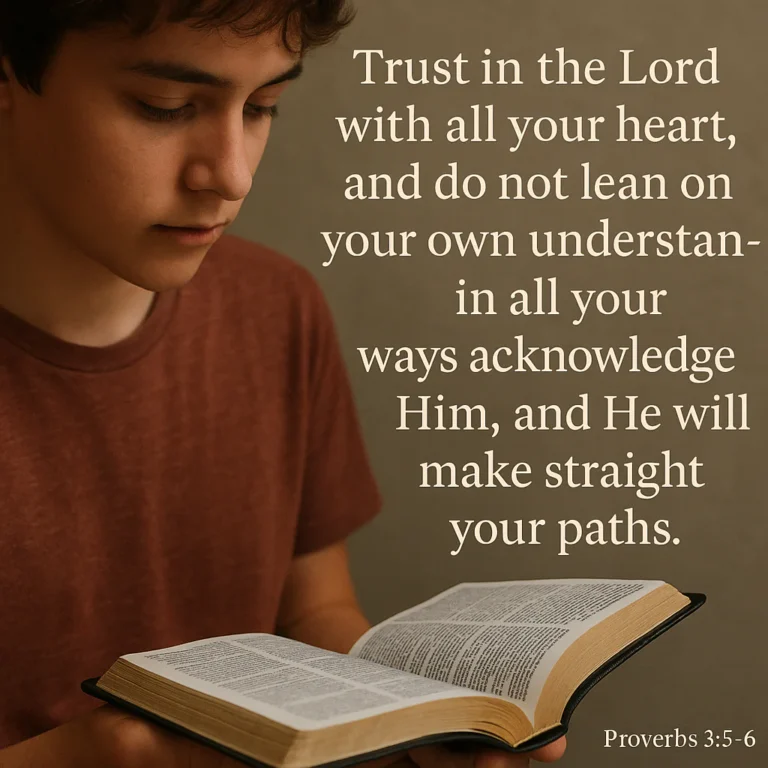
3. Proverbs 3:5–6: Trusting God’s Direction
This passage invites wholehearted trust rather than self-reliance. “Lean not on your own understanding” does not mean abandoning reason. Proverbs itself praises wisdom, counsel, planning, and discernment.
Read Proverbs 3:1–12. Trust includes honoring God with choices, resources, relationships, and habits.
Try this prayer:
“Lord, show me where I am confusing control with wisdom. Give me humility to seek counsel and courage to obey what You make clear.”
4. Psalm 23: The Lord as Our Shepherd
Psalm 23 remains a beloved devotional passage because it presents God as shepherd, guide, host, and protector. It does not promise a life without valleys. It promises God’s presence in the valley.
Read Psalm 23 aloud slowly. Notice the movement:
- Provision
- Rest
- Restoration
- Guidance
- Presence in danger
- Abundant hospitality
- Lifelong goodness
For a related collection, see Bible Verses About Reflection.
5. Psalm 46:10: Be Still and Know God
“Be still” is often used as an invitation to personal relaxation. In context, Psalm 46 speaks about upheaval, conflict, and God’s sovereign power. Stillness means ceasing frantic resistance and recognizing who God is.
Read Psalm 46, not only verse 10. The psalm begins with God as refuge and ends with His exaltation among the nations.
Reflection:
What would surrender look like today if I believed God is already my refuge?
6. Isaiah 41:10: Courage When You Feel Afraid
Isaiah 41:10 offers a cluster of promises: God is with His people, strengthens them, helps them, and upholds them. It does not deny fear; it addresses fear with divine presence.
Read the surrounding promise in Isaiah 41:8–13.
This is especially useful for:
- Medical appointments
- Difficult conversations
- Parenting fears
- Public responsibilities
- Grief and uncertainty
See our Bible Verses for Strength for related passages.
7. Matthew 6:33: Seeking God First
Jesus teaches His listeners to seek God’s kingdom and righteousness rather than becoming consumed by material worry. Read it with Matthew 6:25–34.
Seeking first does not mean neglecting work, bills, health, or practical planning. It means refusing to let those concerns become your functional master.
Morning application:
Before checking notifications, ask: “What would faithfulness to God look like in the first decision of my day?”
8. Matthew 11:28–30: Rest for the Weary
Jesus invites the burdened to come to Him. His rest is not laziness; it is relief from the crushing load of self-salvation, religious performance, and anxious striving.
Read Matthew 11:25–30. Notice that Jesus offers rest while also calling people to learn from Him.
✅ Helpful for: burnout, shame, exhaustion, overcommitment
✅ Practice: identify one burden to surrender and one wise limit to establish
9. John 3:16: God’s Love and Salvation
John 3:16 is often memorized as a summary of God’s love and the gospel. Read it alongside John 3:1–21, where Jesus speaks with Nicodemus about new birth, belief, judgment, and light.
A devotional response might be:
- Thank God for initiating salvation.
- Confess where you have tried to earn love.
- Pray for courage to live openly in the light.
- Consider how God’s love reshapes your treatment of others.
10. John 14:27: The Peace of Christ
Jesus gives peace in the context of preparing His disciples for His departure. This is not shallow optimism. It is peace rooted in Christ’s presence and the promised work of the Holy Spirit.
Read John 14:15–31.
When you read the word “peace,” ask:
- Is this peace based on circumstances?
- Or is it grounded in Christ’s promise?
- What fear is trying to define reality for me?
11. Romans 8:28: God Working Through All Things
Romans 8:28 is often quoted during suffering, but it should be handled tenderly. Paul does not say every event is good. He says God works in all things for the good of those who love Him, and the next verse points toward conformity to Christ.
Read Romans 8:18–39. The passage includes suffering, groaning, hope, intercession, and inseparable love.
Pastoral caution:
Do not use this verse to rush someone through grief. Sometimes the most faithful devotional response is lament, silence, and presence.
12. Romans 12:2: Renewing Your Mind
Romans 12:2 connects spiritual transformation with renewed thinking and discernment. It is not merely about replacing negative thoughts with positive ones. It concerns worshipful resistance to patterns that deform our loves and choices.
Read Romans 12:1–8.
A practical exercise:
| Question | Example |
|---|---|
| What message is shaping me? | “My worth depends on productivity.” |
| Does Scripture affirm or challenge it? | Human worth comes from God’s grace. |
| What truth will I practice? | Work faithfully without treating work as identity. |
13. 1 Corinthians 10:13: Strength During Temptation
This passage assures believers that temptation is not unique and that God provides a way to endure. It should not be used to minimize the complexity of addiction, trauma, or compulsive behavior.
Read 1 Corinthians 10:1–13. Paul’s warning includes Israel’s history, idolatry, and overconfidence.
Devotional application:
- Identify the predictable trigger.
- Name the escape route.
- Contact a trusted person.
- Remove access where appropriate.
- Pray without pretending you are invulnerable.
14. 2 Corinthians 5:17: New Life in Christ
“New creation” describes a profound change in identity and belonging. It does not mean every emotional wound disappears overnight.
Read 2 Corinthians 5:14–21. The passage moves from new creation to reconciliation and ambassadorial living.
Ask: How does my identity in Christ change the way I handle yesterday’s failure today?
15. Galatians 5:22–23: The Fruit of the Spirit
The fruit of the Spirit gives daily devotional readers a practical growth map: love, joy, peace, patience, kindness, goodness, faithfulness, gentleness, and self-control.
Read Galatians 5:13–26. The fruit contrasts with the works of the flesh and grows within a life led by the Spirit.
Rather than asking only, “Did I feel spiritual today?” ask:
- Was I more patient in conversation?
- Did I practice self-control?
- Did I repair harm?
- Did I pursue peace without avoiding truth?
16. Ephesians 2:8–9: Salvation by Grace
These verses anchor Christian salvation in grace through faith, not human boasting. Read Ephesians 2:1–10, including verse 10, which connects grace with good works prepared by God.
This guards against two opposite errors:
- Pride: “I saved myself.”
- Passivity: “Grace means obedience does not matter.”
Grace creates humble, grateful action.
17. Ephesians 6:10–11: Spiritual Strength and God’s Armor
The armor of God passage helps Christians think about spiritual resistance through truth, righteousness, faith, salvation, peace, Scripture, and prayer.
Read Ephesians 6:10–20. The passage does not encourage paranoia or blaming every hardship on demonic activity. It calls believers to stand faithfully.
A grounded devotional application:
| Biblical image | Daily practice |
|---|---|
| Belt of truth | Reject deliberate deception |
| Breastplate of righteousness | Pursue integrity |
| Shoes of peace | Bring reconciliation where possible |
| Shield of faith | Answer accusation with trust |
| Helmet of salvation | Remember your identity |
| Sword of the Spirit | Know and use Scripture wisely |
| Prayer | Remain dependent on God |
18. Philippians 4:13: Strength Through Christ
“I can do all things through Christ” is often applied to athletic, academic, or professional achievement. In context, Paul is talking about learning contentment in abundance and need.
Read Philippians 4:10–13. The verse means Christ strengthens believers to remain faithful across changing circumstances, not that every desired outcome is guaranteed.
Better devotional question:
What kind of faithfulness do I need Christ’s strength to practice today?
19. Philippians 1:6: God Finishes What He Begins
Paul expresses confidence that God will carry His work to completion. The promise encourages perseverance without pretending growth is instant.
Read Philippians 1:3–11.
Use it when:
- You feel discouraged by slow growth
- You are praying for someone’s spiritual journey
- You are tempted to measure yourself against others
- You need hope after failure
20. Colossians 3:23: Working Wholeheartedly for God
The video highlighted Colossians 3:23–24, encouraging believers to work wholeheartedly for the Lord. That message is valuable when work feels unseen.
Read the complete household and community section in Colossians 3:1–25. Wholehearted work does not justify exploitation, unhealthy overwork, or ignoring rest. It means serving with integrity because God sees.
21. 2 Timothy 1:7: Power, Love, and Self-Control
This verse contrasts fearfulness with the resources God provides: power, love, and self-control. It is especially fitting for moments that require courage with tenderness.
Read 2 Timothy 1:3–14.
Ask:
- Where do I need courage?
- Where do I need love rather than defensiveness?
- Where do I need disciplined action rather than panic?
22. Hebrews 4:12: The Living Word of God
Hebrews describes God’s Word as living and active, penetrating and discerning. This is not a promise that every reading will produce an emotional experience. It is a reminder that Scripture addresses the hidden motives of the heart.
Read Hebrews 4:12–16. The passage joins Scripture’s searching power with Jesus as the compassionate great High Priest.
The result is not despair but confidence to approach God’s throne of grace.
23. Hebrews 11:1: Understanding Biblical Faith
Hebrews 11:1 introduces a chapter about trust demonstrated through costly obedience. Faith is not pretending uncertainty does not exist. It is confidence in God’s character amid uncertainty.
Read Hebrews 11:1–16, then continue through the chapter for examples of faith that include waiting, risk, suffering, and hope.
24. James 1:5: Asking God for Wisdom
James gives direct encouragement to ask God for wisdom, emphasizing God’s generosity. Wisdom is more than information; it is skill in faithful living.
Read James 1:2–8. The passage connects wisdom with trials and steadfastness.
Before making a decision, pray:
“God, give me wisdom to see what is true, humility to receive counsel, and courage to do what is right.”
25. 1 Peter 5:7: Giving Your Worries to God
“Cast all your anxiety on him because he cares for you” offers both an action and a reason. We release anxiety to God because He cares, not because our worries are silly.
Read 1 Peter 5:6–11. Peter connects humility, alertness, resistance, suffering, and restoration.
Try writing one worry on paper, then underneath it write: “God cares about this, and I will take the next faithful step.”
26. 1 John 1:9: Confession and Forgiveness
This verse offers a clear path for confession and forgiveness. Confession is agreeing with God about sin rather than managing appearances.
Read 1 John 1:5–2:2. Confession is not self-punishment. It is returning to truth and receiving cleansing through Christ.
27. Psalm 1:1–3: Growing Like a Tree Planted by Water
Psalm 1 contrasts two ways of life and portrays the person who delights in God’s instruction as a fruitful tree. Growth is seasonal; fruitfulness does not mean constant visible productivity.
Read Psalm 1. Ask what influences are shaping your imagination, decisions, and desires.
28. Psalm 27:1: God as Light and Salvation
Psalm 27 begins with confidence but later includes honest pleading and waiting. That combination is spiritually healthy: courage and vulnerability can live in the same prayer.
Read Psalm 27. It is especially useful when fear is loud but God’s presence feels quiet.
29. Psalm 34:8: Tasting and Seeing God’s Goodness
“Taste and see” is an invitation to experience and testify to God’s goodness. It is not a promise that every circumstance will feel pleasant.
Read Psalm 34, which includes praise, deliverance, humility, brokenheartedness, and suffering.
A simple practice: record one evidence of God’s goodness, one difficulty you are bringing to Him, and one person you can encourage.
30. Psalm 51:10: A Clean Heart and Renewed Spirit
Psalm 51 is David’s penitential prayer after serious sin. Its power comes from honest confession, not vague religious regret.
Read Psalm 51. Do not use it to demand instant trust from someone you have harmed. Genuine repentance includes changed behavior and, where appropriate, accountability and restitution.
31. Psalm 119:105: Scripture as a Lamp for Your Path
This verse presents God’s Word as a lamp, not a floodlight showing every detail of the next decade. Often Scripture gives enough light for the next faithful step.
Read Psalm 119:97–112.
Practical question:
What is the next obedient step I can see, even if I cannot see the entire route?
32. Proverbs 16:3: Comitting Your Plans to God
Comitting plans to God means submitting goals, motives, methods, and results. It is not a formula for making every plan succeed.
Read Proverbs 16:1–9. Invite God to correct not only your destination but also your reasons for wanting it.
33. Isaiah 40:31: Renewed Strength for the Weary
Isaiah speaks to people who feel forgotten and exhausted. Waiting on the Lord is active dependence, not spiritual inactivity.
Read Isaiah 40:27–31. Notice that the passage begins with God’s incomparable strength before describing renewed human strength.
34. Lamentations 3:22–23: New Mercies Every Morning
Lamentations was written in the shadow of devastation, which makes its declaration of hope especially striking. “New mercies” is not a denial of sorrow. It is hope spoken inside sorrow.
Read Lamentations 3:19–33.
Lynn Dove includes this passage among her morning Scriptures, and rightly so: it gives the day a theological starting point—God’s compassion and faithfulness, not yesterday’s failure.
35. Micah 6:8: Walking Humbly With God
Micah 6:8 summarizes faithful living through justice, mercy, and humble walking with God. It keeps devotion from becoming inward-looking.
Read Micah 6:6–8.
A devotional is incomplete if it never changes how we treat people.
Best Bible Verses for Specific Daily Needs
A verse list becomes far more useful when organized around real-life situations. The categories below offer starting points, not rigid prescriptions.
Bible Verses for Anxiety, Stress, and Overthinking
| Need | Passages | Devotional response |
|---|---|---|
| Immediate worry | Philippians 4:6–7 | Pray with thanksgiving |
| Fear about tomorrow | Matthew 6:25–34 | Focus on today’s faithfulness |
| Feeling overwhelmed | Psalm 46:1–3 | Remember God as refuge |
| Anxiety about control | 1 Peter 5:7 | Release concern to God |
| Racing thoughts | Philippians 4:8 | Practice truthful attention |
| Fear of abandonment | Romans 8:38–39 | Rest in Christ’s unbreakable love |
Philippians 4:8 is particularly helpful because it calls attention to what is true, honorable, just, pure, lovely, commendable, excellent, and praiseworthy. This is not toxic positivity. It is disciplined attention shaped by truth.
If anxiety is persistent, disabling, or accompanied by panic, seek support from a qualified mental-health professional. The American Psychological Association provides accessible information about anxiety and treatment.
Bible Verses for Peace and Rest
- Psalm 4:8
- Psalm 23
- Psalm 46:10
- Matthew 11:28–30
- John 14:27
- Romans 5:1
- Philippians 4:6–7
Use a breathing prayer:
- Inhale: “You are my refuge.”
- Exhale: “I release this fear.”
- Inhale: “Christ gives me peace.”
- Exhale: “I receive this moment.”
Prayer cannot be reduced to a breathing technique, but physical stillness can help a distracted mind become attentive.
Bible Verses for Strength During Hard Seasons
Our Bible Verses for Strength collection pairs well with:
- Isaiah 41:10
- Isaiah 40:31
- Psalm 73:26
- 2 Corinthians 12:9
- Ephesians 6:10
- Philippians 4:13
- Romans 8:31–39
A key distinction: biblical strength often looks like endurance, dependence, courage, and faithful love, not constant emotional intensity.
Bible Verses for Hope and Encouragement
- Jeremiah 29:11, read in context
- Lamentations 3:22–23
- Romans 15:13
- Hebrews 6:19
- Psalm 42:5
- Psalm 130:5
- 1 Peter 1:3–9
Hope is not merely optimism about circumstances. Christian hope rests on God’s character, Christ’s resurrection, and the promised renewal of creation. See the BibleProject overview of biblical hope for helpful biblical context.
Bible Verses for Wisdom and Decision-Making
- James 1:5
- Proverbs 3:5–6
- Proverbs 16:3
- Psalm 32:8
- Proverbs 15:22
- Philippians 1:9–10
- Colossians 1:9–10
Use this four-part discernment grid:
| Question | Purpose |
|---|---|
| Is it consistent with Scripture? | Tests basic faithfulness |
| What motives are present? | Exposes pride, fear, or love |
| What wise counsel is available? | Corrects blind spots |
| What fruit is likely? | Considers consequences |
Bible Verses for Faith and Trust in God
- Proverbs 3:5–6
- Psalm 37:5
- Psalm 56:3–4
- Mark 9:24
- Hebrews 11:1
- Romans 4:20–21
- 2 Corinthians 5:7
The prayer “I believe; help my unbelief” in Mark 9:24 is a welcome reminder that honest faith can include struggle.
Bible Verses for Forgiveness and Spiritual Renewal
- Psalm 51:10
- 1 John 1:9
- Romans 8:1
- Ephesians 1:7
- Colossians 3:12–13
- Matthew 6:12–15
- 2 Corinthians 5:17
Forgiveness before God and reconciliation with people are related but not identical. Reconciliation may require repentance, boundaries, safety planning, or time. Do not pressure victims of abuse to return to unsafe situations in the name of forgiveness.
Bible Verses for Love, Marriage, and Family
- 1 Corinthians 13:4–7
- Ephesians 4:1–3
- Ephesians 5:21
- Colossians 3:12–15
- Deuteronomy 6:4–9
- Proverbs 22:6
- 1 Thessalonians 5:11
Read these passages as calls to mutual love, patience, instruction, and responsibility—not as tools for controlling family members.
Bible Verses for Work, Purpose, and Productivity
- Colossians 3:23–24
- Matthew 5:16
- Ephesians 2:10
- Proverbs 16:3
- Proverbs 6:6–11
- 1 Corinthians 15:58
- Galatians 6:9
Healthy Christian productivity includes work, rest, limits, relationships, worship, and care for the body. God is not honored by frantic exhaustion disguised as devotion.
Bible Verses for Grief, Loss, and Comfort
- Psalm 34:18
- Psalm 42
- Psalm 13
- Matthew 5:4
- John 11:35
- 2 Corinthians 1:3–4
- Revelation 21:1–5
The presence of lament throughout Scripture gives grieving people permission to speak honestly. A devotional may consist of one sentence: “Lord, I am hurting. Stay with me.”
Bible Verses for Protection and Safety
- Psalm 91
- Psalm 121
- Psalm 23
- Proverbs 18:10
- Ephesians 6:10–18
- 2 Thessalonians 3:3
- Psalm 46
Read protection passages with wisdom. They do not guarantee immunity from illness, violence, accidents, or suffering. They express trust in God’s care and ultimate keeping.
Bible Verses for Gratitude and Contentment
- Psalm 100
- Psalm 103:1–5
- Philippians 4:10–13
- 1 Thessalonians 5:16–18
- Colossians 3:15–17
- James 1:17
- Psalm 118:24
Gratitude does not require pretending everything is good. It enables us to recognize God’s gifts while naming what is painful.
Best Morning Bible Verses for Starting the Day With God
Morning devotionals are popular because the beginning of the day often feels like a threshold. Before the inbox, school run, commute, chores, or breaking-news avalanche, there is a moment to choose what will shape attention.
A Morning Scripture Reading Plan
Lynn Dove’s morning collection includes Psalm 5:3, Lamentations 3:22–23, Isaiah 50:4, Psalm 118:24, Philippians 4:6–7, Joshua 1:9, Proverbs 3:5–6, James 1:5, Romans 12:2, and other passages. Her description of feeling “not as prepared for the day” when she misses morning devotion captures a familiar experience, though our spiritual readiness does not depend on maintaining a flawless streak.
Try this seven-day sequence:
| Day | Passage | Theme |
|---|---|---|
| 1 | Psalm 5:3 | Expectant prayer |
| 2 | Lamentations 3:22–23 | New mercy |
| 3 | Psalm 118:24 | Gratitude |
| 4 | James 1:5 | Wisdom |
| 5 | Joshua 1:9 | Courage |
| 6 | Philippians 4:6–8 | Peaceful attention |
| 7 | Romans 12:1–2 | Renewed living |
Morning Prayers Based on Bible Promises
Prayer for direction:
“Father, as Psalm 32:8 teaches, guide me today. Make me teachable, honest, and attentive to wise counsel.”
Prayer for courage:
“Lord, according to Isaiah 41:10, strengthen and help me. Keep me from confusing fear with wisdom.”
Prayer for peace:
“Jesus, receive my anxious requests. Teach me to give thanks without denying what is difficult.”
How to Avoid Reaching for Your Phone First
You do not need a dramatic mountain retreat. Try:
- Keep a physical Bible beside your bed.
- Put your phone across the room.
- Use a simple bookmark.
- Prepare the passage the night before.
- Begin with five minutes.
- If your phone is your Bible, activate focus mode first.
The YouVersion Bible App offers reading plans and audio Bibles, but digital tools can also introduce notifications. Use the tool; do not let the tool use you.
Best Evening Bible Verses for Nightime Devotions
Evening quiet time has a different emotional texture. Morning asks, “How shall I begin?” Evening asks, “What can I release?”
Scriptures for Reviewing Your Day
Use a gentle review:
- Where did I notice grace?
- Where did I act from fear or pride?
- Whom did I hurt or neglect?
- What do I need to confess?
- What can I surrender before sleep?
- What gift can I thank God for?
Helpful passages include Psalm 139:23–24, Psalm 4:8, Lamentations 3:22–23, and Philippians 4:8.
This practice resembles the Christian examen, associated particularly with Ignatian spirituality. The Jesuits describe reflection as a way of noticing God’s presence and movement in daily life.
Bible Verses for Sleep and Rest
- Psalm 4:8
- Psalm 23
- Psalm 91
- Matthew 11:28–30
- Philippians 4:6–7
- Psalm 121
- Proverbs 3:24
Do not turn bedtime devotion into a second performance review. You are not trying to produce perfect spiritual feelings before closing your eyes. You are entrusting yourself to God.
An Evening Prayer of Gratitude and Surrender
“God of mercy, thank You for carrying me through this day. I confess what was sinful, receive Your forgiveness, and release what I cannot repair tonight. Guard my mind, bless those I love, and give me rest. Teach me to trust Your care while I sleep. Amen.”
How to Build a Consistent Daily Devotional Habit
Consistency grows through clarity, small steps, flexibility, and grace. A rigid plan can produce impressive streaks and miserable souls. A wise plan creates room for real life.
Choose a Realistic Time and Place
Consider:
- Your energy level
- Family responsibilities
- Work schedule
- Sleep needs
- Noise and interruptions
- Whether you focus better in the morning or evening
A parent of young children may need a devotional in ten-minute fragments. A night-shift worker may meet God in the afternoon. There is no holiness contest for waking earliest.
Use the SOAP Bible Study Method
SOAP stands for:
- S — Scripture: Write the passage or key verse.
- O — Observation: What does it say in context?
- A — Application: How should it shape your life?
- P — Prayer: Respond to God.
Example using James 1:5:
- Scripture: Ask God for wisdom.
- Observation: James presents God as generous and non-condemning.
- Application: I can ask for wisdom without pretending certainty.
- Prayer: “Lord, make me teachable.”
For more structured approaches, explore our Bible Study Guides.
Try the ACTS Prayer Method
- Adoration: Praise God for who He is.
- Confession: Admit sin honestly.
- Thanksgiving: Name gifts and mercies.
- Supplication: Ask for help for yourself and others.
ACTS is a helpful framework, but prayer does not need to follow a formula. The Psalms include praise, complaint, confession, questions, and celebration.
Create a Scripture Memory Practice
Choose one verse for a week:
- Read it aloud three times.
- Write it by hand.
- Place it somewhere visible.
- Recite it during ordinary transitions.
- Explain it in your own words.
- Review it in context.
The goal is not to collect verses like refrigerator magnets. It is to allow Scripture to become available when you need wisdom, comfort, or correction.
Use a Bible Reading Plan Without Turning It Into a Chore
Compare approaches:
| Plan type | Best for | Potential drawback |
|---|---|---|
| Verse of the day | Busy schedules | Can encourage isolated-verse reading |
| One chapter daily | Building context | May feel rushed |
| Gospel plan | Focusing on Jesus | Less immediate coverage of other genres |
| Chronological plan | Following biblical storyline | Chronology can be debated |
| Topical plan | Specific needs | May overlook broader Scripture |
| Book study | Deep understanding | Requires more time |
The BibleProject reading plans and Bible Gateway reading plans provide several options. Choose one that encourages attention rather than guilt.
What to Do When You Miss a Day
✅ Resume without drama.
✅ Read today’s passage.
✅ Avoid doubling the workload as punishment.
✅ Ask what disrupted the habit.
✅ Adjust the plan if necessary.
A missed day is a scheduling problem, not a verdict on your relationship with God.
How to Study a Bible Verse During Quiet Time
Read the Verse in Its Full Context
Use the five-layer context check:
- Immediate context: What comes before and after?
- Book context: What is the author doing in this book?
- Historical context: Who first received the message?
- Literary context: Is it poetry, narrative, wisdom, prophecy, gospel, or letter?
- Whole-Bible context: How does it fit the wider biblical story?
Resources such as Blue Letter Bible and Bible Gateway can help compare translations and locate parallel passages. Use commentaries carefully and prioritize reputable scholars, pastors, and denominational resources.
Ask Observation, Interpretation, and Application Questions
Observation
- Who is speaking?
- Who is being addressed?
- What commands, promises, warnings, or repetitions appear?
- What emotional language is present?
Interpretation
- What did this communicate to the first audience?
- What theological truth does it reveal?
- What misunderstandings should I avoid?
Application
- What should I believe?
- What should I begin or stop doing?
- What relationship needs attention?
- What prayer does this passage inspire?
Turn Scripture Into a Personal Prayer
Suppose you read Psalm 23:
- “The Lord is my shepherd” becomes gratitude for God’s care.
- “He leads me” becomes a request for guidance.
- “Though I walk through the darkest valley” becomes honest admission of fear.
- “You are with me” becomes worship and trust.
This practice is sometimes called praying Scripture. It is not changing the meaning of the text. It is responding to the meaning faithfully.
Journal Prompts for Christian Devotions
Use one prompt at a time:
- What does this passage reveal about God?
- What false belief does it challenge?
- What comfort does it offer?
- What sin does it expose?
- What virtue does it invite?
- Who needs encouragement from this truth?
- What would obedience look like before lunch?
- What question remains unresolved?
How to Meditate on Scripture Without Misusing It
Avoid:
- Treating a verse as a fortune cookie
- Claiming every promise applies identically to every person
- Ignoring historical setting
- Using Scripture to control someone else
- Calling personal impressions “God’s audible command”
- Replacing medical, legal, or pastoral wisdom with a slogan
A healthy devotional is reverent and intellectually honest. It welcomes emotion but tests interpretation.
Bible Translations and Devotional Tools Compared
Choosing Between the NIV, ESV, NLT, CSB, and KJV
| Translation | General approach | Strengths | Possible limitation |
|---|---|---|---|
| NIV | Thought-for-thought with attention to meaning | Readable and widely used | Some readers prefer more formal wording |
| ESV | More formally equivalent | Literary precision and study use | Can feel less conversational |
| NLT | Highly readable meaning-based translation | Accessible for new readers | Some phrasing is more interpretive |
| CSB | Balanced readability and formal precision | Clear for study and public reading | Preferences vary by passage |
| KJV | Historic formal English | Literary beauty and tradition | Archaic vocabulary can obscure meaning |
Translation philosophy is explained well by the American Bible Society. No translation eliminates the need for context and careful reading.
Our recommendation:
- Use one translation you understand.
- Compare another when a passage seems unclear.
- Consult a study Bible for notes.
- Avoid treating one English wording as the only faithful wording.
Study Bibles, Devotional Bibles, and Large-Print Editions
| Tool | Best use | Watch for |
|---|---|---|
| Study Bible | Context, maps, notes, cross-references | Notes are helpful but not inspired |
| Devotional Bible | Daily reflection and thematic structure | Can encourage short readings only |
| Journaling Bible | Writing prayers and observations | Thin paper in some editions |
| Large-print Bible | Accessibility and reduced eye strain | Heavier to carry |
| Audio Bible | Comuting and low-vision access | Listening still benefits from reflection |
Popular options include the NIV Study Bible, ESV Study Bible, CSB Study Bible, NLT Illustrated Study Bible, and Life Application Study Bible. Read editorial statements and compare theological perspectives before choosing.
👉 CHECK PRICE on:
- NIV Study Bible: Amazon | Zondervan Official
- ESV Study Bible: Amazon | Crossway Official
- CSB Study Bible: Amazon | Lifeway Official
- NLT Illustrated Study Bible: Amazon | Tyndale Official
Bible Apps for Daily Scripture Reading
The YouVersion Bible App offers translations, audio, reading plans, and highlights. Bible Gateway provides broad online access and comparison tools. Blue Letter Bible is particularly useful for original-language tools and commentaries.
| App or site | Strongest feature | Best for |
|---|---|---|
| YouVersion | Reading plans and audio | Habit building |
| Bible Gateway | Translation access | Quick comparisons |
| Blue Letter Bible | Lexicons and study tools | Deper word study |
| BibleProject | Biblical themes and videos | Big-picture understanding |
| Logos Bible Study | Advanced research | Serious study and libraries |
Digital tools are convenient, but notifications can turn quiet time into notification time. Download the passage or use print when distraction is a problem.
Recommended Christian Journals, Pens, and Reading Plans
A plain notebook works perfectly. If you enjoy well-designed tools, brands such as Moleskine, Leuchtturm1917, and Archer & Olive offer journaling formats, while Zebra Sarasa, Pilot G2, and Sakura Pigma Micron are popular writing options.
Theological wisdom does not increase with stationery quality, though a pen that does not leak through the page is a small mercy.
👉 Shop devotional tools on:
- Moleskine notebooks: Amazon | Moleskine Official
- Leuchtturm1917 notebooks: Amazon | Leuchtturm1917 Official
- Zebra Sarasa pens: Amazon | Zebra Pen Official
- Sakura Pigma Micron pens: Amazon | Sakura Official
Bible Verses for Families, Children, and Christian Moms
Simple Family Devotion Ideas
Family devotion does not need to resemble a seminary lecture delivered before cereal. Try:
- Read one short passage at breakfast.
- Ask each person what they notice.
- Pray for one person.
- Memorize a verse during the week.
- Listen to an audio Bible during a drive.
- Connect Scripture to a real family decision.
- End with one sentence of gratitude.
Deuteronomy 6:4–9 presents faith formation as woven into ordinary rhythms—sitting, walking, lying down, and rising.
Short Scriptures Children Can Memorize
- Psalm 56:3
- Proverbs 3:5
- John 11:35
- Philippians 4:13
- 1 Thessalonians 5:16
- 1 John 4:19
- Psalm 118:24
- Ephesians 4:32
Explain words children may not understand. Memorization without understanding is impressive but limited; understanding turns words into wisdom.
Quiet Time for Busy Parents
The Faith for Anxious Moms podcast description speaks directly to parents wrestling with fear and “what-ifs,” encouraging them to find peace and grow in faith through God’s Word. That perspective is valuable because parents often need devotionals that acknowledge interruptions rather than pretending the house is a silent monastery.
A realistic parent-friendly plan:
- Read one paragraph during a predictable pause.
- Keep a verse on the refrigerator.
- Pray while feeding, walking, or driving, if safe.
- Use audio Scripture during chores.
- Invite children into a brief prayer.
- Restart after interruptions without self-condemnation.
Bible Reading With Your Spouse or Small Group
Shared devotion can deepen relationships, but it should not become a spiritual interrogation.
Use questions such as:
- What stood out to you?
- What comforted or challenged you?
- What would faithful application look like?
- How can I pray for you?
- What perspective might we be missing?
Make room for disagreement about interpretation. Christian fellowship becomes stronger when people can ask honest questions without being treated as rebellious.
Common Mistakes to Avoid in Daily Devotions
Taking Verses Out of Context
The most common mistake is turning a meaningful verse into a universal slogan. Jeremiah 29:11, Philippians 4:13, and Romans 8:28 are all precious passages, but their meaning becomes richer—not weaker—when read in context.
✅ Read paragraphs and chapters.
✅ Compare translations.
✅ Consult responsible notes.
❌ Use one line to promise a result God has not promised.
Treating Quiet Time Like a Spiritual Performance
A devotional habit can become another scoreboard. We count days, pages, and highlighted verses, then quietly wonder why our hearts remain restless.
God is not impressed by a streak that produces pride. The goal is communion, formation, truth, and faithful response.
Using Scripture as a Quick Fix for Deep Pain
A verse can comfort without instantly resolving grief, trauma, depression, marital conflict, or financial crisis. Offer Scripture with compassion, not as a verbal bandage.
The National Alliance on Mental Illness provides resources for mental-health concerns. Seeking help is not a failure of faith.
Confusing Feelings With God’s Voice
Feelings matter, but they are not infallible interpreters. A strong emotional impression may be meaningful, but it should be tested against:
- Scripture
- Wisdom
- Character
- Community
- Circumstances
- The fruit it produces
God’s guidance will not contradict God’s revealed character.
Frequently Asked Questions About Daily Bible Devotionals
What Is the Best Bible Verse to Read Every Day?
There is no single best verse for every person and every season. Psalm 23, Philippians 4:6–7, Proverbs 3:5–6, and Lamentations 3:22–23 are excellent starting points because they address care, peace, trust, and renewed mercy.
Read one passage repeatedly for a week rather than collecting a new verse every morning. Repetition gives the text time to expose assumptions and form habits.
How Many Bible Verses Should I Read During Quiet Time?
Read enough to understand the thought. That might be one verse, a paragraph, or a chapter. For most people, five to fifteen focused minutes is more sustainable than an ambitious plan that collapses after three days.
Context matters more than quantity. Read fewer verses carefully rather than many verses hurriedly.
What Is a Good Bible Verse for Today?
Choose according to your spiritual need:
- Anxiety: Philippians 4:6–7
- Wisdom: James 1:5
- Courage: Joshua 1:9
- Rest: Matthew 11:28–30
- Guidance: Psalm 119:105
- Gratitude: Psalm 118:24
- Renewal: Romans 12:2
Then read the surrounding passage and ask how it applies faithfully.
How Long Should a Daily Devotional Be?
A devotional may be five minutes or an hour. A healthy routine includes Scripture, reflection, prayer, and response, even if each part is brief.
Do not confuse longer with deeper. A single sentence prayed honestly may be more spiritually significant than twenty pages skimed distractedly.
Should I Read the Bible or Pray First?
Either order can work. Some people pray for openness, read Scripture, and pray in response. Others begin reading and let the passage shape the prayer.
A simple pattern is:
- Pray for understanding.
- Read slowly.
- Reflect.
- Pray what the passage reveals.
Can I Use the Same Bible Verse Every Day?
Yes. Repetition can help you memorize Scripture and notice layers you missed previously. Psalm 1 and Psalm 119 both portray sustained meditation as fruitful.
Just ensure that repeated use does not become superstition. The verse is not a charm; it is part of God’s Word.
What Should I Do If I Do Not Understand a Passage?
First, do not panic. Try:
- Reading several verses before and after it
- Comparing two or three translations
- Checking a study Bible
- Looking at cross-references
- Consulting a trusted commentary
- Asking a mature Christian or pastor
- Returning to the passage later
The BibleProject provides accessible visual overviews of biblical books and themes, while Bible Gateway makes comparison convenient.
Is Reading a Daily Bible Verse Enough?
A daily verse can be a meaningful beginning, but Christian formation involves more than isolated reading. Include prayer, obedience, worship, relationships, service, church community, and honest self-examination.
A verse becomes spiritually fruitful as it shapes love of God and neighbor.
How Can I Stay Consistent With Bible Reading?
Make the habit:
- Small enough to begin
- Specific enough to remember
- Flexible enough to survive interruptions
- Connected to an existing routine
- Supported by a community
- Free from shame when you miss
Put the Bible where you already sit. The best plan is usually the one you will actually practice.
A 30-Day Bible Verse Quiet Time Reading Plan
This plan moves from trust to peace, strength, wisdom, love, hope, and purpose. Read the listed passage in context, journal one observation, and pray one response.
Days 1–5: Trust and Dependence on God
| Day | Passage | Focus |
|---|---|---|
| 1 | Proverbs 3:5–6 | Trust |
| 2 | Psalm 23 | Shepherding care |
| 3 | Psalm 37:5 | Commitment |
| 4 | Matthew 6:25–34 | Freedom from worry |
| 5 | James 1:5 | Wisdom |
Days 6–10: Peace and Freedom From Anxiety
| Day | Passage | Focus |
|---|---|---|
| 6 | Philippians 4:4–9 | Prayer and peace |
| 7 | 1 Peter 5:6–11 | Casting anxiety |
| 8 | John 14:25–31 | Christ’s peace |
| 9 | Psalm 46 | God as refuge |
| 10 | Psalm 4 | Rest |
Days 11–15: Strength and Courage
| Day | Passage | Focus |
|---|---|---|
| 11 | Isaiah 41:8–13 | God’s help |
| 12 | Joshua 1:1–9 | Courage |
| 13 | Isaiah 40:27–31 | Renewed strength |
| 14 | Ephesians 6:10–20 | Spiritual steadfastness |
| 15 | 2 Corinthians 12:7–10 | Grace in weakness |
Days 16–20: Wisdom and Spiritual Growth
| Day | Passage | Focus |
|---|---|---|
| 16 | Romans 12:1–8 | Renewed thinking |
| 17 | Psalm 1 | Fruitful rootedness |
| 18 | Psalm 119:97–112 | Love for Scripture |
| 19 | Colossians 1:9–14 | Spiritual wisdom |
| 20 | Philippians 1:3–11 | Growing love and discernment |
Days 21–25: Love, Grace, and Forgiveness
| Day | Passage | Focus |
|---|---|---|
| 21 | Ephesians 2:1–10 | Grace |
| 22 | 1 John 1:5–2:2 | Confession |
| 23 | Colossians 3:12–17 | Compassion |
| 24 | 1 Corinthians 13 | Love |
| 25 | Psalm 51 | Repentance |
Days 26–30: Hope, Gratitude, and Purpose
| Day | Passage | Focus |
|---|---|---|
| 26 | Lamentations 3:19–33 | Mercy |
| 27 | Romans 8:18–39 | Hope and love |
| 28 | Psalm 103 | Gratitude |
| 29 | Micah 6:6–8 | Justice and humility |
| 30 | Colossians 3:1–24 | Whole-life devotion |
At the end of thirty days, review your notes. Look for recurring themes. Perhaps you expected God to give answer, but He repeatedly gave wisdom. Perhaps you wanted immediate relief, but Scripture kept forming endurance. That is not a failed devotional. It may be the beginning of a deeper one.